
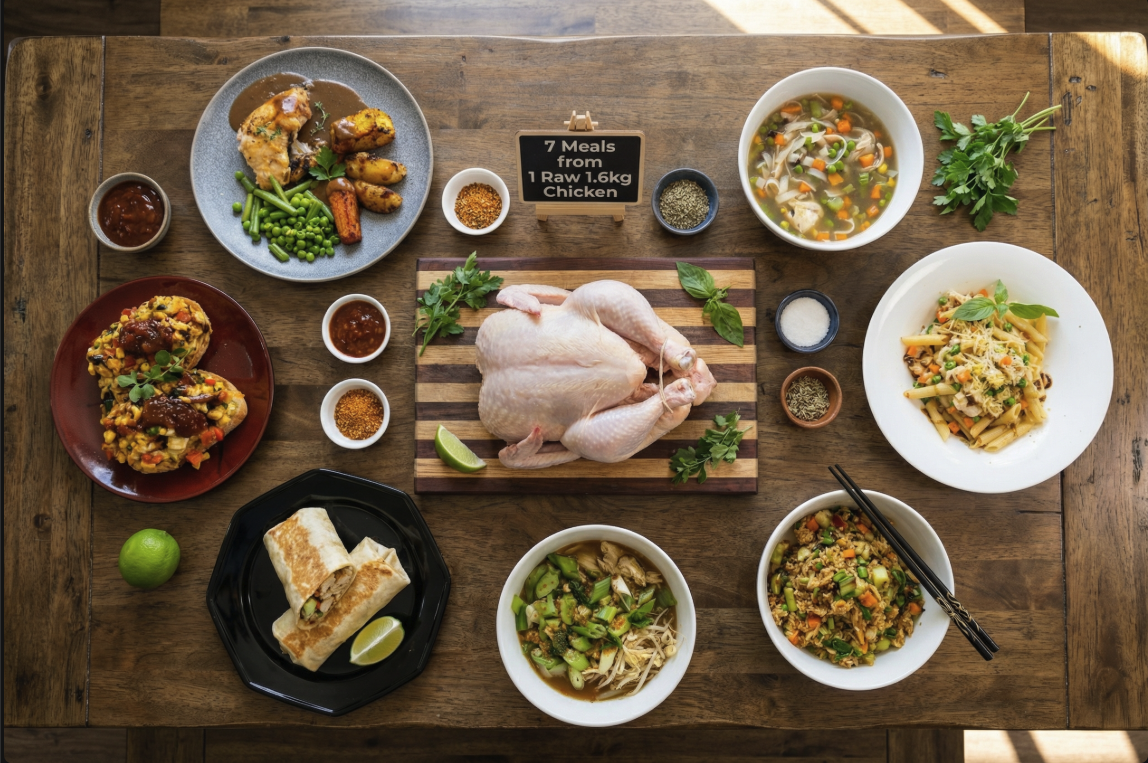
So… what just happened?
We started with one $10 chicken.
No fancy ingredients.
No complicated recipes.
No overthinking.
And somehow…
👉 we ended up with seven completely different meals.
Not variations.
Not repeats.
👉 Seven genuinely different dishes.
From that one chicken, we made:
If you’re reading this thinking…
👉 “That’s a lot of meals from one chicken”
You’re right.
But that’s not the real takeaway.
Most people approach cooking like this:
👉 What do I need to buy to make this meal?
Chef Ian approaches it differently:
👉 What can I create from what I already have?
That one shift changes everything.
Not from scratch every night.
Not with 30 ingredients.
Not by following recipes step by step.
👉 They prepare
👉 They plan
👉 They use what’s there
👉 They build meals from it
It’s easy to think:
👉 “It’s too much effort”
👉 “I’ll end up eating the same thing all week”
👉 “It’s easier to just grab something”
But now you’ve seen something different.
You’ve seen that:
👉 One cook can become multiple meals
👉 Variety comes from how you use ingredients
👉 Simple food can still feel like a proper meal
This wasn’t about just saving money.
This wasn’t about stretching food.
This was about:
👉 Cooking smarter
👉 Feeling more confident
👉 Actually enjoying what you cook
“You don’t need more ingredients to cook better food…
You just need to use the ones you have properly.”
If this made you think…
👉 “I could actually do this”
That’s exactly where it starts.
This one is less about mastering a single cooking method and more about learning how to plan, portion and transform one ingredient across several meals. That is a valuable kitchen skill in itself.
Meal planning, portioning and reducing waste: The real skill in creating seven meals from one chicken is learning to see the whole ingredient—not simply the first dinner it produces.
Plan before you begin: Decide how the chicken will be divided before using it. Reserve the best slices for meals where the chicken remains visible, smaller pieces for wraps, salads or stir-fries, and the carcass and trimmings for stock or soup.
Carve with purpose: Remove the breasts, legs, wings and remaining meat carefully so each part can be used where it performs best. Good carving helps maximise the usable meat and prevents valuable pieces from being left on the carcass.
Portion immediately: Divide the chicken into meal-sized portions once it has cooled. This prevents accidentally using too much in the first few dishes and makes the remaining meals easier to organise.
Store with the next dish in mind: Refrigerate the portions needed within the next few days and freeze the remainder promptly. Do not keep the entire chicken refrigerated while gradually using it across seven days. Label frozen portions with their intended meal where possible.
Change the supporting flavours: The chicken may be the common ingredient, but different sauces, seasonings, vegetables and cooking styles stop the meals from feeling repetitive. One portion might become Asian-inspired, another a salad, wrap, pasta, curry or comforting soup.
Protect the texture: Add cooked chicken towards the end when preparing a new dish. It only needs to be heated through; prolonged recooking can make it dry and stringy.
Use every valuable part: The carcass, wing tips, skin and small meat pieces still have purpose. They can create stock, add flavour to soup or provide the foundation for another meal.
Do not think of these dishes as “seven nights of leftovers.” Think of the chicken as an ingredient you have prepared in advance. Portion it carefully, store it safely and give each meal its own flavour and identity—that is how one economical chicken becomes seven meals you will genuinely want to eat.
These are your smart buys—ingredients deliberately chosen because they work across several meals:
🟡 Chicken → All seven meals
🟡 Frozen mixed vegetables → Pasta, Soup and Fried Rice
🟡 Shredded cheese → Pasta, Melt and Wrap
🟡 Smokey Tomato Relish → Melt and Wrap
🟡 Rice → Wrap and Fried Rice
🟡 Spring onion → Noodles, Fried Rice and Garnish
🟡 Stock made from the carcass → Soup and Noodles
👉 This is the system in action: one central ingredient supported by a small collection of versatile pantry, refrigerator and freezer staples.
The same approach can be applied to many other ingredients. A roast beef, pork shoulder, leg of lamb, cooked fish or tray of roasted vegetables can become the starting point for several different meals.
The key is to ask three questions before adding something to your shopping list:
Build your pantry and freezer around versatile ingredients such as rice, pasta, noodles, tinned tomatoes, beans, frozen vegetables, stock, sauces, herbs and seasonings. These staples allow one freshly cooked ingredient to move in several completely different flavour directions.
You do not need to repeat this exact seven-meal menu every week. Keep the system, then change the hero ingredient and supporting flavours according to what is affordable, seasonal or already available at home.
Shop for ingredients that work together—not seven unrelated dinners. When every purchase has more than one possible use, you spend less, waste less and always have the beginnings of another meal waiting in the kitchen.
Use the Master Shopping List to gather the ingredients needed across all seven meals before you begin. Many ingredients appear in more than one dish, so planning ahead helps reduce unnecessary purchases, use fresh produce efficiently and avoid forgotten ingredients sitting in the refrigerator.
Once the chicken has been cooked and cooled:
The carcass and trimmings can also be turned into chicken stock immediately, or frozen together in a labelled bag until you are ready to make it.
Some additional preparation can be completed ahead, such as measuring pantry ingredients, making dressings or sauces and chopping sturdy vegetables. Leave delicate salad leaves, fresh herbs and ingredients that brown or soften quickly until closer to serving.
You do not need to follow the seven meals in a fixed order. Choose the next dish according to your appetite and schedule—just move the required frozen chicken portion into the refrigerator the day before.
The Master Shopping List gives you the plan, but portioning gives you flexibility. Once the chicken is divided, labelled and safely stored, you are not committed to eating seven chicken meals in a row. You simply have the foundations of seven affordable meals ready whenever they suit you.
One chicken.
Seven completely different meals.
👉 Not because it was special
👉 But because you approached it differently
🔗 Series Navigation
You didn’t just see recipes.
You saw:
✔ Cooking once and using it properly
✔ Building meals instead of starting from scratch every time
✔ Using ingredients across multiple dishes
✔ Turning simple food into something you actually want to eat
When you look at the full ingredient list…
It’s not overwhelming.
In fact, most of it is probably already in your kitchen.
👉 A few vegetables
👉 Some pantry staples
👉 A handful of flavour builders
And that’s it.
Some ingredients showed up again and again:
👉 Buy once. Use multiple times.
👉 Used across ALL meals
👉 Great example of “buy once, use multiple times”