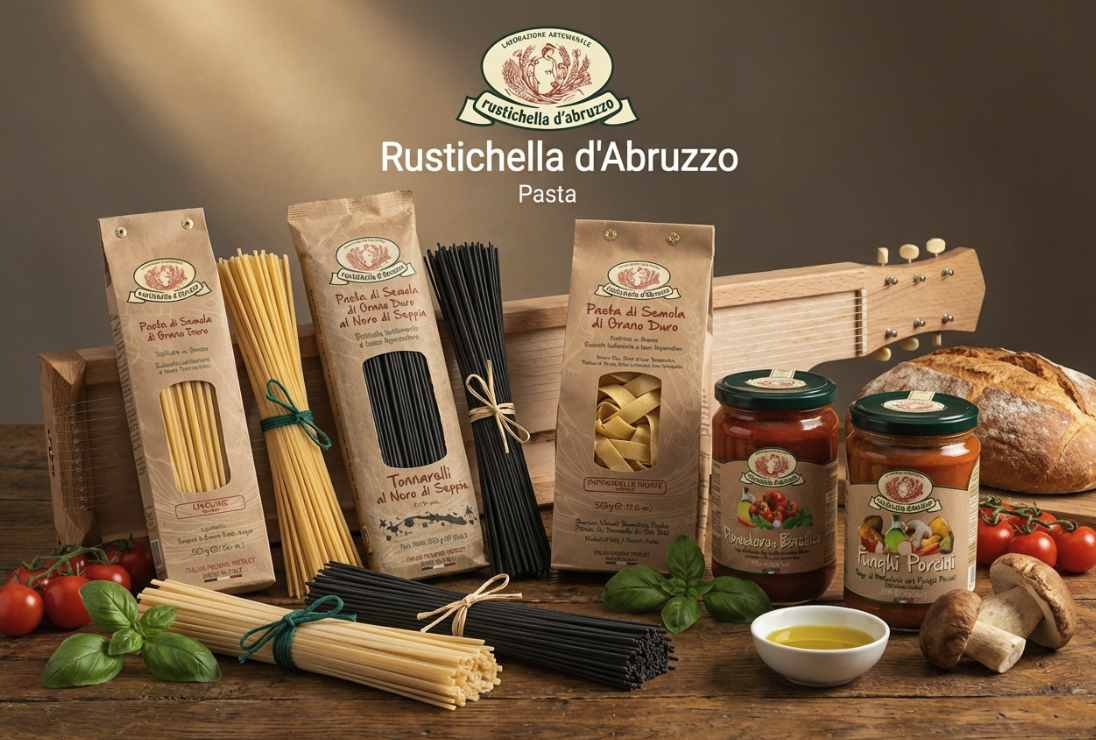
Some pasta is simply a vehicle for sauce. Good pasta contributes something of its own: the aroma of wheat, a satisfying bite and a surface that holds onto every spoonful rather than leaving the sauce behind in the bowl. That is why Rustichella d’Abruzzo has earned a place in theUnderground Chef pantry.
Its story began in 1924, when Gaetano Sergiacomo established a pasta factory in Penne, in the Abruzzo region of Italy. A century later, the family tradition continues into its fourth generation. The business has grown, but the principles behind the pasta remain grounded in time, care and respect for the ingredient.
Rustichella starts with selected durum-wheat semolina, slowly mixed with water. The dough is then pushed through bronze dies, which give each piece a visibly rough, porous surface. That texture is not decorative. It gives oil, cheese, tomato and pan juices something to cling to, so the pasta and sauce arrive at the fork as one dish.
Drying is equally deliberate. Depending on the shape, Rustichella describes a low-temperature process of about 40–45°Cover 24–56 hours. The slower approach protects the character of the wheat and helps the pasta retain the firm, resilient texture that home cooks are looking for when they say al dente.
WHY IT MATTERS IN YOUR KITCHEN
The rough surface helps sauce cling. The firm bite gives the plate structure. And the wheat flavour means a simple sauce can stay simple - you do not need to bury good pasta under too many ingredients.
After nearly five decades in professional kitchens, Chef Ian knows that the best results rarely come from rushing. They come from repetition, restraint and learning where time genuinely makes a difference. That is what he recognises in Rustichella d’Abruzzo: a family producer that still treats pasta-making as a craft rather than a race to the packet.
The connection is not about nostalgia for its own sake. Tradition is valuable when it improves what lands on the table. Here, the old methods have a practical result you can taste and feel - pasta that cooks evenly, keeps its bite and carries sauce beautifully.
There is no single ‘best’ shape; the right choice depends on what you are cooking. A few dependable starting points are:
· Linguine - slightly flattened strands with enough surface to hold pesto, tomato sugo and seafood sauces. It is the shape used in Chef Ian’s Mediterranean Seafood Linguine.
· Pappardelle Rigate - broad, grooved ribbons suited to porcini, slow-cooked meat ragù, fresh tomato and other sauces with real body.
· Spaghetti and cl assic shapes - ideal when you want the pasta itself to remain central, whether the finish is garlicand olive oil, tomato and basil or a simple cheese-based sauce.
For an easy pantry dinner, pair Rustichella pasta with Rustichella Tomato & Basil Sauce. The sauce combines tomato pulp and basil with carrot, onion and Aprutino Pescarese extra virgin olive oil. It has enough flavour to make dinner feel complete without overpowering the pasta.
Linguine is a natural match, particularly with seafood, but the same sauce can also begin a baked pasta, a quick pizza, a risotto or a pot of soup. For earthier dishes, Rustichella Porcini Sauce works especially well with pappardelle rigate, linguine or squid-ink pasta.
· Use a large pot and plenty of water so the pasta can move freely.
· Salt the water properly once it boils; this is your chance to season the pasta itself.
· Start checking before the packet time is up, then drain while the centre still has a little resistance.
· Keep a cup of pasta water and finish the pasta in the sauce. Add a splash of the starchy water to help everything come together.
· Do not rinse. The starch on the surface is part of what helps the sauce hold.
See Rustichella d’Abruzzo’s craft and heritage in the accompanying video: Watch the Rustichella reel on You Tube.
“Good pasta does not need to be hidden under a heavy sauce. Give it enough water, season it properly, cook it until it still has a little bite and let the texture do its job. Rustichella is one of those products that reminds you how much difference care in the making can make at the table.”
Chef Ian