
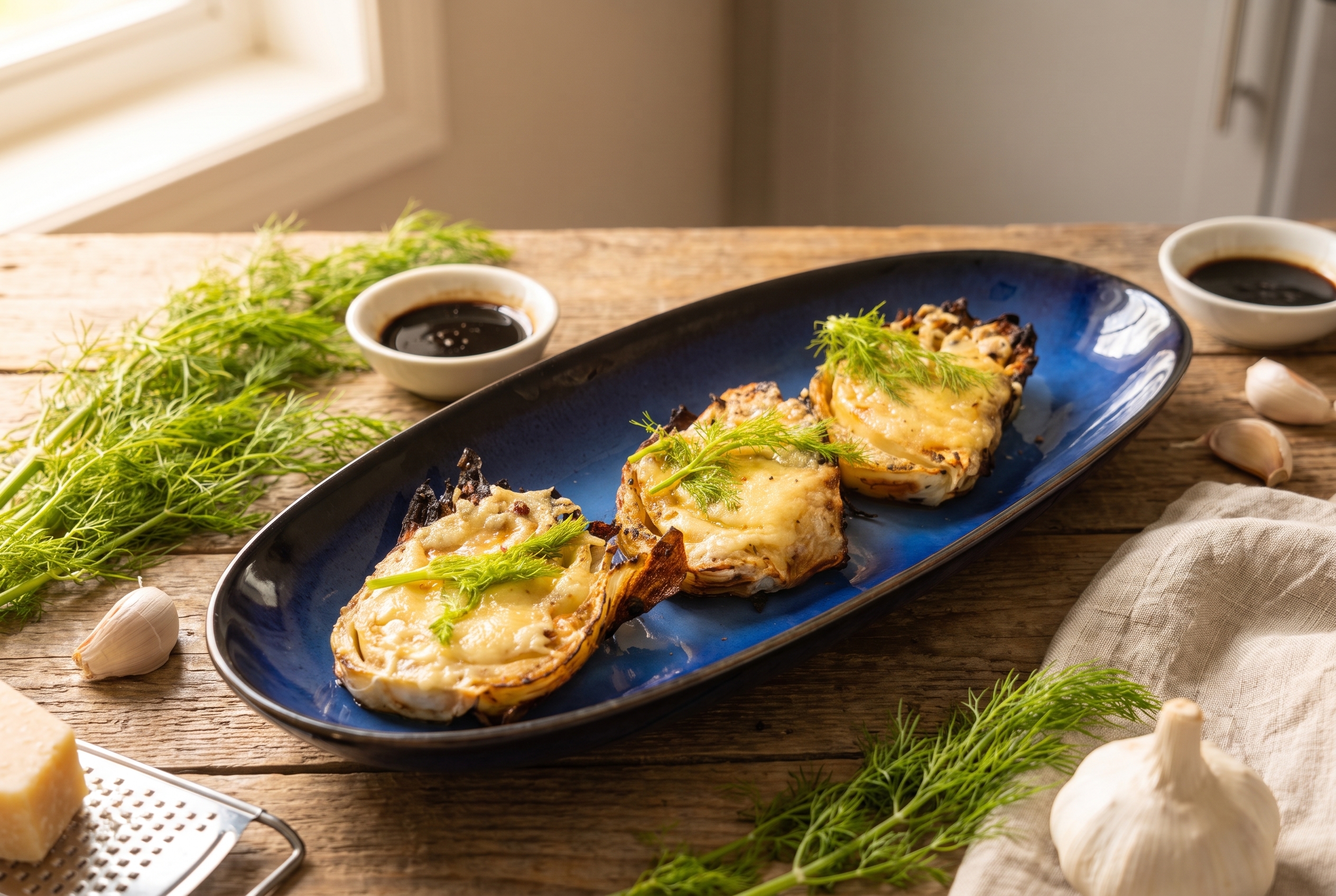
You’ve probably seen fennel sitting in the vegetable section — that pale, rounded bulb with long green stalks and feathery leaves — and wondered exactly what you’re supposed to do with it.
Perhaps you’ve even picked one up, looked at it for a moment and put it straight back.
And then there’s the other thing you may have heard:
“Doesn’t fennel taste strongly of aniseed?”
Raw fennel certainly has a distinctive fresh anise or liquorice note, but don’t let that put you off. Cooking changes it considerably. Once roasted, that stronger flavour mellows, the natural sugars begin to caramelise and fennel becomes sweeter, softer and much more delicate.
If you’ve never cooked fennel before, roasting is a very good place to start.
Fennel has been part of Mediterranean cooking for thousands of years and was well known to the ancient Greeks and Romans.
It remains an important ingredient throughout Mediterranean cuisine, particularly in Italy, where fennel — finocchio — is eaten raw, roasted, braised and added to soups, stews and salads.
One of the great things about fennel is that almost the whole plant can be put to work.
The bulb is what we generally cook as a vegetable, while the stalks and delicate green fronds are useful too.
Those delicate green fennel fronds make a beautiful garnish and give you a gentle fresh fennel flavour.
The thicker stalks are useful too.
Add them to vegetable or chicken stock, or try one of Chef Ian’s tricks:
Lay the fennel stalks underneath a whole chicken when roasting.
They act as a simple natural roasting rack, lifting the chicken slightly from the tray while adding extra aroma and flavour to the cooking juices.
Preheat the oven fully to 200°C fan-forced before adding the fennel.
Prepare and season the fennel exactly as above and arrange it on a lined baking tray in a single layer.
Roast for approximately 12 minutes, turning once.
Sprinkle with parmesan and return to the oven for a further 3–5 minutes, or until tender, golden and lightly crisp around the edges.
Finish with Garlic Balsamic and reserved fennel fronds.
Prepare and season the fennel as above.
Preheat the BBQ to medium-high heat before cooking. Place the fennel wedges on the grill or flat plate, allowing enough room around them for the moisture to escape.
Cook for approximately 5–6 minutes each side, depending on the thickness of the wedges, until tender and nicely charred.
Sprinkle with parmesan towards the end of cooking, or immediately after removing the fennel from the BBQ.
Finish with Garlic Balsamic and fresh fennel fronds.
Preparing fennel correctly
Learn how to trim the stalks, remove most of the firm core while leaving enough attached to hold the wedges together, and cut evenly sized pieces for consistent cooking.
Roasting rather than steaming
Preheating the Ninja or oven and leaving space between the fennel pieces allows moisture to escape. This encourages caramelisation and crisp edges instead of soft, steamed vegetables.
Seasoning before cooking
Tossing the fennel thoroughly with the Olsson’s Smoked Redgum Salt, Spice Lab Mélange of Peppercorns and Italian Classic before adding the oil helps distribute the seasoning evenly across the cut surfaces and between the layers.
Using high heat to develop flavour
Roasting at 200°C helps the natural sugars in the fennel caramelise, softening its stronger raw aniseed flavour and bringing out its sweetness.
Adding ingredients at the right stage
Parmesan is added towards the end so it colours and melts without burning, while the Garlic Balsamic is added after cooking so its sweet acidity stays fresh and noticeable.
Using the whole ingredient
The fronds become the garnish and the stalks can be saved for stocks or used underneath a roasting chicken — a simple example of reducing waste while adding flavour.
Preheat first — this one matters.
Fennel is made up of closely packed layers that naturally hold moisture. If it goes into a cold Ninja or oven and slowly comes up to temperature, that moisture begins to steam between the layers.
That can leave you with soft, soggy fennel instead of the finish we’re after.
A properly preheated Ninja or oven gives the fennel immediate heat, helping the outside roast and caramelise while the centre becomes tender.
We’re looking for tender fennel with golden, slightly crisp edges — not steamed fennel.
Don’t remove all of the core.
Leave a small amount attached and it will hold the individual layers of each wedge together while cooking.
Keep the stalks.
Use them in vegetable or chicken stock, or lay them underneath a whole chicken when roasting as a natural roasting rack.
Give the fennel some room.
Arrange it in a single layer rather than piling the pieces together. Space allows moisture to escape and encourages roasting rather than steaming.
Worried about the aniseed flavour?
Raw fennel has a much stronger liquorice or anise character. Once cooked, that flavour mellows considerably and its natural sweetness comes forward.
Finish with the Garlic Balsamic.
Add it after cooking. A small drizzle gives you acidity and sweetness without overpowering the fennel.
Roasted fennel works particularly well with:
It’s simple enough for a weeknight side but easily good enough to put on the table when entertaining.
And once you know how to prepare it, fennel suddenly doesn’t look quite so mysterious anymore.
Once you’re comfortable preparing fennel, there are plenty of other ways to use it:
Once you know how to prepare it, fennel becomes one of those vegetables that can move easily from salad to side dish, soup, pasta or roast — which makes it far more versatile than it first appears.
Raw fennel is crisp, refreshing, slightly sweet and has a noticeable anise or liquorice flavour.
Heat changes that considerably.
When fennel is roasted, the stronger aniseed character softens and the vegetable develops a gentle sweetness, with tender centres and caramelised edges.
So even if you’re not a fan of strong aniseed flavours, cooked fennel may surprise you.
Choose fennel bulbs that are:
If the stalks and feathery fronds are still attached, look for fresh green growth rather than limp or dried-out leaves.
Smaller to medium-sized bulbs are often particularly tender.
Fennel enjoys cooler growing conditions, which is why you’ll often see particularly good supplies through the cooler months and into spring.
Cut the stalks and fronds away from the bulb first, reserving what you want to use.
Cut the bulb in half lengthways and you’ll see a firm triangular core at the base.
Remove most of that tougher core, but when cutting fennel into wedges, leave a small amount attached.
It acts almost like a hinge and helps hold those individual layers together while the fennel cooks.
For today’s recipe, we’re cutting the fennel into substantial pieces of around 3 cm.
Then we’re keeping things very simple — garlic, lemon, parmesan and three seasonings from the Chef’s Pantry before roasting it until tender, golden and crisp around the edges.
So next time you see fennel sitting in the vegetable section, don’t walk past it.
Roasting is one of the simplest ways to understand what fennel can really taste like.
The edges colour and caramelise, the centre becomes tender and the stronger raw fennel flavour mellows beautifully.
We're adding garlic, Italian herbs, lemon, parmesan and a little smoked salt, then finishing everything with Garlic Balsamic.
It's simple enough to serve beside a weeknight dinner but good enough to put onto the table with a roast, chicken, pork, fish or grilled meat.
So next time you see fennel in the vegetable section, don't walk past it. Take one home.