
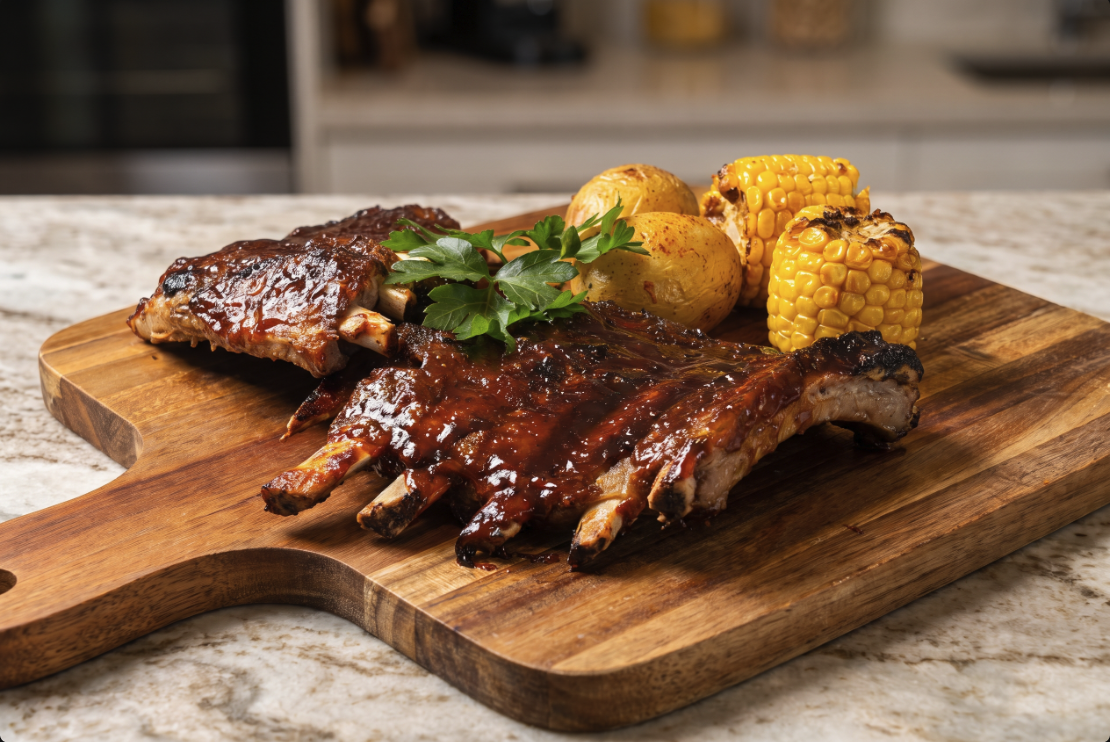
Love a good plate of sticky pork ribs but think they are something best left to pubs, clubs or barbecue restaurants?
They are much easier to achieve at home than you might think.
For this Kitchen 101 recipe, Chef Ian uses the Ninja 11-in-1 in two different ways: first steaming the ribs until tender, then switching to Bake/Roast mode to develop colour, crust and that classic sticky barbecue finish.
The secret is simple:
Tenderise → Colour → Glaze
Steam first for tenderness, roast with The Spice Lab American Rub and Olsson’s Red Gum Smoked Salt for flavour and colour, then add your barbecue sauce right at the end so it caramelises without burning.
It is a simple, reliable method that gives the home cook a great result without needing a smoker or complicated barbecue equipment.
Once you understand that sequence, great ribs become very easy to reproduce at home.
And considering what a plate of ribs can cost when you eat out, this is one Kitchen 101 technique well worth having in your repertoire.
Steam the ribs for 20 minutes using a stovetop steamer.
Allow them to cool slightly, then oil and season with The Spice Lab American Rub and Olsson’s Red Gum Smoked Salt.
Roast in a preheated oven at 200°C for approximately 10-15 minutes.
Brush with barbecue sauce during the final 5 minutes, watching carefully so the sauce caramelises without burning.
Steam the ribs first, then allow them to cool slightly.
Oil and season before finishing over a medium-hot barbecue grill.
Once the ribs have developed colour, brush with barbecue sauce and continue cooking briefly until sticky and caramelised.
Avoid cooking heavily sauced ribs directly over very high flames, as the sugars in the sauce can burn quickly.
For an even deeper barbecue flavour, steam the ribs first, then season and place them into your smoker.
Once they have taken on the desired smoky flavour, finish over higher heat or in the oven.
Brush with barbecue sauce only during the final cooking stage.
This recipe is really about understanding three different stages of cooking.
Steam the ribs first.
The gentle moist heat helps soften the connective tissue and gives us the tender, pull-apart result we want before any high heat is applied.
Once tender, lightly oil and season the ribs with The Spice Lab American Rub and Olsson’s Red Gum Smoked Salt.
High heat now develops colour, texture and that savoury barbecue crust.
Only once the ribs are tender and coloured do we add the barbecue sauce.
A final short burst of heat caramelises the sugars and gives the ribs their glossy, sticky finish without burning the sauce.
Tenderise → Colour → Glaze
Remember those three stages and you can use the same principle whether you cook your ribs in the Ninja, oven, barbecue or smoker.
Remember the three stages:
Tenderise → Colour → Glaze.
Each stage is doing a different job.
Don't add your barbecue sauce too early.
The sugar in the sauce can burn long before the ribs are ready, creating a bitter crust instead of a sticky glaze.
Let the ribs cool slightly after steaming.
A slightly drier surface allows the oil and seasoning to adhere much better.
Use smoked salt strategically.
You don't need much. It should enhance the smokiness rather than overpower the pork.
Choose a barbecue sauce you genuinely enjoy.
Its flavour will be very noticeable in the finished ribs.
Cooking for a crowd? Steam ahead.
Complete the tenderising stage earlier, refrigerate the ribs and simply colour and glaze them at service time.
Ribs deserve a generous presentation.
Serve them on a long wooden board, platter or large dinner plate, keeping the ribs as the hero.
Add roasted chat potatoes and a roasted sweet corn cob alongside.
Brush the hot corn with melted butter and finish with a light dusting of The Spice Lab American Rub for another layer of flavour.
For a more substantial meal, swap the chat potatoes for an Idaho-style baked potato topped with sour cream.
And don't forget the napkins — good ribs are meant to be picked up and enjoyed.
The steaming stage can easily be completed ahead of time.
Steam the ribs for 20 minutes, remove from the Ninja and allow them to cool completely.
Once cold, wrap well or place into a sealed container and refrigerate.
When ready to serve, simply season and finish the ribs in the Ninja, oven or on the barbecue before glazing with barbecue sauce.
This makes the recipe particularly useful when cooking for a larger group.
Several portions of ribs can be steamed ahead of time, leaving only the quick colour and glaze stages to complete when your guests are ready to eat.
Add a little cayenne, chilli powder or hot smoked paprika for extra heat.
Choose a barbecue sauce with honey, maple or brown sugar notes for a sweeter glaze.
Add a little more Olsson’s Red Gum Smoked Salt, or finish briefly over a charcoal barbecue.
Try a smoky bourbon-style barbecue sauce, chipotle barbecue sauce or honey barbecue glaze.
Serve with coleslaw, potato salad, grilled vegetables, corn salad or a crisp green salad.
Steaming helps tenderise the pork before it is exposed to high heat.
It takes much of the guesswork out of cooking ribs and helps produce that tender, pull-apart texture we are looking for.
Most barbecue sauces contain a fair amount of sugar.
If they are exposed to high heat for too long, those sugars can burn and turn bitter.
Adding the sauce towards the end allows it to caramelise and become sticky without burning.
The barbecue sauce becomes one of the dominant flavours in the finished dish, so quality matters.
A good American-style barbecue sauce such as Sweet Baby Ray’s or similar will generally give you more depth, sweetness and smoky character than a basic everyday barbecue sauce.
Olsson’s Red Gum Smoked Salt gives us another layer of genuine smoky flavour without needing a smoker.
Combined with The Spice Lab American Rub and a good barbecue sauce, it helps build that classic American barbecue flavour very easily at home.
You certainly can, but it becomes harder to control the cooking.
Many supermarket marinades contain sugar, which can burn before the ribs themselves become tender.
Starting with plain pork ribs allows us to control tenderness, seasoning and sauce separately.
Absolutely.
Ribs can be expensive in pubs, clubs and restaurants, and pre-marinated supermarket ribs aren't always particularly cheap either.
Once you understand this simple steam-first technique, great ribs are very achievable at home.