
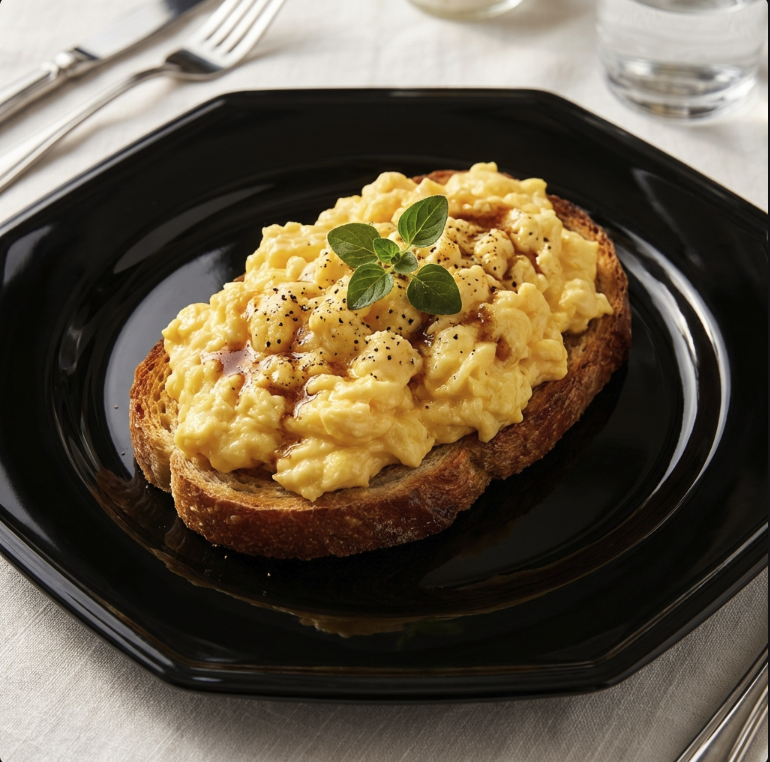
Scrambled eggs are one of those “simple” things that expose every shortcut.
Too cool a pan and they go watery. Too much waiting and they go dry.
This is Chef Ian’s method for soft, fluffy curds that melt in your mouth — fast, hot, and served immediately.
Scrambled eggs aren’t hard — but they are honest.
Get the pan hot, whisk properly, move fast, and serve them straight away.
Do that, and you’ll get soft, fluffy curds every time — no café, no gimmicks.
Just the right method, done properly.
Chef Ian
For this recipe, Chef Ian recommends using a hot frying pan and following the 13-second cooking method demonstrated. Scrambled eggs can technically be prepared in a microwave, saucepan or double boiler, but these methods create a different texture and do not deliver the same soft, creamy curds or precise control.
This is one occasion when the cooking method matters just as much as the ingredients. The direct heat of the pan allows the eggs to cook quickly while remaining soft and moist, provided they are removed immediately.
If a frying pan is not available, eggs may be cooked gently in a small saucepan over low heat, stirring continuously. However, this should be considered a different style of scrambled egg—not an alternative version of Chef Ian’s method.
Scrambled eggs are simple, but the timing is unforgiving. Have the toast, plates and garnishes ready before the eggs touch the pan. Once cooking begins, there is no time to step away—and remember that the eggs will continue cooking from their residual heat after they leave the pan.
Aeration, heat control and speed: Whisk the eggs and cream thoroughly in a generously sized bowl to incorporate air and completely combine the mixture. This helps create lighter, softer scrambled eggs rather than dense, streaky curds.
Use cream rather than milk: Cream adds richness and enough fat to create a smooth, velvety texture. Milk contains considerably more water, which can produce thinner eggs and leave liquid separating on the plate, particularly if the mixture is overcooked. For Chef Ian’s method, cream is part of the technique—not simply an optional indulgence.
Season before cooking: Adding the salt and pepper to the egg mixture ensures the seasoning is distributed evenly throughout, rather than sitting only on the surface after cooking.
Commit to the heat: The pan must be properly heated before the eggs are added. A lukewarm pan makes the eggs cook slowly, giving them more opportunity to become heavy or watery. The hot pan creates soft curds quickly while Chef Ian’s shaking and stirring prevent the mixture from catching.
Keep everything moving: Shake the pan while stirring continuously. This combines the cooked egg from the base with the softer mixture above, creating even, creamy curds without allowing any section to overcook.
Work quickly: Once the eggs enter the pan, the entire process takes approximately 13 seconds. Your toast, plate and garnish must be ready before cooking begins.
Remove them early: Take the eggs off the heat while they still look slightly softer than you want them. Residual heat from the pan and the eggs themselves will continue the cooking process on the way to the plate.
Do not dilute good eggs unnecessarily. Use cream for richness, butter for flavour and a properly heated pan for speed. The secret is not a long ingredient list—it is being prepared, paying attention and knowing exactly when to stop cooking.
Scrambled eggs should not be cooked ahead. They continue to firm as they sit, losing the soft, creamy texture that makes Chef Ian’s 13-second method so successful. Refrigerating and reheating them will only cook them further and may cause moisture to separate.
What you can do ahead is have everything ready:
Remove the egg mixture from the refrigerator just before cooking, give it another quick whisk and proceed with the recipe.
This is not a recipe to cook now and serve later. Prepare everything else first, then cook the eggs last. Thirteen seconds in the pan is all they need, so there is very little time to save by making them ahead.
If you are dairy intolerant, replace the cream with a small amount of unsweetened plant-based cooking cream. Soy or oat cooking cream will generally provide a creamier result than thin plant-based milk. Choose an unflavoured product without added sugar, as coconut-based alternatives may add a noticeable sweetness or coconut flavour.
Replace the butter with a dairy-free butter-style spread or a small amount of neutral-flavoured oil. Make sure the substitute is suitable for frying, as some spreads contain a high proportion of water and may spit or prevent the eggs from cooking cleanly.
Alternatively, leave the cream out altogether and whisk the eggs thoroughly on their own. The result will be lighter and less rich, but still soft and enjoyable if cooked quickly and removed from the heat before becoming firm.
When adapting the recipe, avoid replacing the cream with a large quantity of thin plant-based milk. Its additional water can make the eggs loose or watery. Use a plant-based cooking cream sparingly—or simply trust the eggs and cook them without it.
To serve