
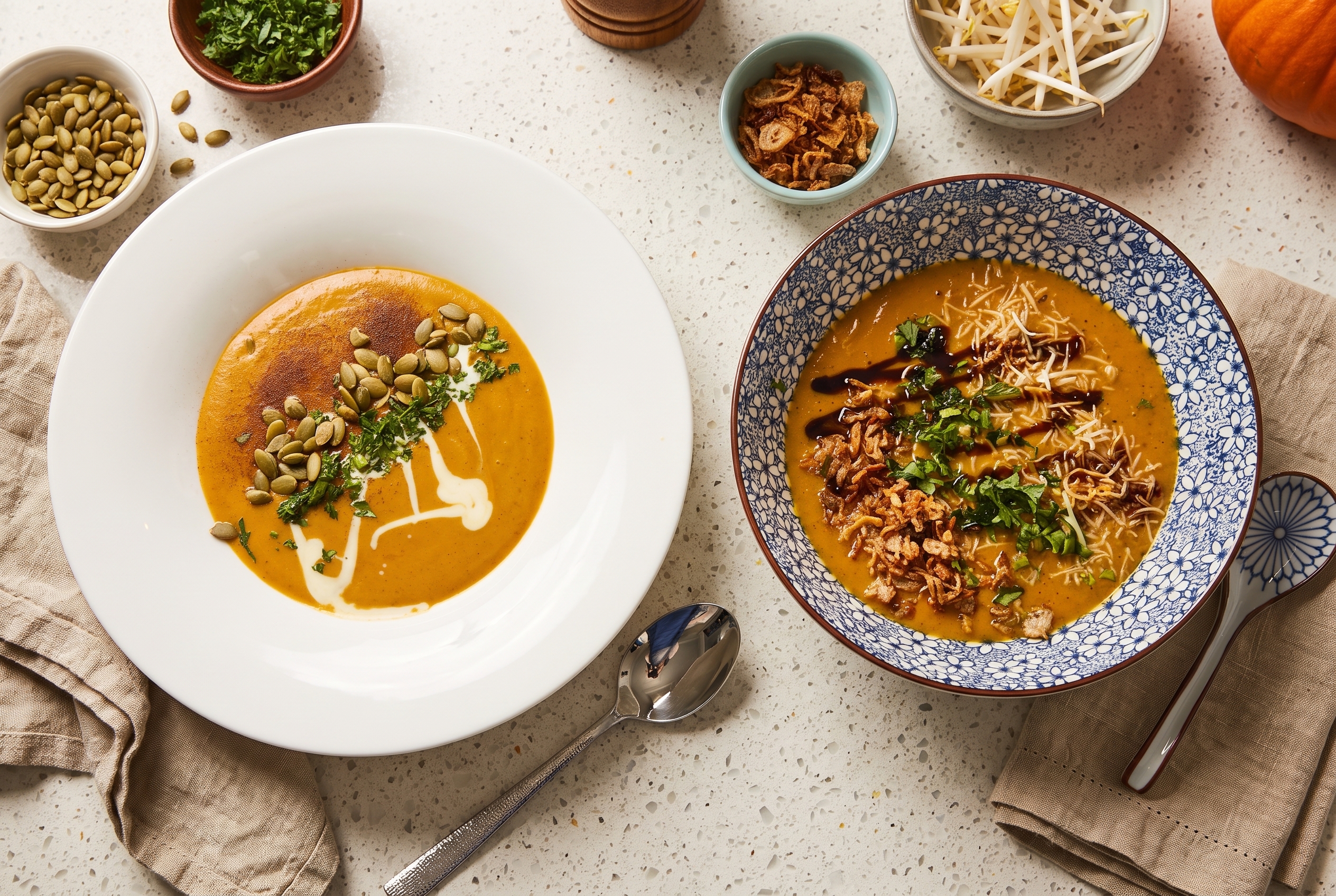
This is the kind of recipe I love because you do the main work once and create two completely different soups.
We begin with one simple roasted pumpkin soup base. Half is finished as a classic creamy pumpkin soup, while the other half is transformed with coconut cream, sweet soy, fish sauce and coriander into a fragrant Asian-style version.
Roasting the pumpkin first develops its natural sweetness and gives the soup a much deeper flavour than simply boiling everything together. We are also leaving the skin on the pumpkin. Once it is cooked and puréed, you will not notice it, but you will be adding more fibre and reducing unnecessary preparation and waste.
Butternut pumpkin is my first choice for soup because of its naturally sweet, rich flavour and smooth texture. Kent, Jap or Queensland Blue pumpkin will also work beautifully when they are available.
It is one soup, finished two ways - a great Kitchen 101 technique that shows how a few carefully chosen ingredients can completely change the personality of a dish.
Allow approximately two hours for the complete oven and stovetop method, including preparation, roasting, simmering, blending and finishing.
Roasting caramelises the pumpkin’s natural sugars and gives the soup a richer, more rounded flavour. This is why roasting before adding the stock produces a better result than simply boiling raw pumpkin.
Pumpkin skin softens during roasting and pressure cooking. Once blended thoroughly, it adds body and fibre without affecting the finished texture.
Do not season the soup before roasting or pressure cooking. The stock will reduce slightly and the flavours will concentrate as the soup cooks.
Purée the soup first, then taste and season. This gives you much greater control over the final result.
A stick blender is the simplest option because the soup can be blended directly in the cooking pot.
When using a jug blender, work in small batches, leave room for steam to escape and never completely fill the jug with hot soup.
Learning how to create a neutral base and then change its flavour is an important cooking skill. It saves time, reduces waste and gives you more variety without preparing two separate recipes.
Ladle the soup into warm bowls. Finish with a small swirl of cream and a very light dusting of sieved cinnamon.
Add chopped parsley and your choice of toasted pine nuts, pepitas or flaked almonds for colour and texture.
For a slightly sharper finish, drizzle a small amount of balsamic glaze over the soup just before serving. Do not use too much — it should balance the sweetness of the pumpkin rather than overpower it.
Serve with warm crusty bread, toasted sourdough or simple garlic bread.
Ladle the soup into warm bowls and garnish with chopped coriander, fried shallots and toasted coconut.
The fried shallots provide crunch, while the coconut reinforces the flavour of the coconut cream.
Serve with warm flatbread, roti or crisp wonton strips. It can also be served in smaller bowls as the beginning of an Asian-inspired meal.
The pumpkin soup base can be made up to three days ahead and stored in an airtight container in the refrigerator.
For maximum flexibility, prepare, purée and divide the base soup, but wait to add the cream, coconut cream and final flavourings until you are reheating it.
Reheat gently on the stovetop, stirring regularly. Avoid boiling the soup once the cream or coconut cream has been added, as this can affect its smooth texture.
The soup can also be frozen before adding the cream or coconut cream. Freeze in labelled portions for up to three months, thaw in the refrigerator and finish in your chosen style after reheating.
Always add the fresh garnishes immediately before serving.
Replace the chicken stock with vegetable stock or water.
For a completely plant-based version, replace the honey with maple syrup and use coconut cream or a plant-based cooking cream.
Omit the fish sauce from the Asian-style soup or replace it with a vegetarian fish sauce or a little additional soy sauce.
Add a small amount of chilli oil, fresh chilli, sambal or curry paste to the Asian-style soup.
Begin with a small quantity. You can always add more, but you cannot take it back out.
Add a teaspoon of mild curry powder when coating the pumpkin before roasting. Finish with cream or coconut cream.
Add a teaspoon of finely grated fresh ginger to the Asian-style finish for extra fragrance.
Roast one brown onion or several garlic cloves alongside the pumpkin, then purée them into the soup.
Kent, Jap and Queensland Blue pumpkin can all be used. The final soup may vary slightly in sweetness, thickness and colour depending on the pumpkin selected.
Yes. Wash the pumpkin well, remove any damaged areas and leave the skin on. It becomes soft during cooking and blends into the soup, adding fibre and reducing preparation time.
Butternut pumpkin is my first choice because it has a naturally sweet flavour and produces a smooth, creamy soup. Kent, Jap and Queensland Blue pumpkin are also suitable.
Chicken stock, sweet soy and fish sauce all contain seasoning. Waiting until the soup has been cooked and puréed prevents it from becoming too salty.
Certainly. Leave the soup as one batch and double the finishing ingredients for your chosen version.
For the classic soup, use approximately 300 ml cream. For the Asian-style version, use approximately 300 ml coconut cream and adjust the soy sauce and fish sauce gradually to taste.
Use coconut cream, plant-based cooking cream, evaporated milk or a lighter cooking cream. Each will produce a slightly different flavour and consistency.
Yes. For the best result, freeze the puréed pumpkin base before adding cream or coconut cream. Add the finishing ingredients after thawing and reheating.
Add a little extra stock, water, cream or coconut cream until the soup reaches your preferred consistency.
Simmer it gently without a lid until some of the liquid evaporates. Stir regularly to prevent it from catching on the bottom.
Yes. Allow the soup to cool slightly and blend it in small batches. Take care when blending hot liquids, as steam can build up inside the jug.
It should not be. Add the sweet soy and fish sauce, mix well and taste before adding anything else. These ingredients normally provide all the seasoning the soup requires.