
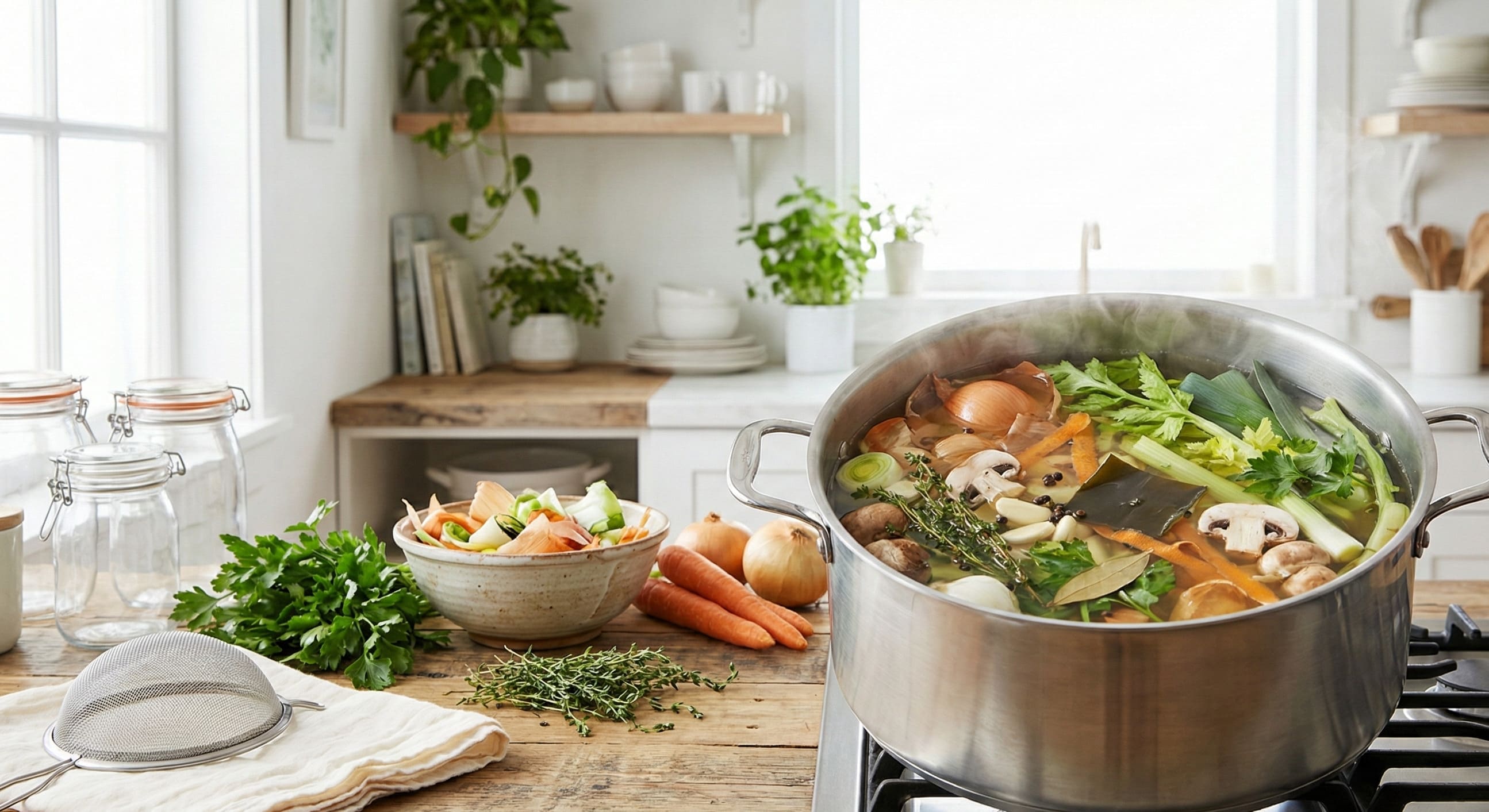
Vegetable stock proves something I love: you don’t need meat for big flavour.
This is the quickest stock to make, the easiest to keep on hand, and the one that quietly upgrades everything — soups, risottos, sauces, even cooking grains. Plus, it’s the best way to turn everyday veg bits into something genuinely useful.
"Veg stock is the quickest ‘liquid gold’ you can make — and once you’ve got it in the freezer, weeknight cooking gets a whole lot easier."
Chef Ian
There’s no need to roast the vegetables for this one. Pressure cooking extracts plenty of flavour in just 15 minutes while keeping the stock lighter and more versatile.
And I think that distinction is actually worth teaching: roasting gives you deeper colour and flavour; using the vegetables straight into the pressure cooker gives you a cleaner, lighter stock. Neither is wrong — it depends on what you want to use the stock for.
Balance, gentle extraction and knowing when to stop: Vegetable stock does not require hours of cooking. The goal is to draw out the vegetables’ fresh, natural flavours without reducing them to bitterness or creating a muddy stock.
Cut vegetables evenly: Roughly chop the vegetables into similar-sized pieces so they release their flavour at an even rate. Smaller pieces expose more surface area and allow the stock to develop relatively quickly.
Keep the flavours balanced: Onion, carrot and celery provide the classic foundation. Too much carrot can make the stock overly sweet, while excessive celery, herbs or strongly flavoured vegetables can dominate it.
Sweat without colouring: Gently cooking the vegetables in a small amount of oil before adding the water helps release their aroma and develops a rounded flavour. Keep the heat controlled unless you specifically want a darker, roasted-style stock.
Start with cold water: Cold water allows the temperature to rise gradually and encourages a gentle, even extraction of flavour from the vegetables and herbs.
Use only enough water to cover: Adding too much water will dilute the flavour. Cover the vegetables comfortably, remembering that more water can always be added if the finished stock is too concentrated.
Simmer - do not rapidly boil: A gentle simmer produces a cleaner, fresher-tasting stock. Vigorous boiling breaks down the vegetables, clouds the liquid and can introduce bitter or muddy flavours.
Do not overcook it: Unlike chicken or beef stock, vegetable stock generally needs only 30–45 minutes of gentle simmering. Cooking it for several hours will not necessarily make it better; it can dull the fresh flavour and draw out bitterness.
Strain without pressing: Pour the stock through a fine sieve and allow it to drain naturally. Pressing or crushing the cooked vegetables forces fine particles into the liquid and can make the stock cloudy.
Leave the salt until later: Stock is an ingredient rather than a finished dish. If it is salted now and later reduced in a sauce or soup, the final result may become too salty.
Good vegetable stock is about restraint. Use fresh, balanced ingredients, simmer gently and strain it once the vegetables have given up their flavour. Longer and stronger do not always mean better—particularly when working with vegetables.
Vegetable stock is ideal for making ahead. Keeping a few portions in the freezer gives you a quick flavour base for soups, sauces, risotto, grains and casseroles.
The vegetables can be washed and roughly chopped the day before. Store them in a sealed container in the refrigerator until you are ready to make the stock.
You can also keep a dedicated stock bag in the freezer and gradually add suitable clean vegetable trimmings, such as:
Avoid spoiled or mouldy vegetables, and use strongly flavoured scraps such as cabbage, broccoli, cauliflower and Brussels sprouts sparingly because they can overpower the stock or make it bitter.
Once cooked, strain the stock promptly and discard the vegetables and aromatics. Divide it between shallow containers or place the pot in an iced-water bath, stirring occasionally to release the heat.
Do not leave a large pot of stock on the bench to cool slowly. Refrigerate it promptly once the initial heat has reduced.
Cover and refrigerate the cooled vegetable stock for up to 3–4 days.
Unlike a stock made from bones, vegetable stock will not set like jelly when chilled because it does not contain collagen. Some natural separation is normal—simply stir it before using.
Freeze the stock in quantities that suit your cooking:
Leave some room at the top of containers for expansion, and label each portion with the type of stock, quantity and date. For the best flavour and quality, use within approximately three months.
Thaw the stock overnight in the refrigerator, warm it gently from frozen in a saucepan or add a frozen portion directly to the dish. Bring it quickly to a thorough simmer before using.
A freezer bag of vegetable trimmings is an excellent way to reduce waste, but remember that stock is not a rubbish bin. Only save fresh, clean and flavourful trimmings - f you would not happily cook with it, do not put it into your stock.
Add fresh ginger, garlic, spring onion, coriander stalks and a few dried shiitake mushrooms to the usual vegetables. For a lighter Japanese direction, include a piece of kombu, removing it before the stock reaches a strong boil.
Use for noodle soups, Asian-style sauces, dumpling broths, stir-fries and cooking rice.
Add bruised lemongrass, sliced ginger or galangal, coriander roots or stalks, kaffir lime leaves and spring onion.
This makes a fragrant base for Thai soups, coconut curries and noodle dishes. Avoid adding chilli unless you want every dish made with the stock to carry heat.
Increase the mushrooms and include dried shiitake or porcini for deeper flavour. Mushroom stalks and trimmings are excellent here, provided they are fresh and clean.
Use for risotto, gravies, casseroles, lentil dishes and vegetarian sauces requiring additional depth.
Roast the onion, carrot, celery, mushrooms and garlic until deeply golden before adding them to the stockpot.
This produces a darker, richer stock suitable for gravies, hearty soups, braised vegetables and robust vegetarian dishes.
Add tomato, garlic, leek, parsley stalks, thyme, bay leaf and a small amount of fennel.
Use for tomato-based soups, pasta sauces, braised vegetables, couscous and Mediterranean-style casseroles.
Add ginger, garlic, coriander stalks and whole spices such as cumin seed, coriander seed, cardamom or a small piece of cinnamon.
Keep the spicing restrained so the stock supports the finished curry, dhal or rice dish rather than overwhelming it.
Simmer stripped corn cobs with onion, celery, garlic and herbs. The cobs release a gentle natural sweetness and plenty of corn flavour.
Use for corn soup, chowder, risotto, polenta or vegetable sauces.
Think about the stock’s final destination before choosing the aromatics. A traditional vegetable stock is versatile, while a flavoured stock is more specialised - but it can give the finished dish considerably more character. Label flavoured stocks clearly before freezing so your Thai stock does not accidentally find its way into an Italian risotto.
Chef’s rule: veggie stock is best when it stays light and aromatic — don’t throw the whole fridge at it.