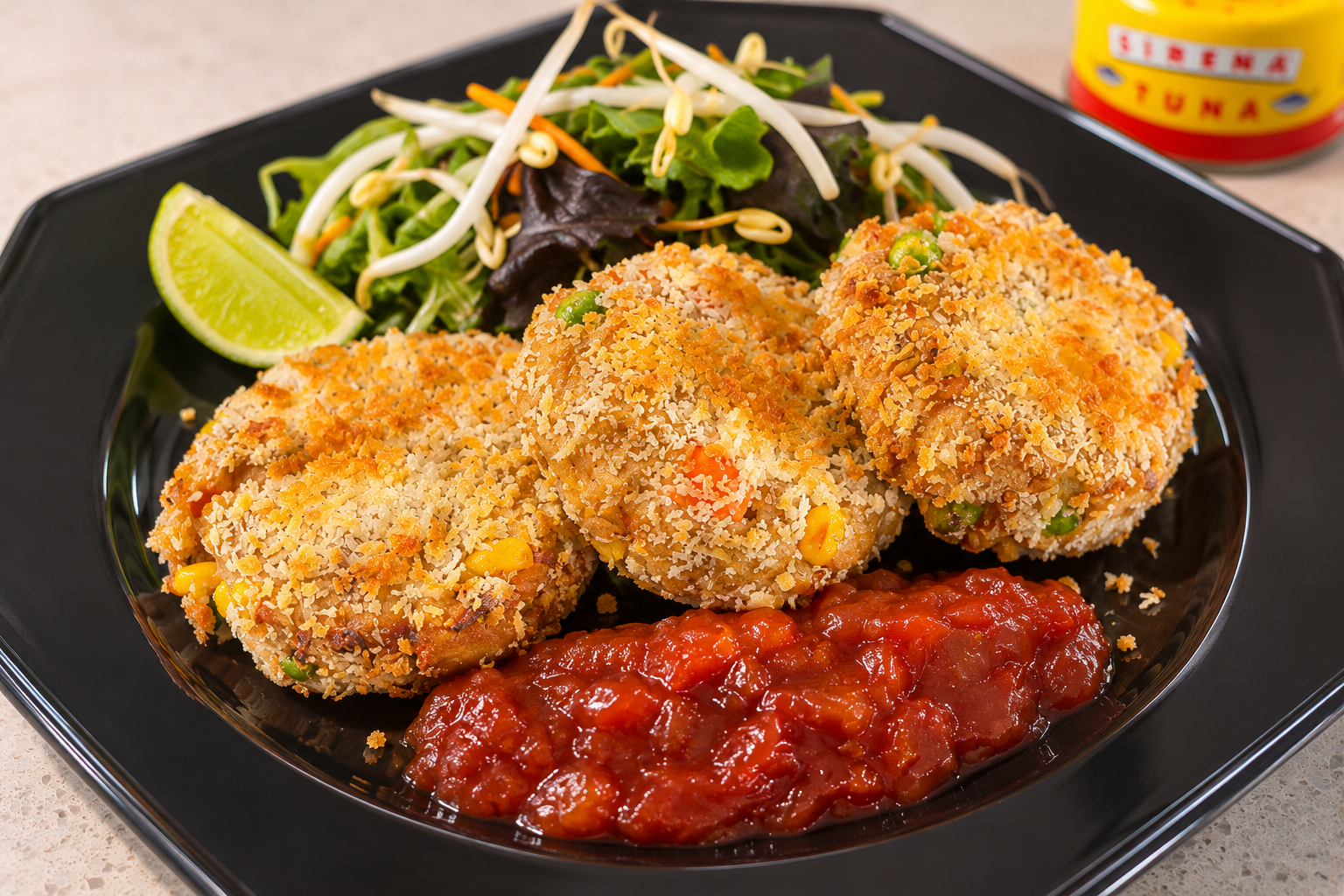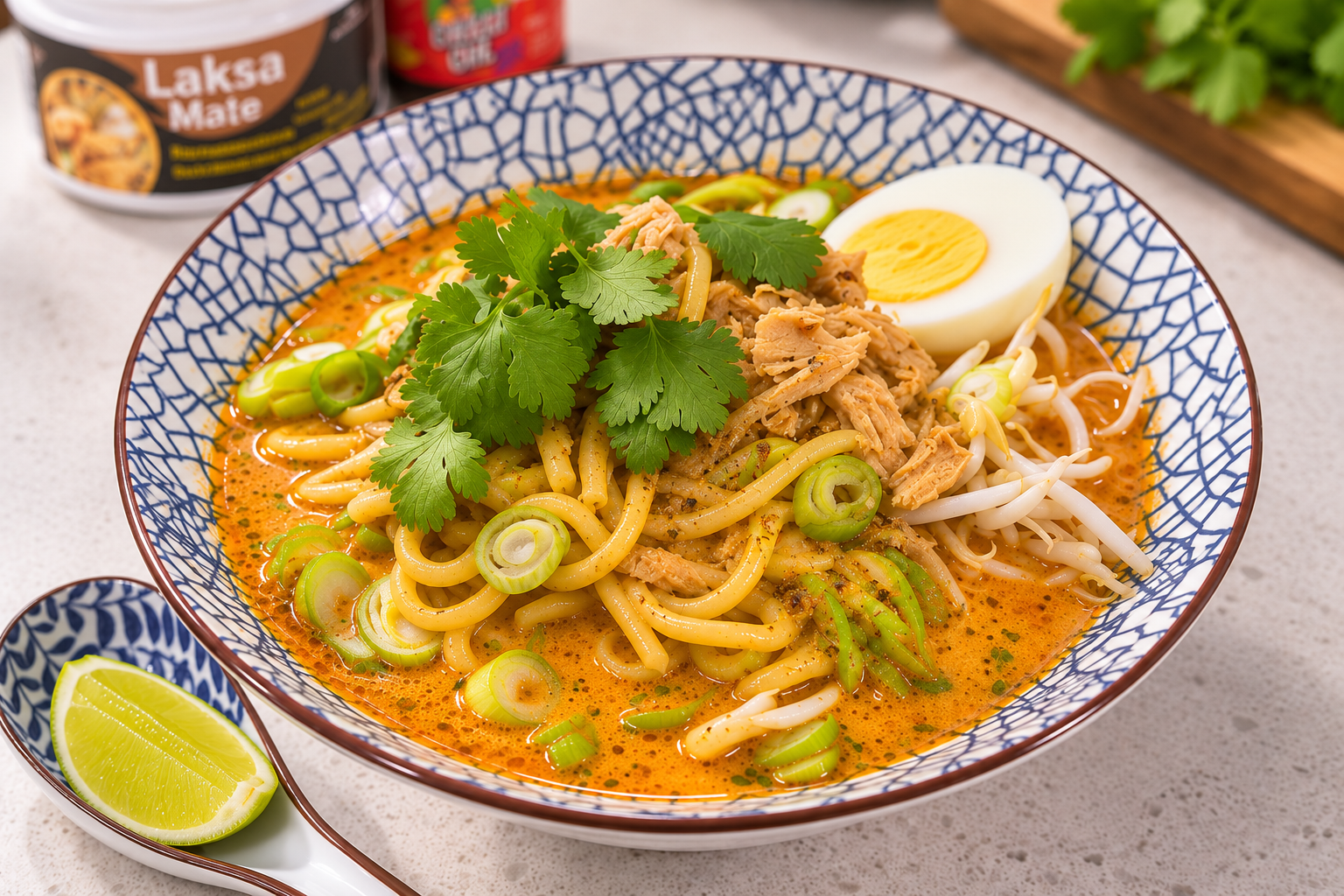

Our Eating for One – Seven Delicious Meals from One Tin of Tuna journey continues, and this time Chef Ian is bringing a little Japanese inspiration into the kitchen!
Have you ever tried Okonomiyaki?
If the name sounds unfamiliar, don't be put off. Okonomiyaki is a Japanese savoury pancake, traditionally made with cabbage and a simple batter, then finished with delicious sauces and toppings.
And the wonderful thing about this dish? It's made using ingredients you probably already have in your kitchen.
For our version, Chef Ian is using a 95g tin of Sirena Italian Style Tuna in Oil, finely shredded cabbage, spring onion and a simple flour-and-water batter.
The pancake is cooked gently in a frying pan until golden, with the cabbage and tuna nestled inside. We finish with a drizzle of Kewpie Japanese Mayonnaise, roasted sesame seed sauce and a sprinkle of Pandaroo Seaweed & Sesame Furikake.
And here's a clever little touch - rather than wasting the oil from the tuna tin, Ian drizzles a little over the finished pancake for extra flavour.
Crisp on the outside, tender inside and full of flavour, this is a wonderful example of how a few everyday ingredients can become something completely different.
With Ian's Japanese heritage, it's also a lovely opportunity to introduce a traditional Japanese favourite in a way that's approachable for everyday home cooks.
Remember those spring onions we've been using throughout our tuna series?
Well, they're making another appearance!
This time, we're combining them with shredded cabbage and our familiar tin of tuna to create a Japanese-inspired meal.
And if you've bought a whole cabbage, don't worry. Use what you need for your pancake and keep the remainder for coleslaw, stir-fries or another easy summer meal.
It's another way to get more value from your shopping without eating the same dish over and over again.
One tin. One person. One delicious meal.
Serve immediately while hot and golden.
If you find a large pancake difficult to flip, divide the mixture into two smaller pancakes.
Smaller pancakes are easier to handle, particularly if this is your first time making Okonomiyaki.
Prepare and cook each pancake using the same method, adjusting the cooking time to suit their size.
An electric frying pan or flat griddle works well for this recipe.
Use moderate heat and allow the base to become firm before adding the filling and turning.
If the cabbage is taking longer to soften, cover the frying pan briefly with a lid after turning the pancake.
The trapped heat will help cook the cabbage.
Remove the lid towards the end of cooking to allow excess moisture to evaporate and the surface to become lightly golden.
Gradually adding water to the flour while whisking helps prevent lumps.
The finished batter should be smooth and thin enough to spread easily across the frying pan.
Allowing the batter to rest for approximately 30 minutes gives the flour time to absorb the water.
This helps create a more consistent batter before cooking.
Ian's tested recipe uses 60g flour and 200ml water.
This produces a relatively thin batter, so it's important to use a well-heated non-stick pan and allow the base to set before adding too much weight from the filling.
Rather than mixing the cabbage and tuna directly into the batter, Chef Ian uses a layered technique.
The pancake base is cooked first, then topped with cabbage, tuna and spring onion.
A little additional batter is drizzled over the filling to help hold everything together.
Medium heat allows the pancake to become golden without burning before the cabbage has softened and the batter is fully cooked.
Wait until the underside is firm enough to support the filling before attempting to flip.
A wide spatula and a controlled movement will make the process easier.
Gently pressing the pancake after turning helps the cabbage cook through.
Avoid pressing too firmly, as this can force moisture from the filling and make the pancake difficult to handle.
1. Rest the batter
Once you've mixed the flour and water, allow the batter to rest for approximately 30 minutes.
This gives the flour time to hydrate and helps create a more consistent pancake.
2. Finely shred the cabbage
The finer your cabbage, the easier it will be to cook and hold together inside the pancake.
Large pieces can make turning difficult.
3. Keep the pancake thin
We're using a relatively thin batter, so spread it evenly across the pan before adding the filling.
A thinner base helps the pancake cook evenly.
4. A little extra batter helps hold everything together
Once the cabbage, tuna and spring onion are in place, drizzle a little batter over the filling.
This helps bind the ingredients together as the pancake cooks.
5. Don't rush the flip
Allow the underside to cook until golden and firm before attempting to turn the pancake.
Turning too early can cause it to break apart.
6. Press gently after turning
Once you've flipped the pancake, gently press down with your spatula.
This helps the cabbage cook through and ensures the filling is heated properly.
7. Don't waste the tuna oil
Rather than discarding the oil from your Sirena Tuna, reserve a little to drizzle over the finished Okonomiyaki.
Combined with the Kewpie mayonnaise and sesame dressing, it adds another layer of flavour.
8. Let the sauces finish the dish
Kewpie Japanese Mayonnaise and roasted sesame seed sauce provide a wonderful balance of creaminess and savoury flavour.
There's no need for a complicated filling when your finishing sauces do so much of the work.
9. A sprinkle of Japanese flavour
Pandaroo Seaweed & Sesame Furikake adds a lovely savoury finish, with the subtle flavour of seaweed and roasted sesame.
A light sprinkle is all you need.
10. Don't be intimidated by the name
Okonomiyaki might sound complicated, but look at the ingredients — flour, water, cabbage, spring onion and tuna.
Sometimes a different cooking technique is all it takes to turn familiar ingredients into something new.
One of the things I love about Japanese cooking is how simple, everyday ingredients can be transformed into something completely different.
You don't always need expensive ingredients or complicated techniques.
Sometimes all it takes is a little cabbage, a simple batter, a tin of tuna and the confidence to try something new.
That's exactly what our Eating for One series is about.
One tin. One person. One delicious meal.
Okonomiyaki is as enjoyable to look at as it is to eat, particularly when finished with a combination of delicious sauces.
Carefully transfer the cooked pancake to the centre of a serving plate.
Drizzle Kewpie Japanese Mayonnaise over the surface, followed by roasted sesame seed sauce.
For a traditional-inspired presentation, create a simple criss-cross pattern with the sauces.
Finish with a light sprinkle of Pandaroo Seaweed & Sesame Furikake, adding another layer of Japanese flavour and texture.
Finally, drizzle a little of the reserved tuna oil over the pancake.
Serve immediately while the pancake is hot, with the cabbage tender and the outside lightly crisp.
Although Okonomiyaki is best enjoyed freshly cooked, the preparation can be organised ahead of time.
Finely shred the cabbage and slice the spring onion, then refrigerate in covered containers until required.
Measure the flour and have the other ingredients ready.
Prepare the batter approximately 30 minutes before cooking to allow sufficient resting time.
Keep the tuna sealed until you're ready to prepare the pancake.
For the best result, cook the Okonomiyaki just before serving and add the sauces and furikake at the last moment.
If you do have leftover cooked pancake, cool promptly and refrigerate in a covered container. Reheat thoroughly in a non-stick frying pan until hot throughout.
A little finely grated carrot can add extra sweetness and colour to the cabbage filling.
It's also a lovely way to use up a small piece of carrot left in the refrigerator.
If you don't have traditional green cabbage, finely shredded wombok can be used.
Because wombok contains more moisture, avoid adding too much and cook until any excess moisture has evaporated.
Rather than one large pancake, divide the ingredients into two smaller portions.
This makes turning easier and can be particularly helpful for anyone new to cooking Okonomiyaki.
Replace the plain flour with a suitable gluten-free flour blend.
The amount of water may need adjusting, as different gluten-free flours absorb moisture differently.
Always check that your Kewpie mayonnaise, roasted sesame seed sauce and furikake are also suitable for a gluten-free diet.
If you enjoy a little more freshness, reserve some of the sliced spring onion to scatter over the finished pancake.
What is Okonomiyaki?
Okonomiyaki is a Japanese savoury pancake, commonly made with cabbage and a flour-based batter.
There are many regional variations and different ways to prepare and serve it.
Our Tuna Okonomiyaki is Chef Ian's easy, layered interpretation designed for cooking for one.
Is Okonomiyaki difficult to make?
Not at all. The main skills are preparing a smooth batter, controlling the cooking temperature and turning the pancake carefully.
Why does the batter need to rest?
Resting allows the flour to absorb the water and helps create a more consistent batter.
Why is the batter quite thin?
Chef Ian's tested recipe uses 60g flour and 200ml water.
The thin batter creates a light pancake base, with a little extra batter drizzled over the filling to help hold everything together.
Can I use ordinary plain flour?
Yes. This recipe uses standard plain flour, making it easy to prepare without purchasing speciality ingredients.
Can I use a different cabbage?
Yes. Green cabbage, white cabbage or finely shredded wombok can be used.
Different cabbages contain different amounts of moisture, so you may need to adjust the cooking slightly.
Can I make smaller pancakes?
Absolutely. Two smaller pancakes can be easier to handle and turn, particularly for beginners.
Can I use tuna in springwater?
Yes. However, you won't have the reserved tuna oil to drizzle over the finished pancake.
What is furikake?
Furikake is a Japanese-style seasoning commonly sprinkled over rice and other dishes.
Our Pandaroo Seaweed & Sesame Furikake adds savoury flavour, texture and a lovely finishing touch.
Can I make this recipe gluten-free?
A gluten-free version may be possible using a suitable gluten-free flour blend and checking that the sauces and furikake are also gluten-free.
The batter consistency may need adjusting.
Is this recipe dairy-free?
There are no dairy ingredients specifically required in the pancake itself, but check the labels of the mayonnaise, roasted sesame seed sauce and furikake before classifying the complete dish as dairy-free.
Can I prepare Okonomiyaki ahead of time?
You can prepare the cabbage and spring onion in advance, but the pancake is best cooked fresh and served immediately.
What should I serve with Tuna Okonomiyaki?
The pancake makes a satisfying meal on its own, particularly when finished with Kewpie mayonnaise, roasted sesame seed sauce and furikake.
A small fresh salad would also make a lovely accompaniment.