
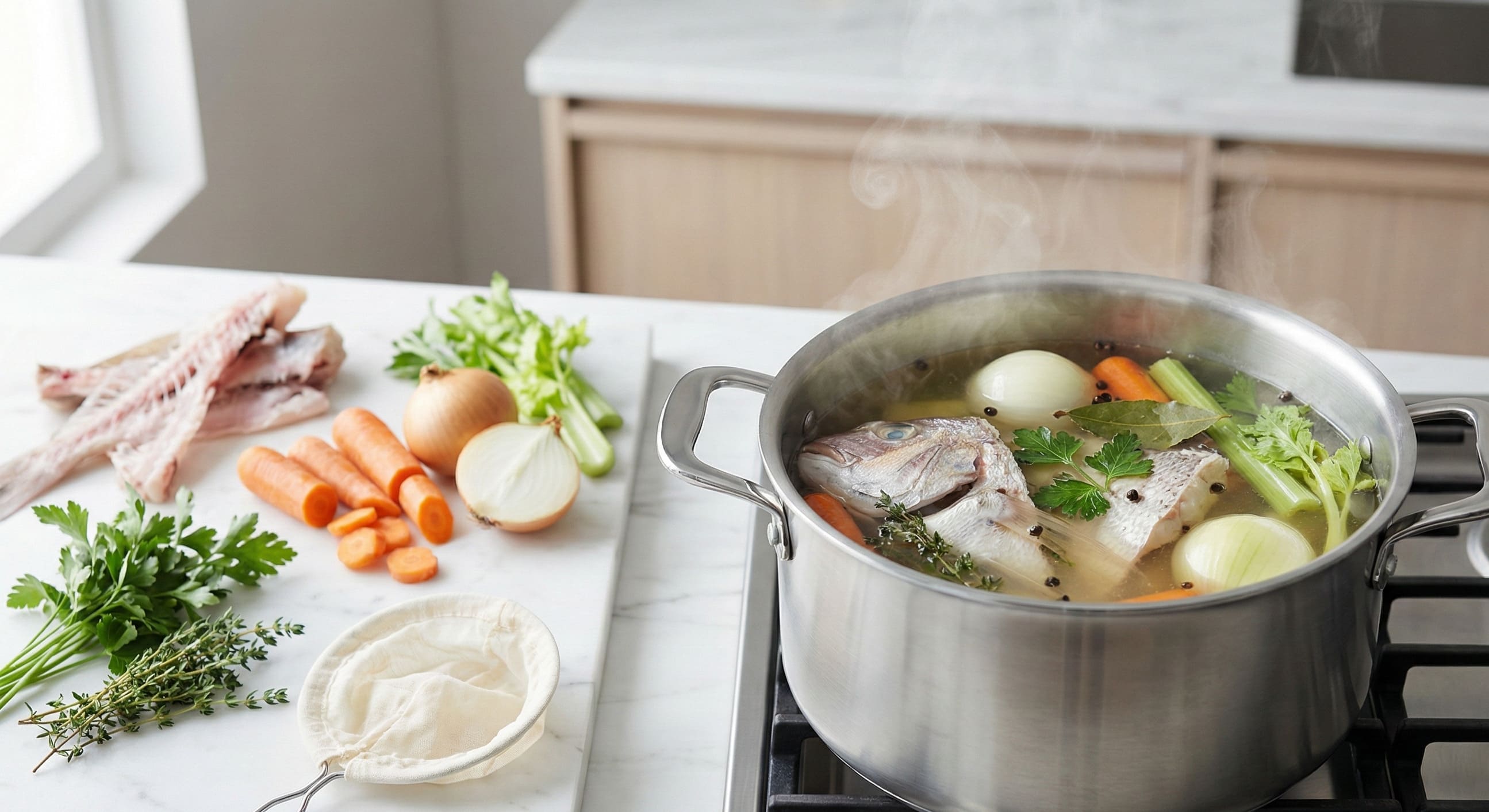
Fish stock teaches one of the best lessons in cooking: less is more.
Where chicken and beef stocks are about time and richness, fish stock is about freshness, restraint, and timing. The good news? You can make a beautiful, clear fish stock in under 30 minutes — you just need to treat it gently.
"This is one of the fastest ways to make seafood taste restaurant-good at home. Risotto, Marinara and Chowder will elevate to next level."
Chef Ian
Fish stock is not improved by hours on the stove. Its delicate flavour is extracted quickly, so keep the simmer gentle and stop cooking after approximately 20–30 minutes. Rapid boiling or prolonged cooking can break down the bones, cloud the liquid and create an unpleasant bitter or overly fishy result.
Preparation, gentle extraction and flavour control: Fish stock is quick to make, but it requires a lighter touch than chicken, beef or vegetable stock. Clean bones, restrained aromatics and controlled cooking produce a fresh, delicate result.
Choose suitable fish bones: Use frames, heads and trimmings from mild white fish such as snapper, barramundi, whiting or flathead. Avoid strongly flavoured oily fish such as salmon, tuna or mackerel unless you specifically want a much heavier stock.
Clean the bones thoroughly: Rinse the frames and heads under cold water, removing blood, gills and internal matter. These can create bitterness, cloudiness and an unpleasantly strong fish flavour.
Keep the aromatics delicate: Onion, leek, celery, parsley stalks, bay leaf and peppercorns should support the fish rather than dominate it. Use carrot sparingly, as it can add sweetness and alter the stock’s colour.
Sweat without colouring: Gently soften the vegetables before adding the fish bones and liquid. Browning them will create a darker, more robust flavour that may overpower the delicacy of the fish.
Start with cold water: Add only enough cold water to cover the bones. Too much water dilutes the stock, while gradually raising the temperature encourages controlled flavour extraction.
Simmer—never boil: For the stovetop method, keep the surface barely moving. Vigorous boiling can break down the delicate bones and emulsify fats and impurities into the liquid, resulting in a cloudy or harsh-tasting stock.
Do not overcook it: Fish bones release their flavour quickly. Approximately 20–30 minutes at a gentle simmer is sufficient on the stovetop. Longer cooking does not necessarily create a better stock and may introduce bitterness.
Skim gently: Remove foam and impurities from the surface without stirring them back into the liquid. This helps create a cleaner stock with a fresher flavour.
Strain without pressing: Allow the stock to pass naturally through a fine sieve or muslin. Pressing the bones and vegetables forces particles and bitter flavours into the finished liquid.
Leave seasoning until later: Do not salt the stock. Keeping it unseasoned allows it to be reduced, diluted and adjusted for the final dish.
Fish stock is about restraint. Clean the bones well, use subtle aromatics and control the temperature. The aim is not to create the strongest possible stock—it is to capture a clean fish flavour that adds depth without overpowering the finished dish.
Fish stock is excellent for making ahead and freezing in recipe-sized quantities. Once cooked, strain it immediately and discard the fish bones, vegetables and aromatics.
Cool the stock quickly by dividing it between shallow containers or placing the pot in an iced-water bath. Stir occasionally to help release the heat, taking care not to introduce water from the ice bath.
Do not leave a large pot of fish stock sitting on the bench to cool slowly. Cover and refrigerate promptly once the initial heat has reduced.
Store the cooled stock in a sealed container in the refrigerator and, for the freshest flavour, use it within 2–3 days.
Fresh fish stock should have a clean, delicate seafood aroma. If it develops an unpleasantly sour, strong or ammonia-like smell, discard it.
Freeze the stock in quantities suited to the way you cook:
Leave room for expansion in rigid containers, then label each portion with the stock type, quantity and date. For the best flavour and quality, use frozen fish stock within approximately three months.
Clearly label prawn, shellfish and combined seafood stocks so they are not confused with plain fish stock—particularly when cooking for someone with a shellfish allergy.
Thaw overnight in the refrigerator, warm gently from frozen in a saucepan or add the frozen stock directly to a recipe. Bring it rapidly to a thorough simmer before using.
Fish stock is quick to make but highly perishable. Cool it promptly, store it cold and freeze anything you will not use within the next few days. Smaller frozen portions give you much greater flexibility and prevent good stock from being wasted.
Replace the fish bones with raw prawn heads and shells. Rinse them well, then sauté in a little oil until they turn orange and become aromatic before adding the vegetables and cold water.
Gently simmer for approximately 20–30 minutes, skimming when necessary, then strain without pressing excessively.
Prawn stock has a sweeter, richer shellfish flavour than fish stock and is ideal for:
Use a combination of mild white-fish bones and prawn heads or shells. The fish provides a clean, savoury foundation while the prawns contribute sweetness, colour and a fuller seafood flavour.
Keep the quantities balanced so the prawn shells do not completely dominate the fish. This combination works particularly well for seafood soups, risotto, paella and sauces containing several varieties of seafood.
Prawn, crab, lobster or Moreton Bay bug shells can be used individually or combined. Crushing the larger shells slightly and sautéing or roasting them first helps release their flavour.
This produces a richer stock suited to bisques, chowders, seafood sauces and special-occasion dishes rather than delicate fish recipes.
Add ginger, spring onion, coriander stalks, garlic and a small amount of lemongrass to either the fish or prawn stock.
Use it for laksa, noodle soups, dumpling broths, seafood curries and Asian-style sauces. Keep the aromatics restrained so the seafood remains the main flavour.
Add garlic, tomato, fennel, parsley stalks and a small strip of orange peel. A pinch of saffron can also be included for a more luxurious variation.
This is a good base for paella, seafood soup, bouillabaisse and tomato-based seafood sauces.
Match the stock to the seafood in the final dish. Use fish stock when you want delicacy, prawn or shellfish stock when you want sweetness and richness, and a combination when the dish contains several types of seafood. Label frozen portions clearly, as each will bring a noticeably different character to the finished recipe.
Because it turns “nice seafood” into “restaurant seafood”:
Yes, there may be a slight difference. Chef Ian’s 20-minute Ninja pressure-cooker method extracts flavour from the fish bones and aromatics at a higher temperature in a sealed environment. This generally produces a fuller, more robust stock.
The stovetop method uses a very gentle 20–30-minute simmer and usually creates a lighter, more delicate fish stock. It is important not to boil it in an attempt to create more flavour, as this may make the stock cloudy, harsh or overly fishy.
If the strained stovetop stock is lighter than required, return the liquid - without the bones and vegetable - to a clean saucepan and reduce it gently until it reaches the desired intensity. If the pressure-cooked stock is too strong for a particular recipe, simply dilute it with a little water.
Judge stock by flavour rather than colour alone. A pale fish stock can still have plenty of flavour. Keep it unsalted so you can reduce, dilute and season it according to the dish in which it will be used.