
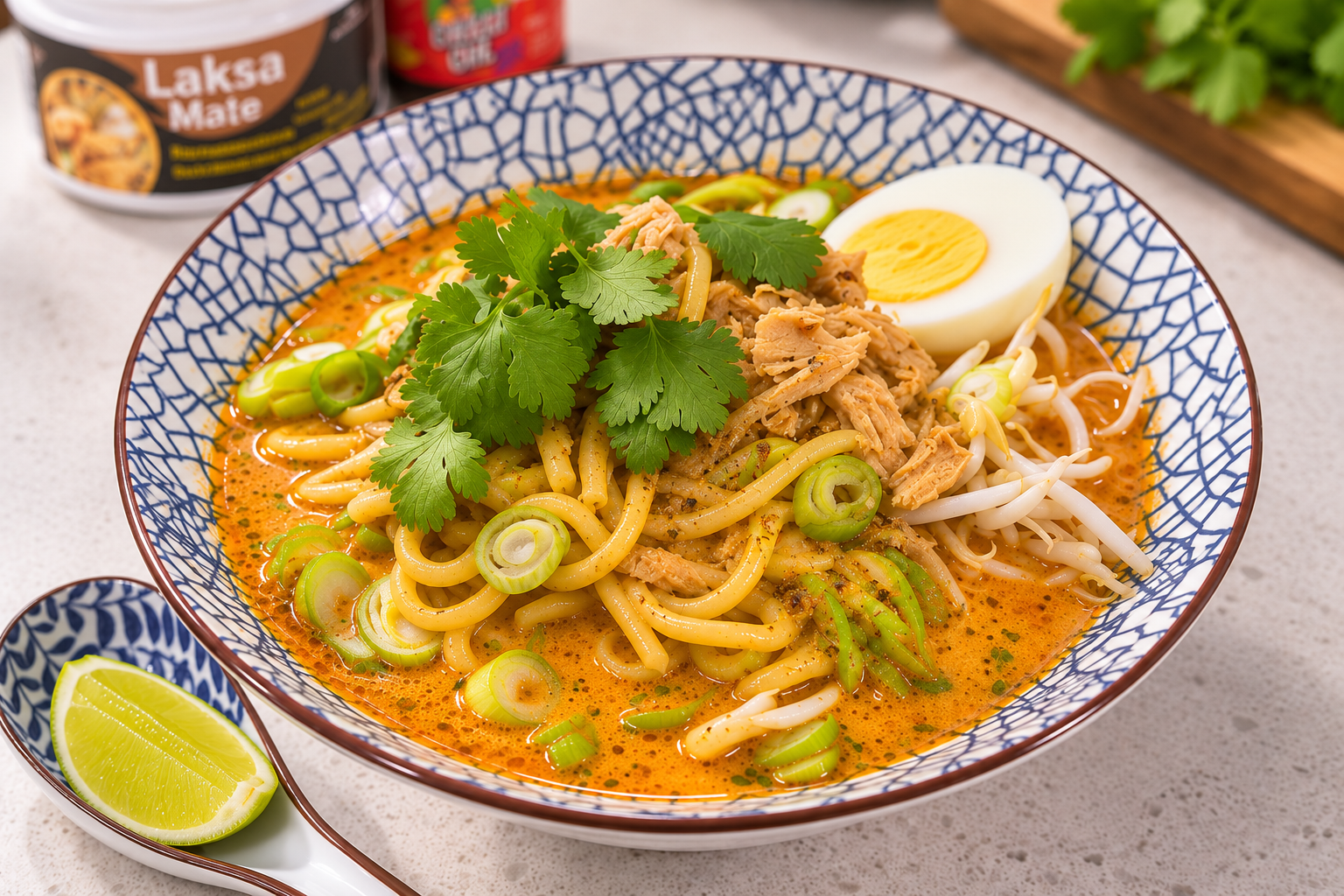
Our Eating for One – Seven Delicious Meals from One Tin of Tuna journey continues, and this time we're heading into the wonderfully fragrant world of Malaysian-inspired cooking!
Who would have thought a humble 95g tin of Sirena Italian Style Tuna in Oil could become such a delicious bowl of laksa?
For many home cooks, the idea of making laksa from scratch might sound a little daunting. There are spices to toast, aromatics to prepare and a long list of ingredients that aren't always sitting in the pantry.
But here's where a clever shortcut can make all the difference.
Using our Laksa Mate Paste as the foundation, Chef Ian creates a rich, fragrant coconut broth without the lengthy preparation traditionally associated with making laksa from scratch.
Add noodles, crisp bean sprouts, tender bok choy, tuna and half a boiled egg, then finish with fresh coriander, spring onion and a squeeze of lime.
And for those who enjoy a little extra heat, a spoonful of green sambal is a lovely optional addition.
It's warming, fragrant, full of flavour and surprisingly simple to prepare.
Better still, it's a complete meal for one, made using just a few fresh ingredients and some familiar pantry favourites.
Remember the spring onions and eggs we've already used in our earlier tuna recipes?
Well, they're making another appearance, but this time in a completely different dish!
The spring onion adds freshness and colour to our laksa, while half a boiled egg makes a lovely finishing touch.
And rather than buying an entirely new collection of vegetables, you can use whatever suitable greens you already have in the refrigerator.
It's another example of how a few versatile ingredients can take you in completely different culinary directions.
One tin of tuna, a little help from the pantry and another delicious meal for one!
Serve immediately while hot and fragrant.
Traditional laksa can be made with several types of noodles, depending on the regional style.
For this easy home version, use whichever Asian noodles you prefer.
Fresh egg noodles, rice noodles or thicker wheat noodles all work well.
Simply follow the packet cooking instructions and drain before assembling your bowl.
If fresh bok choy isn't available, frozen Asian vegetable mixes can be a convenient substitute.
Cook according to the packet instructions, drain thoroughly and arrange over the noodles before adding the broth.
If you prefer a milder flavour, begin with a smaller quantity of Laksa Mate Paste and increase gradually.
Additional coconut cream can soften the heat, although it will also make the broth richer.
Taste and adjust until you find the balance that suits you.
The foundation of a good laksa is its broth.
Laksa Mate Paste provides the concentrated aromatic ingredients, while coconut cream creates richness and helps bring the flavours together.
Gentle simmering allows the ingredients to combine without reducing the liquid too quickly.
Laksa is about balancing aromatic spices, richness, heat and acidity.
The coconut cream softens and rounds out the flavours, while fresh lime adds brightness when serving.
Blanching is a quick cooking technique that helps vegetables retain their colour and texture.
Bok choy should be tender but not overcooked, with the stems retaining a slight crunch.
Cooking the noodles separately gives you greater control over their texture.
It also prevents excess starch from thickening the broth unnecessarily.
Arrange the solid ingredients first, then add the hot broth.
This helps create an attractive finished bowl while ensuring the ingredients are warmed through.
Tinned tuna is already cooked, so there's no need to simmer it for an extended period.
Adding it to the bowl before pouring over the hot broth helps preserve its texture.
1. Let the laksa paste do the hard work
There's no need to prepare a long list of spices and aromatics when you're using a good-quality laksa paste.
The paste includes lemongrass, galangal, ginger, shallots, garlic and a substantial blend of spices - all those wonderful aromatic ingredients are already prepared and balanced in the paste.
Laksa Mate provides the flavour foundation, allowing you to create a delicious bowl of laksa with very little preparation.
2. Taste as you go
Laksa pastes vary in strength and heat.
Begin with the recommended quantity and taste your broth as it simmers. Adjust the balance of paste, coconut cream and water to suit your preference.
3. Don't boil the coconut broth too vigorously
A gentle simmer is all you need.
Boiling too rapidly can reduce the liquid and make the broth overly concentrated.
4. Keep your vegetables crisp
Bok choy doesn't need long cooking. Blanch until just tender, retaining a little crunch in the stems.
The same applies to bean sprouts — they should retain some of their fresh texture.
5. Cook your noodles separately
Noodles continue absorbing liquid after cooking.
Preparing them separately and adding the broth just before serving helps prevent them from becoming too soft.
6. Don't overcook the tuna
Remember, your Sirena Tuna is already cooked.
Gently break it into bite-sized pieces and arrange it over the noodles. The hot broth will warm it through without drying it out.
7. Keep the garnishes fresh
Add the coriander and spring onion at the very end.
Their fresh flavours and bright colours provide a lovely contrast to the rich coconut broth.
8. Don't forget the lime
A squeeze of fresh lime just before eating makes a surprising difference.
The acidity helps balance the richness of the coconut cream and brings freshness to the finished bowl.
9. Control your own heat
If you enjoy spicy food, add a little green sambal.
But remember, you can always add more heat — it's much harder to take it away!
10. Make the most of what you've already purchased
We've already used spring onion and egg in previous recipes in this series.
Here's another delicious way to use those familiar ingredients without having to purchase an entirely new shopping basket.
One of the things I love about cooking is showing people that delicious food doesn't have to be complicated.
Laksa might sound like something you'd only order at a restaurant, but with a good paste, a few fresh ingredients and a little understanding of how flavours work together, it's surprisingly easy to prepare at home.
And who would have thought that a simple 95g tin of tuna could become such a wonderfully fragrant meal?
That's the beauty of our Eating for One series.
We're not just creating seven recipes. We're discovering how familiar ingredients can take us in completely different directions.
One tin. One person. One delicious meal.
Laksa is one of those dishes where the presentation is almost as enjoyable as the eating!
Choose a deep serving bowl that will comfortably hold the noodles, vegetables and fragrant broth.
Place the cooked noodles in the centre, then arrange the bok choy and bean sprouts around them.
Add the tuna in generous pieces, rather than breaking it into tiny flakes, so it remains visible in the finished dish.
Position the half-boiled egg towards the side of the bowl, with the cut surface facing upwards.
Carefully pour the hot laksa broth around the noodles, allowing some of the ingredients to remain visible above the surface.
Finish with a generous sprinkle of fresh coriander and sliced spring onion.
Serve with a wedge of lime on the side.
For those who enjoy extra heat, a small spoonful of green sambal can be offered separately, allowing everyone to adjust the flavour to their liking.
Yes. The broth can be prepared ahead, cooled promptly and refrigerated.
Reheat thoroughly and prepare the noodles and vegetables fresh before assembling your bowl.
Laksa is best enjoyed freshly assembled, but much of the preparation can be completed ahead of time.
The broth can be prepared earlier in the day, cooled promptly and refrigerated in a covered container.
The bok choy can be washed and trimmed, the spring onion sliced and the coriander prepared in advance.
Hard-boil an egg, cool and refrigerate until required.
When you're ready to eat, reheat the broth thoroughly, cook the noodles fresh and blanch the vegetables.
Drain the tuna and assemble the bowl just before serving.
Chef's suggestion: Keep the noodles separate from the broth until serving. If left sitting in the soup, they'll continue absorbing liquid and can become overly soft.
For food safety, refrigerate prepared ingredients promptly and use within 1–2 days.
Don't have bok choy?
Try baby spinach, choy sum, snow peas or another suitable Asian green.
Choose vegetables that cook quickly and retain some texture.
A few finely sliced mushrooms, shredded carrot or extra bean sprouts can be added for additional colour and texture.
It's a great way to use small quantities of vegetables left in the refrigerator.
Use certified gluten-free rice noodles and check the Laksa Mate Paste, coconut cream, green sambal and other packaged ingredients for gluten-containing ingredients or relevant warnings.
For those who enjoy a little extra spice, add green sambal just before serving.
Alternatively, leave it out entirely and allow the Laksa Mate Paste to provide the main flavour.
An extra squeeze of lime can brighten the finished laksa, particularly if you prefer a slightly sharper contrast to the richness of the coconut cream.
What is laksa?
Laksa is a popular Southeast Asian noodle soup, particularly associated with Malaysia and Singapore.
There are many regional variations, but curry laksa commonly features a fragrant, spiced coconut broth served with noodles, vegetables and a choice of protein.
Can I really make laksa using tinned tuna?
Absolutely! Tinned tuna works surprisingly well in a fragrant coconut broth.
Because it's already cooked, simply add it to the bowl and allow the hot soup to warm it through.
Do I need to make my own laksa paste?
Not at all. Using Laksa Mate Paste makes this recipe much more accessible for everyday home cooking.
It saves time while providing the aromatic foundation for the broth.
Can I use coconut milk instead of coconut cream?
Yes. Coconut milk will create a lighter, less rich broth.
You may need to adjust the amount of additional water to achieve your preferred consistency.
What noodles should I use?
Fresh egg noodles, rice noodles or other suitable Asian noodles can all be used.
Choose your favourite and follow the packet instructions.
Does Laksa Mate Paste contain shellfish?
Yes. Laksa Mate Paste contains dried shrimp and shrimp paste, making it unsuitable for anyone with a crustacean allergy. Our Tuna Laksa also contains fish, soy and egg.
Can I make this Tuna Laksa gluten-free?
A gluten-free version may be possible using certified gluten-free rice noodles.
Laksa Mate Paste contains rice flour rather than wheat flour in its listed ingredients, but always check the manufacturer's gluten-free and allergen information, along with the other packaged ingredients, before preparing the dish.
Is this recipe dairy-free?
The Laksa Mate Paste and coconut cream contain no listed dairy ingredients.
Provided your noodles and other additions are also dairy-free, this recipe can be prepared without dairy.
Is Tuna Laksa suitable for vegetarians?
No. In addition to the tuna, Laksa Mate Paste contains dried shrimp and shrimp paste.
Is this laksa very spicy?
The heat will depend on the quantity and formulation of Laksa Mate Paste used.
Start with a smaller amount if you're sensitive to spice, and add extra green sambal only if desired.
Can I use different vegetables?
Certainly. Baby spinach, choy sum, snow peas, mushrooms and shredded carrot can all work well.
Why add the lime at the end?
Fresh lime juice adds acidity and brightness, balancing the richness of the coconut cream.
Adding it just before serving allows you to adjust the flavour to your own taste.
Can I use the oil from the tuna tin?
The oil can add flavour, but this recipe doesn't require it because the laksa broth already contains richness from the coconut cream and paste. You can reserve the oil for another suitable cooking use if desired.


