
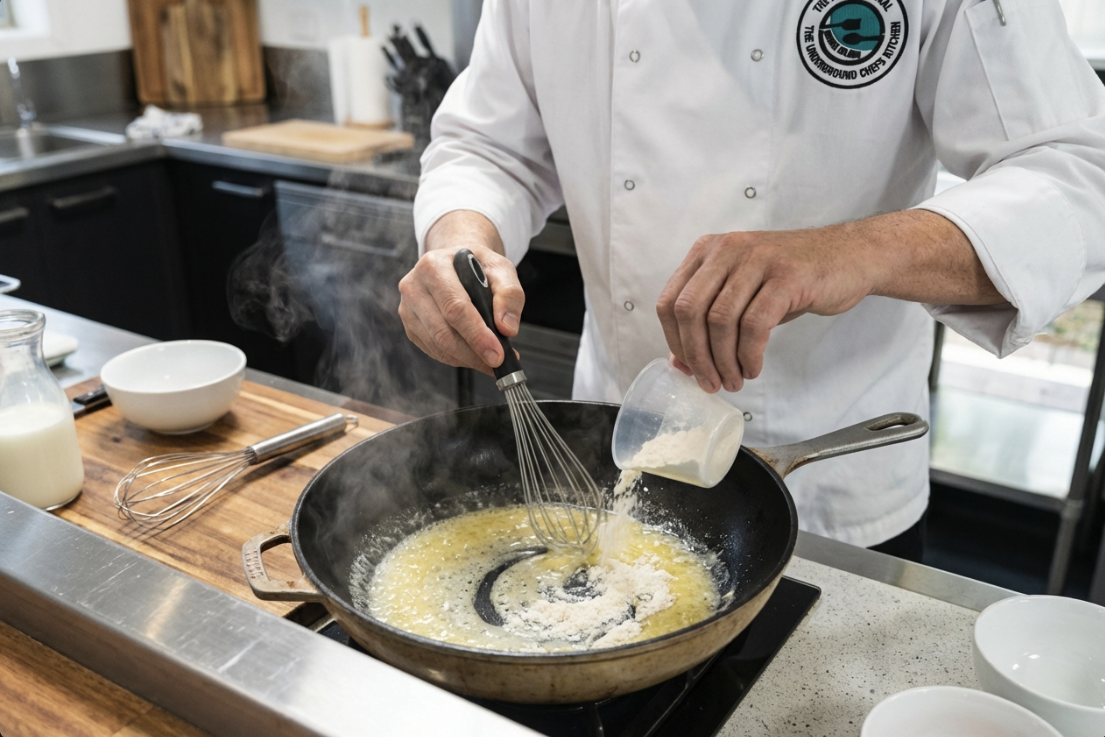
A perfect Béchamel is one of those quiet culinary triumphs — a sauce that feels luxurious but comes from just three simple ingredients. It’s all about balance, control, and a little patience.
This is one of the five classic mother sauces, and it’s the creamy base behind lasagne, gratins, soufflés and a stack of comfort dishes you already cook.
''Once you’ve nailed béchamel, you’ve got the base for half your comfort-food favourites. This is one of the secrets of my famous lasagne.''
Chef Ian
I melt the butter, stir in the flour, and cook it gently for a minute or two — I’m not browning it, just taking out the raw flour taste.
I add warm milk a little at a time, whisking as I go. Warm milk helps the sauce come together smooth and fast.
Once it’s smooth, I simmer gently and stir until it thickens to a velvety consistency.
I season with salt and white pepper, and if I’m going classic, I add a light pinch of nutmeg.
Béchamel can be made successfully in the microwave and may be useful for anyone without access to a stovetop.
Using the same ingredients as the original recipe:
Use a generously sized bowl because the milk will rise as it becomes hot.
A Thermomix or similar appliance that both heats and stirs can also make béchamel. Butter, flour and milk can be cooked at a controlled temperature while the machine provides continual stirring.
Follow the manufacturer’s instructions for béchamel or white sauce, as temperatures, speeds and timings vary between appliances.
A Ninja or other multi-cooker can be used on Sauté mode, essentially turning the cooking pot into a saucepan. Make the roux first, gradually whisk in the milk and continue stirring until thickened.
This is useful if the stovetop is occupied, although the technique itself remains the same as Chef Ian’s saucepan method.
There are appliances that can make béchamel for you, but learning the saucepan method is worthwhile. Once you understand how to make a roux, incorporate liquid and control the thickness, you have learnt a fundamental sauce-making technique that transfers to gravies, veloutés, cheese sauces and many other dishes.
Roux making, heat control and gradual incorporation: A smooth béchamel relies on understanding how butter, flour and milk work together. The ingredients are simple; the technique determines whether the finished sauce is silky and smooth or floury and lumpy.
Start with the roux: Melt the butter gently, then stir in the flour until completely combined. This mixture of fat and flour is called a roux and provides the thickening power for the sauce.
Cook out the raw flour: Allow the roux to cook gently for a couple of minutes, stirring continuously. For béchamel, you want a white roux, so the flour needs to cook without taking on significant colour. If it begins to brown, the finished sauce will have a darker colour and nuttier flavour.
Control the heat: Moderate heat is your friend. Too much heat can brown the butter, catch the flour on the bottom of the saucepan or scorch the milk.
Add the milk gradually: Begin by adding a small amount of milk to the roux and whisk until completely smooth before adding more. The mixture may initially become very thick—this is normal. Continue adding the milk gradually, whisking between additions, until the sauce becomes smooth and fluid.
Work outwards from the centre: When whisking, make sure you reach the base and corners of the saucepan where flour can hide and lumps can form.
Allow the starch to do its job: The sauce will thicken as it heats. Do not keep adding flour because it initially appears too thin. Give the flour time and heat to absorb the liquid and thicken properly.
Simmer gently to finish: Once all the milk has been incorporated, bring the sauce to a gentle simmer while continuing to stir. This finishes cooking the flour and removes any raw, starchy taste.
Know the right consistency: A finished béchamel should be smooth, glossy and thick enough to coat the back of a spoon while still flowing from it. Remember that the sauce will thicken further as it cools.
Season at the end: Once the consistency is correct, taste and season. Salt, white or black pepper and a little nutmeg are traditional choices, depending on how the béchamel will be used.
Too thick? Whisk in a little additional milk until you reach the desired consistency.
Too thin? Allow it to simmer gently for a little longer before making any further adjustments.
A few lumps? Whisk vigorously while the sauce is still hot. If necessary, pass the finished sauce through a fine sieve.
Caught on the bottom? Do not scrape the burnt section into the sauce. Immediately pour the unaffected sauce into a clean saucepan and continue cooking.
Béchamel is not about rushing. Cook the flour, add the milk progressively and give the sauce time to thicken. Once you understand a roux and learn to control the consistency, you have mastered a technique that becomes the foundation for many other classic sauces.
Béchamel can be made ahead and reheats very well, making it useful for lasagne, pasta bakes, gratins and other dishes where there are already several components to prepare.
To prevent a skin: Once the sauce is finished, transfer it to a shallow container and place a piece of baking paper directly against the surface of the béchamel. This reduces the air contact that causes a skin to form.
Cool quickly: Because béchamel contains milk, it should be cooled promptly and refrigerated at 5°C or colder. Dividing a larger quantity into shallow containers will help it cool more quickly. Food Standards Australia New Zealand
Refrigerate: Store covered in the refrigerator and, for best quality, use within approximately 3 days.
Reheat gently: Return the béchamel to a saucepan over low-to-medium heat and whisk as it warms. It will usually be thicker after refrigeration, so add a small splash of milk until it returns to the required consistency.
Freezing: Béchamel can also be frozen in an airtight container for around 2–3 months. The sauce may appear slightly separated or grainy when thawed, but gentle reheating and vigorous whisking will usually bring it back together.
Thaw overnight in the refrigerator before reheating.
When making béchamel ahead, leave it slightly looser than you ultimately require. It will thicken as it cools and again when reheated. A little milk and a good whisk are usually all that is needed to bring yesterday’s béchamel back to a smooth, silky sauce.
Béchamel is one of the five classic French mother sauces. Think of it as a foundation: once you can make a smooth béchamel, a few simple additions can completely change its flavour and purpose.
Mornay Sauce: Turn the heat down or remove the béchamel from the heat and stir through grated cheese until completely melted and smooth. Traditionally, Mornay uses cheeses such as Gruyère and Parmesan, giving it a deeper, more savoury flavour. Perfect for gratins, pasta bakes, croque monsieur, cauliflower cheese and vegetables.
Rich Cheese Sauce: For an indulgent, creamy version, add a splash of cream followed by your favourite good melting cheese. Cheddar gives a familiar, robust flavour, while combinations of cheeses can add greater depth. Use for macaroni cheese, baked potatoes, vegetables, pasta or poured over steamed cauliflower or broccoli.
Mustard Sauce: Whisk Dijon, wholegrain or your preferred mustard into the finished béchamel. Begin with a small amount, taste and build the flavour gradually. Excellent with chicken, pork, fish, ham or steamed vegetables.
Parsley Sauce: Fold plenty of freshly chopped parsley through the finished sauce just before serving. Adding the parsley at the end keeps its colour fresh and flavour bright. Particularly good with fish, ham, potatoes and steamed vegetables.
When adding cheese, lower the heat first and allow the residual warmth of the béchamel to melt it gently. Excessive heat can cause the cheese to become oily or grainy. Add a little at a time, stir until smooth and taste as you go.
That is the real value of learning the mother sauces: master the foundation once, then use it to create dozens of different dishes.
Béchamel and velouté are both classic French mother sauces and begin in much the same way—with butter and flour cooked together to form a roux.
The key difference is simply the liquid:
Béchamel is creamy, mild and dairy-rich, making it ideal for lasagne, gratins, cheese sauces and pasta bakes.
Velouté takes its flavour from the stock used - chicken, fish or vegetable - making it more savoury and versatile for poultry, seafood, vegetables and finished sauces such as Suprême, mushroom or white wine sauce.
Master the roux and you are already halfway to making both. Change the liquid and you change the sauce - that is the beauty of learning the foundations.
Yes. Replace the plain flour with a suitable gluten-free flour blend. Chef Ian has also used Lupins for Life Lupin Flour as an alternative.
Different gluten-free flours can have slightly different thickening strengths, so add the milk gradually and judge the sauce by its consistency rather than relying entirely on the quantity.
Note: Lupin is a recognised food allergen and will not be suitable for everyone.
Yes. Replace the butter with olive oil or a suitable dairy-free spread and substitute the milk with an unsweetened, unflavoured plant-based milk.
Soy or oat milk will generally give you a creamy, relatively neutral sauce. Almond and coconut-based alternatives can also work, but may add their own flavour.
When adapting béchamel, the technique remains the same: make your roux, add the liquid gradually and judge the finished sauce by its texture. The substitute may change, but the fundamental skill does not.
When making substitutions, think about both texture and flavour. Béchamel is a mild sauce, so the flavour of your flour, fat or milk alternative will be noticeable. Choose neutral products wherever possible and adjust the consistency as you cook.
Equipment