
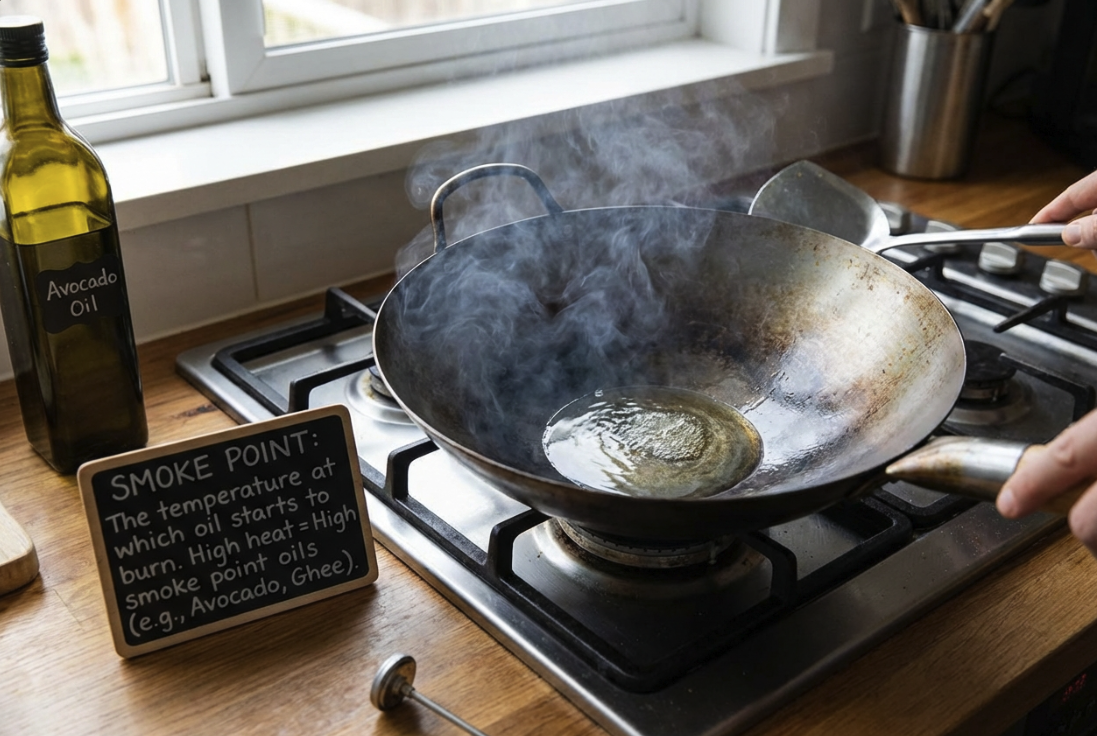
Most home cooks have seen it: the pan starts smoking, oil darkens, food browns too fast… and suddenly dinner tastes a bit off. Smoke point is the simple “chef knowledge” that fixes a heap of common cooking problems — and makes your food taste cleaner, crisper, and more consistent.
Every cooking oil has a temperature where it stops behaving and starts to break down — that’s the smoke point. Once you push past it, the oil begins to smoke, flavours turn bitter, and the chemistry shifts in a way that can make food taste harsh and feel heavy.
Chef translation: if the oil is smoking, it’s already past its best.
Smoke point isn’t a chef-only topic — it’s one of the fastest ways to improve everyday cooking.
Burnt oil tastes burnt. It coats everything.
Right oil = crisp, clean, golden.
Wrong oil = greasy, uneven, “why is this soggy?”
When oil is overheated it breaks down and can create irritating compounds in the smoke — that throat-catching, acrid cloud isn’t just “steam.”
No more guessing, no more smoky kitchens, no more “what did I do wrong?” moments.
After 48 years in commercial kitchens, I can tell you this: you can smell when oil has had enough.
Walk past a fish and chip shop and if the fryers are smoking and the air smells burnt and acrid… that oil is well past its prime. Food cooked in tired oil can leave that soapy-metallic aftertaste and sit heavy.
At home, same rule: if your pan starts smoking, ditch the oil and start again.
And here’s the classic mistake I’ve seen a thousand times in busy kitchens:
tickets pile up → someone turns the heat up.
It doesn’t cook the food faster. It just destroys the oil faster.
You don’t need 12 oils. You need the right oil for the job.
Use neutral, heat-stable oils: rice bran, avocado, peanut, refined canola/sunflower. These are your workhorses.
Light olive oil, grapeseed, refined coconut, non-toasted sesame.
Extra virgin olive oil, toasted sesame, walnut, flaxseed — flavour oils that shine after cooking, not during.
Important chef note: Smoke point matters — but it’s not the only factor. Some oils (like extra virgin olive oil) can be more heat-stable than people assume because of their oxidative stability, even though their smoke point isn’t sky-high.
Storage tip: keep oils cool and dark, not parked next to the cooktop.
You can’t “save” burnt oil. It’s done.
“Oil is an ingredient, not just something to stop food sticking. Treat it right — match it to the job — and your cooking instantly gets cleaner, crispier, and more ‘restaurant’ without doing anything fancy.”
Chef Ian