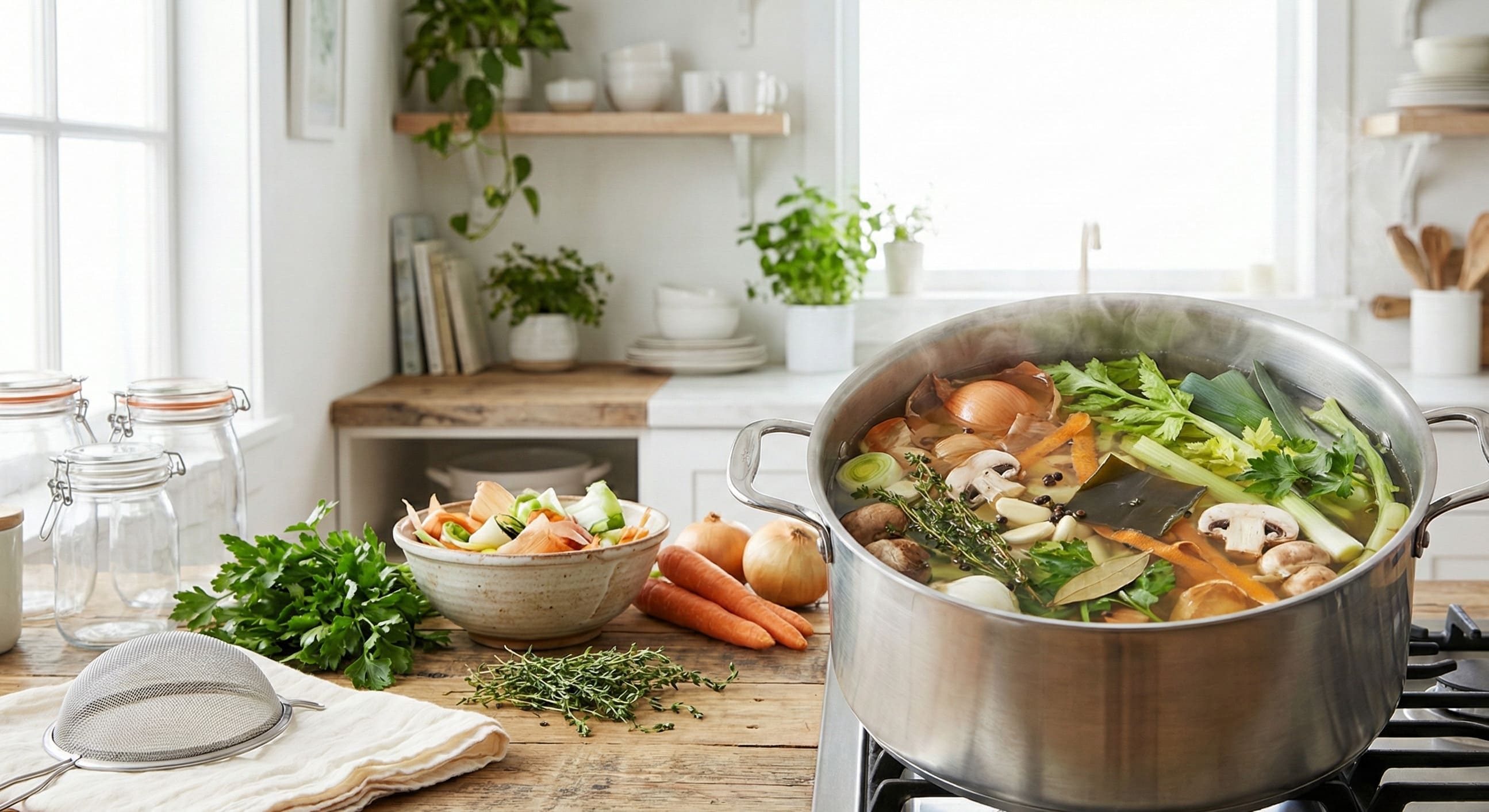
Simple, clean, versatile — and full of flavour
Vegetable stock proves something I love: you don’t need meat for big flavour.
This is the quickest stock to make, the easiest to keep on hand, and the one that quietly upgrades everything — soups, risottos, sauces, even cooking grains. Plus, it’s the best way to turn everyday veg bits into something genuinely useful.
What you’ll learn
- How to make a clean, balanced veg stock (not bitter, not “muddy”)
- Which scraps are great — and which ones ruin it
- The simmer time that keeps it fresh and light
- How to portion and freeze so it’s always ready
You’ll need
- Medium–large pot (or pressure cooker)
- Veg scraps + a few fresh additions (see below)
- Cold water
- Fine strainer or muslin
- Containers for storing/freezing
The simple formula (what goes in)
The “always good” veg
- Onion skins/ends (big flavour)
- Carrot ends/peels
- Celery ends/leaves
- Leek tops
- Mushroom stems (adds lovely savoury depth)
Herbs + flavour builders
- Bay leaf
- Parsley stems
- Thyme
- Peppercorns
- Garlic (optional)
- Small piece of kombu (optional, for gentle umami)
What I avoid (keeps it clean)
- Lots of broccoli/cauliflower/cabbage (goes bitter/sulphury)
- Too much beetroot (turns everything purple)
- Starchy scraps like heaps of potato peel (can cloud it)
Chef’s rule: veggie stock is best when it stays light and aromatic — don’t throw the whole fridge at it.
Method (stovetop)
- I add my veg and herbs to the pot and cover with cold water.
- I bring it up slowly to a gentle simmer (never a rolling boil).
- I let it simmer 45–60 minutes — that’s plenty for a clean, bright stock.
- I strain it through a fine strainer or muslin.
- I cool it quickly, then portion and store.
Pressure cooker option (fast version)
Same ingredients, same idea — just quicker. I still keep it clean and simple, then strain and store as usual.
Chef’s Tricks (this is what makes it taste “proper”)
- Don’t boil it. Boiling makes it murky and can pull harsh flavours.
- Don’t overcook it. Veg stock can go from fresh → dull if it runs too long.
- Don’t salt it. Season the dish you’re cooking (stock reduces, salt concentrates).
- Taste at 45 minutes. If it tastes good, you’re done.
- Want deeper flavour? Roast onions/carrots/celery first — but only when you want a darker, richer style.
Storage (easy wins)
- Fridge: a few days
- Freezer: portion it (small containers or ice-cube trays) so you can grab “just enough” anytime.
Final word from Chef Ian
"Veg stock is the quickest ‘liquid gold’ you can make — and once you’ve got it in the freezer, weeknight cooking gets a whole lot easier."
Chef Ian