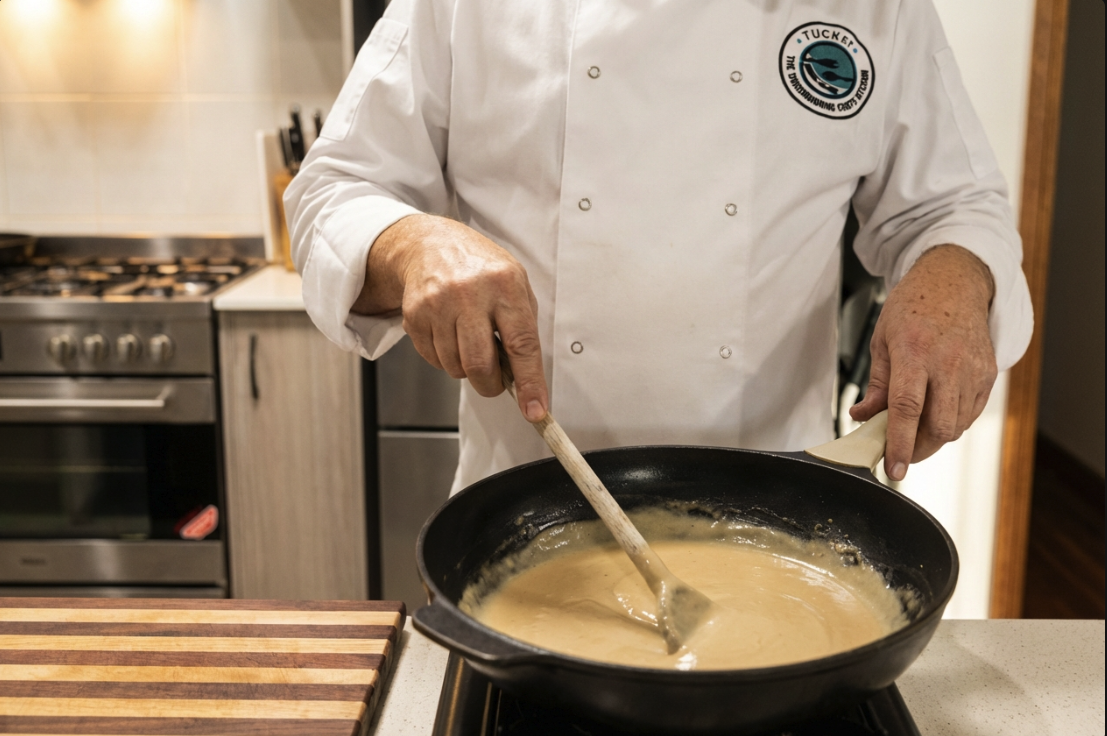
The stock-based sauce that makes dinner feel “restaurant”
Velouté is one of those quiet chef tricks that instantly lifts a meal. It’s the bridge between “good home cooking” and “how did you make this taste so good?”
Instead of using milk like a béchamel, velouté uses real stock — chicken, fish, or vegetable — which gives you a savoury depth and a cleaner finish. Once you’ve got it, you can turn roast chicken, grilled fish or veg into something seriously polished.
What you’ll learn
- How to make a smooth, lump-free velouté (no panic whisking)
- Why stock gives better flavour than milk in savoury sauces
- How thick to make it (and how to fix it if it goes too thick)
- Easy variations you can do once the base is nailed
You’ll need
- Medium saucepan
- Whisk
- Butter
- Plain flour
- Your chosen stock (chicken, fish, or vegetable)
- Salt + white pepper
- Fine strainer (optional, for extra-smooth finish)
The method (simple, smooth, foolproof)
1) Make a roux
I melt butter in a saucepan, then stir in plain flour. I cook it gently for a minute or two — I’m not browning it, just taking out that raw flour taste.
2) Add warm stock gradually
I add stock a little at a time, whisking as I go. Warm stock helps the sauce come together faster and smoother (cold stock can make it claggy).
3) Simmer to thicken
Once it’s smooth, I let it simmer gently until it reaches a silky, pourable consistency. It should coat the back of a spoon.
4) Season and finish
I season with salt and white pepper, then strain if I want it ultra-smooth.
Chef’s Tricks (the stuff that saves you)
- Warm stock is your friend. Keeps it smooth and speeds things up.
- Whisk early, then stir steady. Don’t walk away once it starts thickening.
- Too thick? Add a splash more stock and whisk it back.
- Too thin? Simmer a little longer (gentle heat, keep it moving).
- Want it extra silky? Strain it — it’s a chef move and takes 10 seconds.
Easy variations (once the base is done)
This is where velouté earns its keep — one base, lots of directions:
- Suprême sauce (for chicken): velouté + a little cream + butter
- Vin blanc sauce (for seafood): velouté + white wine + a touch of cream
- Mushroom velouté (veg option): velouté + sautéed mushrooms
How I use velouté (quick wins)
Once it’s made, velouté is a finish sauce — it’s what you spoon over the top right before serving.
- Roast chicken / schnitzel / pan-fried thighs: spoon velouté over and finish with a squeeze of lemon or a sprinkle of herbs.
- Grilled fish or prawns: use fish stock velouté, add a splash of white wine and you’ve got instant seafood sauce territory.
- Veg + grains: pour over steamed veg, mash, or rice to turn a simple plate into something silky and satisfying.
- Pie filling shortcut: stir velouté through leftover chicken and veg and you’ve basically built a creamy pie base (without needing cream).
- Soup upgrade: use it to thicken a light soup (think chicken + veg) into a more elegant bowl.
Chef tip: Start with a little — velouté is meant to lift the dish, not drown it.
Final word from Chef Ian
''Once you’ve got velouté sorted, you’ve got a ‘make it fancy’ button for weeknight dinners.''
Chef Ian