
Cooks Collection Series Hub
February 9, 2026

Rethinking Your Pantry — Stocks & Jus

Week 5 of Rethinking the Pantry brings it home with the ultimate flavour foundation: stocks and jus. Learn why real stock beats powders and supermarket cartons, how to use stock and jus like a chef, and how to upgrade one everyday meal with a simple stock swap.

The quiet hero of great cooking (and the fastest way to make everything taste better)

If I had to choose one pantry upgrade that improves almost every meal you cook, it’s this:

Real stock and jus.

Not because it sounds fancy - but because it’s the flavour base behind nearly everything you’ve ever eaten and loved in a good restaurant.

Escoffier (the godfather of modern French cooking) built whole kitchen systems around one idea:
without stock, you’re cooking without a foundation.

And he was right.

Why stock matters more than you think

Stock is where flavour starts — quietly, in the background.

It brings:

  • depth (that slow-cooked savoury richness)
  • body (a sauce that feels glossy and coats properly)
  • balance (roundness, not just salt)
  • real savoury flavour without needing “20 ingredients”

If your cooking sometimes tastes “fine” but not “wow”… stock is often the missing piece.

Real stock vs powder vs supermarket cartons

Let’s call it straight — these aren’t the same thing.

1) Stock powders & cubes

They’re built to deliver salt + flavouring, fast.
They can help in a pinch, but they rarely give you:

  • clean savoury depth
  • natural body
  • that “restaurant finish”

They’re more like seasoning than stock.

2) Supermarket liquid stock

Some are okay, but many are designed for shelf life and cost - which often means:

  • lighter flavour
  • more “vegetable sweetness” than savoury depth
  • little body (no gelatin feel)

Useful. But not transformational.

3) Real stock / real jus

This is where the magic lives.

Proper stock and jus give you:

  • natural gelatin/body (especially with chicken, veal, beef)
  • full savoury flavour from roasted bones and slow extraction
  • clean ingredients without the “chemical aftertaste”
  • better results with less effort

And yes — it can also be a healthier base because you’re building meals from real ingredients, not relying on flavour powders to do the heavy lifting.

Two ways to do it (both are “Underground Chef approved”)

You’ve got two smart options depending on your life.

Option A: Make your own (when you can)

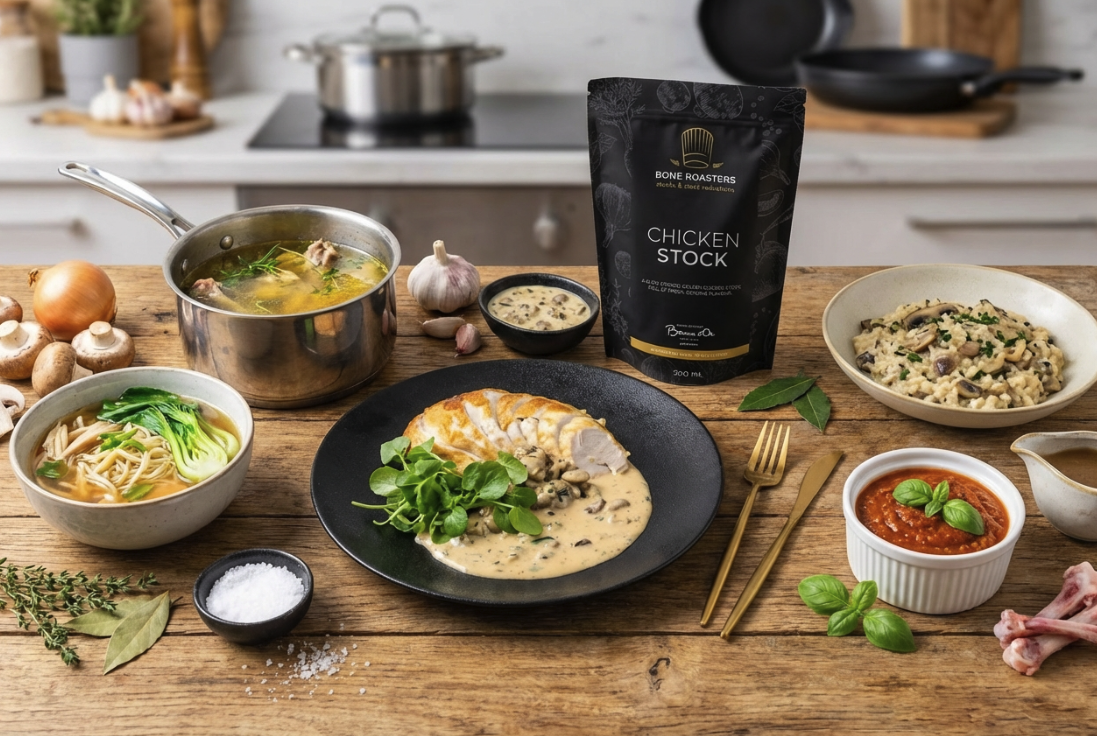
If you enjoy the process, homemade stock is brilliant - and with the Ninja 11-in-1, it becomes far more efficient.

Why Ninja stock works so well:

  • pressure cooking pulls flavour out quickly
  • it’s more hands-off
  • you still get a clean, rich result
  • you can batch it and freeze in portions

👉 Follow the tutorials, build a routine, and you’ll always have stock ready to go.

Option B: Use high-quality retort packs (when time isn’t your friend)

And here’s the honest truth: time isn’t always your friend.

That’s why having a pantry that works means keeping quality shortcut foundations on hand - the kind that taste like they came from a pot, not a packet.

That’s where Bone Roasters (stocks/jus) and Silver Sea (seafood foundations) shine.
Retort packed doesn’t mean “inferior” - it means shelf-stable without needing preservatives, and ready when you are.

So if you’re building a stress-free cooking system, this is one of the smartest tools you can keep within arm’s reach.

Stock & Jus Cheat Sheet

The one rule

If a recipe says “add water”… ask: “Could stock do the job instead?”
Water adds moisture. Stock adds flavour.

What to keep in your pantry

Always handy (minimum kit)
  • Chicken stock (most versatile)
  • Veal or beef stock / jus (best for sauces, gravies, red-meat dishes)
  • Seafood stock (for prawn dishes, paella, chowders, seafood pasta)

Quick swaps that instantly improve meals

Rice + grains
  • Cook rice, quinoa, lentils, couscous in stock instead of water
  • Add a bay leaf or a little onion if you want (optional)
Sauces + gravies
  • Deglaze a pan with stock instead of water
  • Reduce gently for a fast pan sauce
  • Finish with butter (optional) for gloss
“Wet dishes”
  • Use stock in curries, casseroles, savoury mince, bolognese, shepherd’s pie filling
  • You’ll notice the difference immediately — deeper, rounder flavour
Soup + noodles
  • Start soups on stock and you can keep ingredients simple
  • Laksa, ramen-style bowls, chicken noodle soup — stock makes the bowl
Vegetables
  • Steam/poach veg with a splash of stock for a subtle savoury boost
  • Add a spoon of jus to roasted veg juices for an instant “restaurant edge”

When to use stock vs jus

Stock = base + volume

Use when you need liquid plus flavour (soups, risotto, curries, braises).

Jus = punch + finish

Use when you want depth and gloss (gravy, steak sauce, mince dishes, reductions).

Fast “cheat sauces” (30–90 seconds)

1) Quick gravy

Warm jus + a splash of stock, simmer 2–3 minutes → done.

2) Pan sauce for steak or chops

After cooking meat: add stock, scrape the pan, simmer 1–2 minutes, finish with pepper + a knob of butter.

3) Weeknight pasta booster

Warm stock + a spoon of relish, add pasta water, toss through pasta → instant depth.

Storage + prep tips

  • Freeze stock in 1-cup portions (muffin trays work brilliantly)
  • Label: chicken / beef / seafood + date
  • Fridge rule: use opened stock within a few days (smell test always)
This week’s challenge (easy win)

Pick ONE:

  • Cook rice in stock instead of water, or
  • Turn pan juices into a sauce with stock, or
  • Add ½ cup stock to your mince dish and taste the difference.

Small change. Big result.

Chef Ian’s final thought

Stock is the quiet hero because it does its work without asking for attention. It’s the background flavour that makes simple meals taste like they’ve been looked after. Make it when you can — and when you can’t, keep a quality option in the pantry so you’re never stuck cooking “flat food” again. That’s cook smarter, not fancier.

Chef Ian