
Cooks Collection Series Hub
February 9, 2026

Rethinking Your Pantry — Sauces & Condiments

Week 3 of Rethinking the Pantry introduces the dual-purpose rule for sauces and condiments. Learn how to spot “keeper” sauces, use them as marinades, finishers, or bases, and turn one bottle into multiple meals — with less clutter and more flavour.

Sauces & Condiments (and the “dual-purpose” rule)

The simple pantry gatekeeper that stops condiment clutter

This is the whole point of Rethinking the Pantry: small shifts that actually stick.

This week we’re tackling the category that can either:

  • make your pantry feel like a chef’s toolkit, or
  • turn it into a condiment graveyard.

Yep… sauces and condiments.

From here on, we only let a sauce earn shelf space if it passes one simple test:

Can I use it in at least TWO different meals, in TWO different roles?

If yes — it stays.
If no — it’s a one-trick pony that’ll sit there for 6–12 months until it’s forgotten (or worse… replaced with another one-trick pony).

And we’re done with that.

Why sauces get out of control so easily

Sauces are sneaky.

You buy one for:

  • “that stir-fry”
  • “that salad”
  • “that taco night we did once”

They feel small… harmless… useful…

Until you open the fridge and realise you’ve got 14 bottles and still no idea what’s for dinner.

The problem isn’t the sauce.
It’s the label you’ve accidentally put on it:

“This is only for ____.”

This week, we change that.

The chef-style mindset shift

Instead of asking:
“What recipe is this sauce for?”

Ask:
“What job does this sauce do?”

Most sauces do one (or more) of these jobs:

  • Acid (brightness)
  • Sweetness (balance)
  • Heat (excitement)
  • Umami (depth)
  • Aromatics (garlic, onion, herbs)

Once you know the job, you can move it around the kitchen.

That’s when your pantry starts making sense.

The 3 roles every “keeper” sauce should play

Here’s the cheat code. A sauce is a keeper if it can do at least two of these:

1) Marinade

Coats, tenderises, seasons, builds flavour before cooking.

2) Finisher

Added at the end for punch — brightness, sweetness, heat, aroma.

3) Base

A starter for something bigger (mixed with stock, yoghurt, mayo, oil, pasta water).

If you can answer “yes” to two of those… it earns its place.

One sauce, multiple jobs (simple examples that actually work)

1) Garlic + Eschalot Vinaigrette

Most people think: salad dressing
Chef thinking: acid + aromatics + oil = instant flavour base

Try it as:

  • Marinade: chicken, fish, tofu, mushrooms, veg
  • Roast veg finisher: toss through hot roasted veg
  • Warm grain salad: stir through warm rice/lentils/quinoa
  • Quick pan sauce: warm gently, add stock, toss through pasta
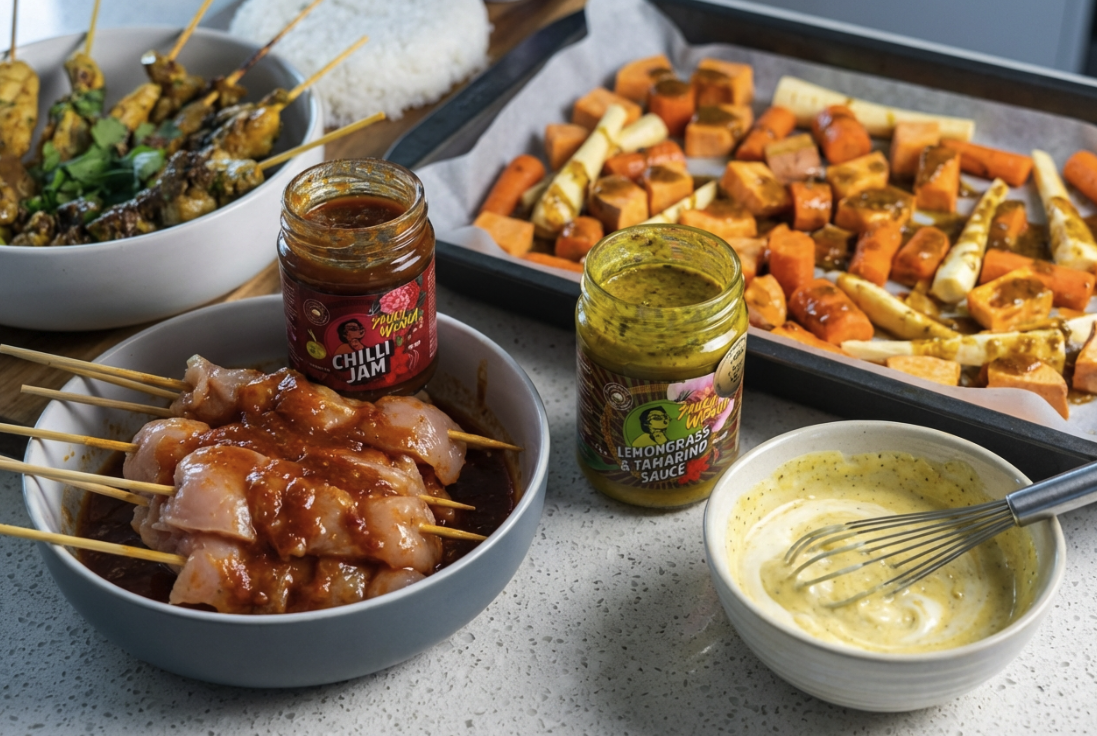
2) Chilli Jam

Most people think: cheese board
Chef thinking: sweet + heat = glaze, sauce starter, sandwich hero

Try it as:

  • Glaze: brush on wings, sausages, salmon, roasted pumpkin
  • Stir-fry starter: spoon of chilli jam + soy + lime
  • Sandwich upgrade: under roast meat or grilled cheese
  • Dip base: mix into mayo or yoghurt

3) Green Sambal (or any punchy chilli condiment)

Most people think: noodles only
Chef thinking: finisher + flavour booster

Try it as:

  • Finish bowls: eggs, rice bowls, leftovers
  • Mix into mayo: instant burger or wrap sauce
  • Toss through veg: beans, broccoli, cabbage, greens
  • Soup booster: small spoon at the end (not the start)

This week’s challenge

Use ONE sauce/condiment in TWO meals — in TWO different roles

Pick one sauce you already have and use it twice.

But here’s the important bit:
don’t use it the same way both times.

Examples:

Garlic + Eschalot Vinaigrette

  • Meal 1: marinade chicken
  • Meal 2: finisher for roasted veg or warm pasta

Chilli Jam

  • Meal 1: glaze sausages or wings
  • Meal 2: base mixed into mayo for a sandwich sauce

Plum Sauce

  • Meal 1: base for a stir-fry
  • Meal 2: glaze for pork or roasted carrots

Why this matters (what’s in it for you)

When your sauces multitask:

  • you buy fewer bottles
  • you waste less
  • you find things faster
  • your food tastes better with less effort
  • your pantry and fridge feel calmer

Fewer products. More meals. More confidence.
That’s the Underground Chef way.

Final thought from Chef Ian

Sauces aren’t there to collect dust — they’re there to do jobs.
If a sauce can’t pull double duty, it doesn’t deserve shelf space. Once you start using sauces as tools (not “that one recipe ingredient”), your whole pantry gets easier to cook from.

Chef Ian