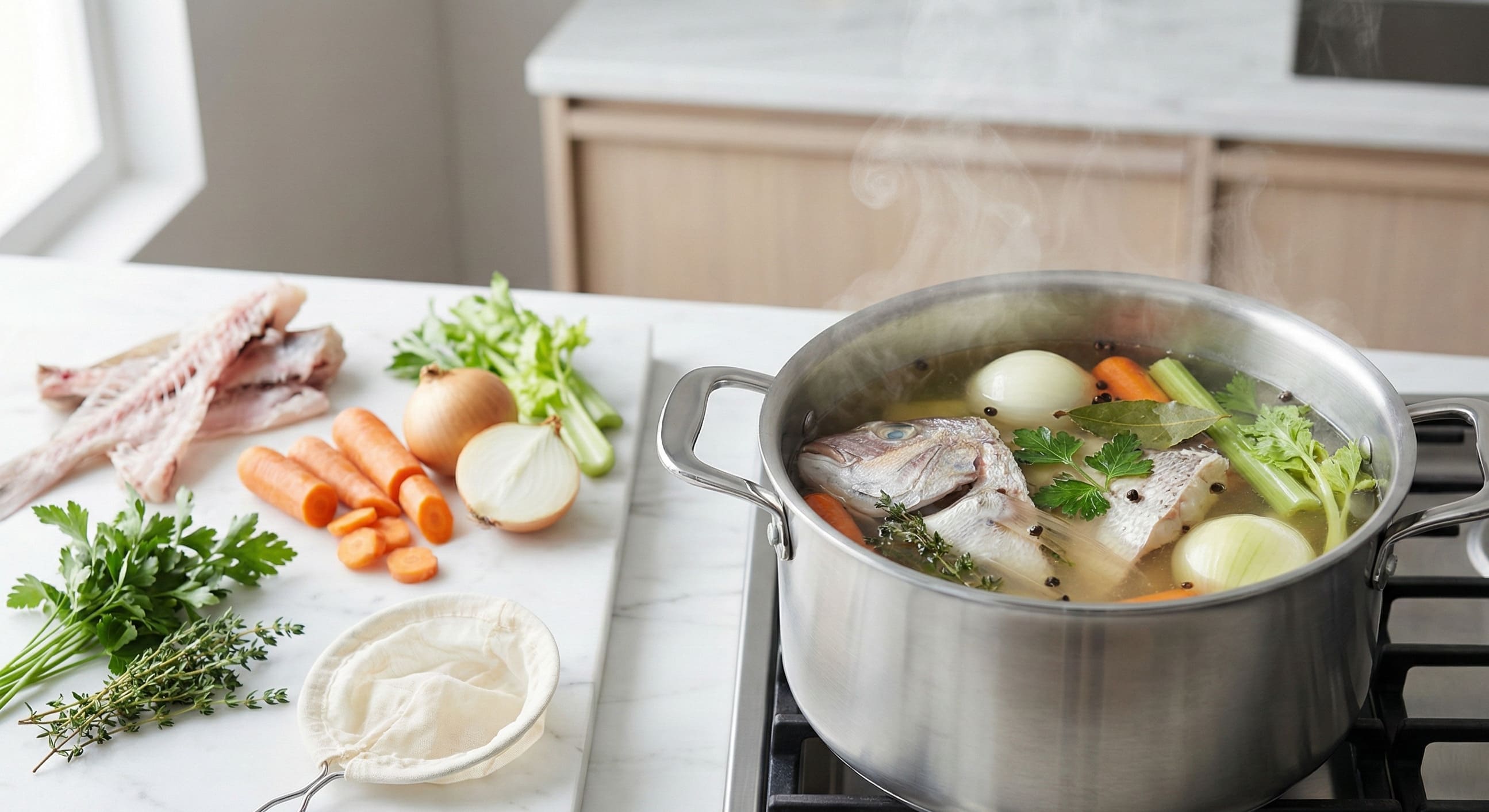
Light, clean flavour in under 30 minutes
Fish stock teaches one of the best lessons in cooking: less is more.
Where chicken and beef stocks are about time and richness, fish stock is about freshness, restraint, and timing. The good news? You can make a beautiful, clear fish stock in under 30 minutes — you just need to treat it gently.
What you’ll learn in this tutorial
- How to keep fish stock clean and aromatic (not fishy)
- The simple steps to avoid bitterness and cloudiness
- Why fish stock is fast — and what happens if you overcook it
- Which fish frames work best (and which to avoid)
- How to strain and store it so it’s ready for seafood soups, risottos and sauces
Why make fish stock?
Because it turns “nice seafood” into “restaurant seafood”:
- seafood chowders and soups get depth without heaviness
- risottos taste like the ocean (in a good way)
- sauces become glossy and clean
- and you’re using frames that often get wasted
You’ll need
- Medium stockpot
- 1–1.5 kg fish frames and heads (non-oily fish like snapper or whiting)
- Onion, carrot, celery (roughly chopped)
- Bay leaf, parsley, peppercorns, thyme
- Cold water
- Fine strainer or muslin cloth
Method (quick + clean)
- Rinse fish frames quickly if needed, and check for any obvious bloodline/gills (that can muddy flavour).
- Add frames, veg and aromatics to a pot.
- Cover with cold water.
- Bring up gently to a bare simmer — do not boil.
- Skim any foam that rises early on.
- Simmer 20–30 minutes max.
- Strain through a fine strainer or muslin.
- Cool quickly and store.
Chef’s Tricks (this is how you keep it “perfect”)
- Avoid oily fish frames (salmon, mackerel, sardines) — they overpower and can taste strong.
- No boiling: boiling makes stock cloudy and can taste bitter.
- Don’t overcook: fish stock goes from fresh → flat → bitter fast if pushed too long.
- Keep aromatics simple: you want clean seafood flavour, not a veggie soup base.
- Don’t salt the stock: season the dish you use it in.
Where I use it
- seafood soups and chowders
- prawn/fish risottos
- seafood sauces
- quick noodle broths
Final word from Chef Ian
"This is one of the fastest ways to make seafood taste restaurant-good at home. Risotto, Marinara and Chowder will elevate to next level."
Chef Ian