
There are some recipes that prove just how valuable a good stock can be.
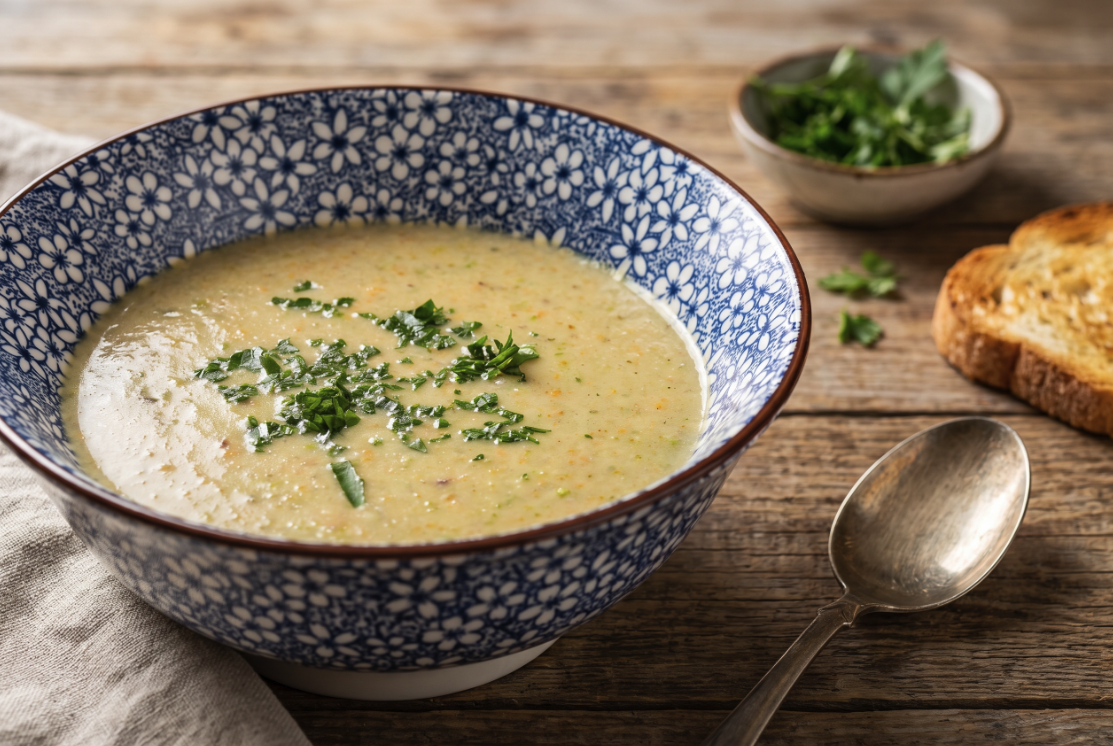
This Cream of Chicken & Vegetable Soup is one of those beautiful Kitchen 101 basics — simple, comforting, practical, and built around the flavour of a well-made chicken stock.
If you have made Chef Ian’s homemade chicken stock from the previous tutorial, this is a perfect way to use it. If not, a good-quality prepared stock such as Bone Roasters Chicken Stock will also work beautifully.
The soup is thickened using a classic beurre manié — a simple mixture of softened butter and flour. This is one of those old-school chef techniques that is very useful to understand, because once you learn it, you can use it to thicken soups, sauces and stews with confidence.
From there, we add mixed vegetables, finish with cream, and season properly with Olsson’s Sea Salt Flakes and Spice Lab Mélange of Peppercorns.
It is simple food, but it is generous, warming and very useful to have in the fridge.
Recipe Course: Soup / Light Meal
Cuisine: Classic / Kitchen 101
Skill Level: Beginner
Serves: Approximately 10–12 portions
Prep Time: 10 minutes
Cook Time: 15 minutes
Total Time: 25 minutes
4 litres chicken stock, homemade or Bone Roasters Chicken Stock
1 kg mixed vegetables, diced
250 ml cream
100 g butter, softened
100 g plain flour
Olsson’s Sea Salt Flakes, to season
Spice Lab Mélange of Peppercorns, to season
Chopped parsley, to garnish
Place the softened butter and plain flour into a bowl.
Mix together until it forms a smooth paste. This is called a beurre manié and will be used to thicken the soup.
Pour the chicken stock into a large pot and bring to the boil.
Once the stock is boiling, gradually whisk in the beurre manié.
Add it a little at a time, whisking well after each addition so it melts smoothly into the stock.
Continue cooking for approximately 5 minutes, stirring well, to allow the flour to cook out and the soup to thicken.
Add the mixed vegetables and stir through.
Cook for a further 5 minutes, or until the vegetables are tender but still have some colour and texture.
Reduce the heat to a gentle simmer.
Add the cream and stir through gently.
Taste and adjust the seasoning with Olsson’s Sea Salt Flakes and Spice Lab Mélange of Peppercorns.
Ladle into bowls and finish with chopped parsley.
Serve hot.
The flavour of this soup starts with the stock.
A good chicken stock gives the soup body, depth and savoury flavour before anything else is added. That is why learning to make stock is such an important Kitchen 101 skill.
Once you have a good stock, you do not need to overcomplicate the recipe. The vegetables add sweetness, colour and texture, while the cream gives the soup a soft, comforting finish.
The beurre manié is the key technique here. By mixing softened butter and flour together before adding it to the hot stock, you create a smooth thickening paste that can be whisked into the soup gradually.
It is a simple method, but it is a very useful one.
This is the sort of recipe you can make in a generous batch, enjoy for lunch or dinner, and reheat over the next few days.
Make sure the butter is softened before mixing it with the flour. This makes it much easier to create a smooth beurre manié.
Add the beurre manié gradually. If you add it all at once, it can be harder to whisk through smoothly.
Always cook the soup for a few minutes after adding the flour and butter mixture. This helps cook out the raw flour taste and gives the soup a better texture.
Cut the vegetables evenly so they cook at the same time.
Add the cream at the end and warm it through gently. Avoid boiling the soup hard once the cream has been added.
Taste the soup after adding the cream, as cream will soften the seasoning. You may need a little more salt or pepper before serving.
Beurre manié is a classic French thickening technique.
It simply means softened butter and flour mixed together into a paste.
The butter coats the flour, which helps it disperse more smoothly into hot liquid. As the flour heats, it thickens the soup or sauce.
This is different from a roux, where the butter and flour are cooked together first before liquid is added.
A beurre manié is very handy when you want to thicken something that is already hot, such as a soup, stew, casserole or sauce.
The key is to add it gradually, whisk well, and give it enough time to cook out properly.
If you have made the homemade chicken stock from Chef Ian’s previous tutorial, this is a perfect recipe to use it in.
Homemade stock will give the soup a beautiful depth of flavour and is a wonderful way to turn basic ingredients into something useful and nourishing.
If you do not have homemade stock ready, Bone Roasters Chicken Stock is a good-quality option and will still give the soup body and flavour.
The better the stock, the better the soup.
This recipe uses mixed vegetables, which makes it flexible and practical.
Think of it as a “fridge soup” — a way to use what you already have rather than needing to buy a perfect list of ingredients.
Carrot, celery, leek, corn, peas, beans, potato, pumpkin, zucchini, broccoli stems, cauliflower pieces or leftover cooked vegetables can all work.
The important thing is to cut the vegetables into small, even pieces so they cook quickly and evenly.
Firmer vegetables such as carrot, pumpkin, potato or parsnip may need to be cut smaller or cooked a little longer. Softer vegetables such as peas, corn, zucchini and beans will cook very quickly.
This soup does not have to be perfect. It just needs a good stock, a good base, proper seasoning and vegetables that make it delicious and nourishing.
~ For a heartier version, add cooked shredded chicken before serving.
~ For extra flavour, add a little finely diced onion, leek or celery to the stock before thickening.
~ For a smoother soup, blend part of the soup before adding the cream.
~ For a more rustic finish, leave the vegetables diced and chunky.
~ For extra richness, add a little grated parmesan when serving.
~ For a lighter version, reduce the cream slightly and add a little more stock.
~ For extra texture, serve with toasted sourdough, croutons or a cheese toastie.
To make this soup gluten-free, replace the plain flour in the beurre manié with a good-quality gluten-free plain flour.
Use the same quantity:
100 g butter
100 g gluten-free plain flour
Mix together into a smooth paste, then whisk gradually into the boiling stock as you would with the original recipe.
As always, allow the soup to cook for a few minutes after adding the thickening mixture so the flour cooks out properly and the soup develops a smooth texture.
You could also thicken the soup with cornflour, but the method is slightly different. Mix the cornflour with a little cold stock or water first to make a slurry, then whisk it into the hot soup and simmer until thickened.
To make this soup dairy-free, replace the butter with a dairy-free butter alternative or a suitable plant-based margarine.
Use the same quantity:
100 g dairy-free butter alternative
100 g plain flour, or gluten-free plain flour if required
Mix together and use in the same way as a beurre manié.
Leave the cream out altogether for a lighter dairy-free soup, or replace it with a dairy-free cooking cream if you would still like a creamier finish.
Oat cream, soy cooking cream or coconut cream can all work, although coconut cream will give the soup a slightly sweeter flavour.
Taste and season carefully at the end, as removing the cream or changing the fat can slightly change the balance of the soup.
This recipe is really a base soup.
Once you understand the method, you can change it to suit what you have, what you like, or what you need.
The basic process is simple:
Start with a good stock.
Thicken it properly.
Add vegetables.
Finish with cream or leave it lighter.
Taste and season well.
From there, you can make it gluten-free, dairy-free, chunkier, smoother, richer, lighter, vegetarian, or add cooked chicken for a heartier meal.
That is the value of learning a base method. You are not just learning one recipe — you are learning a technique you can use again and again.
This soup is a great make-ahead recipe.
You can make the soup base ahead of time, then cool and refrigerate until needed.
When reheating, warm it gently and stir well. If the soup has thickened too much in the fridge, add a little extra stock or water to loosen it.
If freezing, it is best to freeze the soup before adding the cream. Once defrosted and reheated, add the cream at the end for the best texture.
Cream-based soups can sometimes separate slightly after freezing, but gentle reheating and stirring will usually bring them back together.
This recipe is a great example of how a few basic kitchen skills can turn simple ingredients into a complete meal.
Start with a good stock.
Bring it to the boil.
Use a proper thickening technique.
Cook the flour out.
Add vegetables.
Finish with cream.
Taste and season properly.
That is the foundation of many good soups.
Once you understand this method, you can adapt it again and again with different vegetables, stocks, herbs and finishes.
This is exactly what Kitchen 101 is about — learning the basic techniques that give you more confidence in the kitchen.
Serve the soup hot in generous bowls.
Finish with chopped parsley for freshness and colour.
For a little extra polish, add a final crack of Spice Lab Mélange of Peppercorns just before serving.
This soup works beautifully as a light lunch, a simple dinner, or a comforting bowl on a cooler day.
Serve with crusty bread, toasted sourdough, garlic bread or a simple cheese toastie.
That is the value of learning a base method. You are not just learning one recipe — you are learning how to turn what you already have into something useful, delicious and nourishing.
A good soup starts with a good base.
In this recipe, the chicken stock does most of the work. The vegetables, cream and seasoning build from there, and the beurre manié gives the soup its comforting body.
It is simple, practical cooking, but it teaches important skills — how to use stock, how to thicken properly, how to season, and how to finish a soup well.
That is what Kitchen 101 is all about.
Simple methods. Good ingredients. Better cooking confidence.