
By Chef Ian — Underground Chef
I’ve chosen to stock the Ken Hom 32cm Carbon Steel Wok because it’s not just cookware — it’s a proper kitchen tool with history behind it. I had the pleasure of meeting Ken Hom early in my career, and I still regard him as one of the great teachers who helped open our eyes to authentic Chinese cookery. His influence shaped how many of us think about flavour, heat, and speed in the kitchen.
And the wok itself? It’s everything I want for real home cooking: durable, balanced, quick to heat, and built for high-heat cooking — the kind of heat that gives stir-fries that signature sear and smoky edge (the famous “wok hei” effect).
Carbon steel is simple… but it needs one thing before it becomes your best mate:
seasoning.
Seasoning creates a natural, gradually improving non-stick surface (called a patina).
Your wok will darken over time — that’s a good thing. That patina is flavour, protection, and easier cooking all in one.
Before first use, wash the wok in hot soapy water to remove the factory coating. Give it a proper scrub, then rinse well.
Dry with a towel, then put the wok over medium heat for a minute or two to drive off any hidden moisture.
Water + carbon steel = rust, so this step matters.
Heat the wok over medium heat until it’s properly hot (you’ll feel the heat rising and the surface will look “dry and ready”).
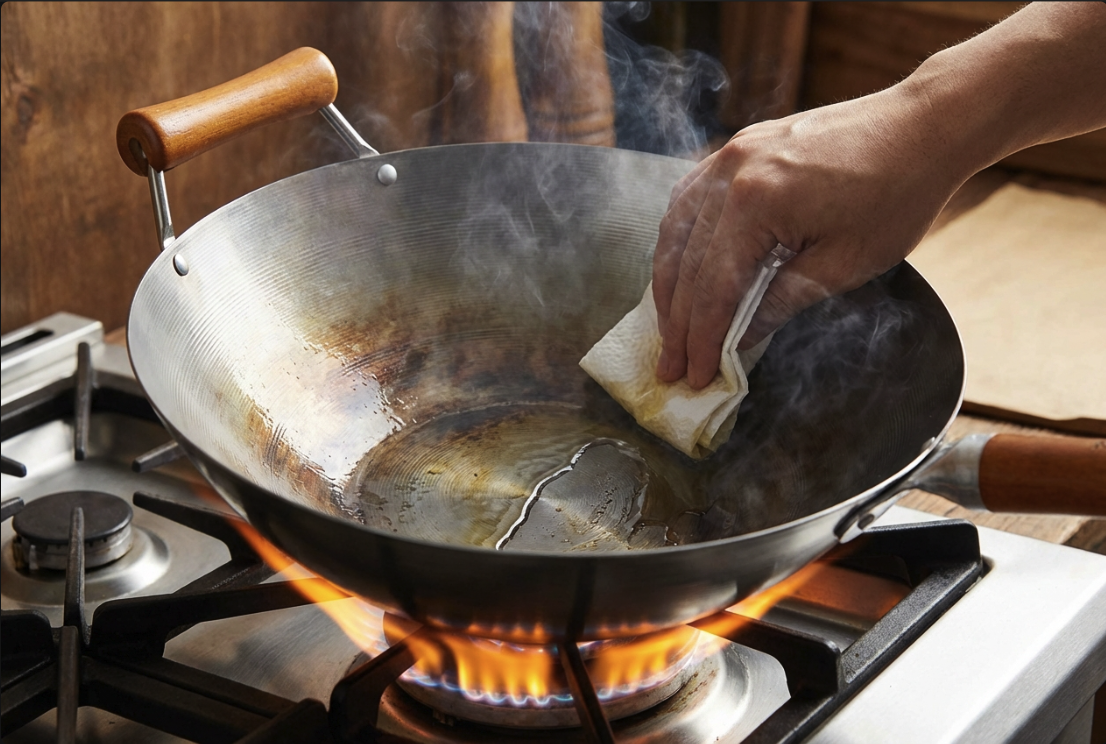
Add a small amount of low smoke-point oil and swirl to coat, then wipe it out so you’re left with a thin film, not puddles.
If you can see oil pooling, it’s too much. Thin coats build a better seasoning.
Keep the heat on until you see a light smoke and the surface starts to darken. Turn and tilt the wok so the oil film hits all the sides.
Let it cool slightly, wipe again, then repeat the oil + heat process 2–3 times.
That’s it — your wok is seasoned enough to start cooking. The patina improves every time you use it.
“Season it once, cook with it often, and it becomes one of the most reliable tools in your kitchen — simple, tough, and a joy to use.”
Chef Ian