
Stories | Chef’s Table Kitchen Intelligence
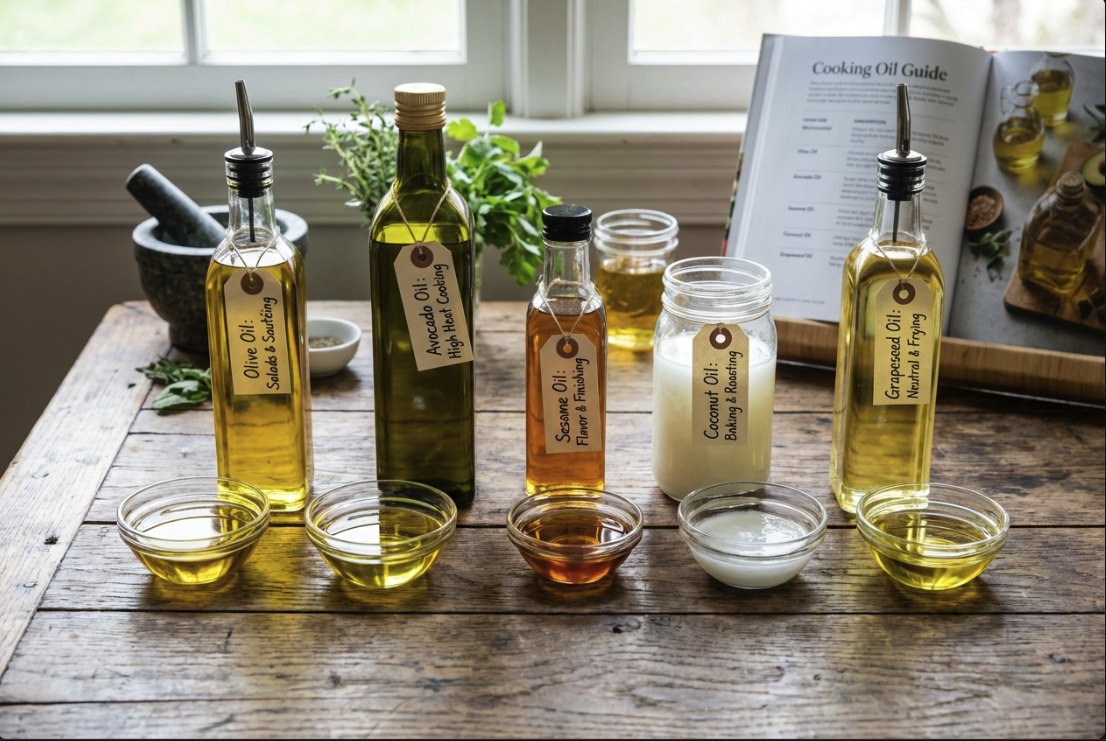
Choosing the right oil isn’t about brands — it’s about purpose.
Heat, flavour, and how you want the dish to finish. Get that right, and your cooking instantly tastes cleaner, crisper, and more “chef”.
This article is the practical oil guide (what to use, when to use it, and why). If you want the deeper science on smoke point and what happens when oil breaks down — that’s covered in our Smoke Point article.
Before you pour, ask three quick questions:
Because some oils are workhorses… and some are perfume.
Use perfume oils like workhorses and you’ll burn money (and flavour).
If you want the easiest “cook smarter” setup, keep these on hand:
That’s it. You don’t need twelve bottles.
Flavour: fruity, grassy, peppery (EVOO)
Best for: dressings, drizzling, finishing veg/seafood; gentle sauté
Chef’s take:
Flavour: neutral
Best for: deep frying, schnitzels, fritters, roast potatoes
Chef’s take: clean and crisp — great when you don’t want the oil to be tasted.
Flavour: mild/neutral
Best for: everyday pan frying, shallow frying, baking
Chef’s take: reliable, affordable, and does the job without stealing the spotlight.
Flavour: mild, buttery
Best for: high-heat searing, roasting, salad work
Chef’s take: the “luxury workhorse” — if you love one oil that can do almost everything, this is it.
Flavour: mild nutty / mostly neutral
Best for: wok cooking, deep frying, Asian cooking
Chef’s take: stable at high heat — the traditional stir-fry oil for a reason.
Flavour: rich, nutty, buttery
Best for: searing, Indian cooking, vegetables, eggs
Chef’s take: butter flavour without butter burning. Brilliant when you want richness and colour.
Flavour: sweet, tropical (unrefined); neutral-ish (refined)
Best for: curries, baking, some stir-fries
Chef’s take: use it on purpose — it brings a distinct note. Great in the right lane, weird in the wrong one.
Flavour: nutty (light), very toasty (toasted)
Best for: Asian dishes, dressings, marinades, finishing
Chef’s take:
Flavour: light and clean
Best for: mayo/emulsions, dressings, pan work, roasting
Chef’s take: great “modern kitchen” oil when you want clean flavour and good performance.
Flavour: neutral
Best for: commercial-style frying
Chef’s take: used widely in restaurants because it fries well and is economical — but not the oil I’d reach for as an everyday home staple.
Flavour: nutty, slightly bitter
Best for: cold use only (dressings, drizzles, smoothies)
Chef’s take: never heat it — think nutrition topper, not cooking oil.
This week, pick one oil you barely use, and give it two jobs:
That’s how you stop oils becoming clutter — and start using them like tools.
The right oil isn’t about the label — it’s about the job.
Use flavour oils when you want to taste them, neutral oils when you don’t, and keep your oil choices simple enough that you actually use them.
Cook smarter, not fancier.
Chef Ian