Stories | Chef’s Table Kitchen Intelligence
Most people buy lamb by cut — “I’ll take the cutlets.”
Chefs buy lamb by flavour, age, and where it was raised… because those three things change how it cooks, how it tastes, and how forgiving it is.
If you’ve ever wondered why one lamb roast was buttery and brilliant… and the next one tasted a bit “sheepy” or cooked dry — this is why.
The big myth: “Lamb is lamb”
Lamb is usually sold as one big category: leg, shoulder, rack, cutlets.
No breed. No region. No clue.
Beef got taught to us as a “premium conversation” (Angus, Wagyu, grass-fed, grain-fed). Lamb never did — so we were never taught to ask better questions.
But lamb has just as much diversity. It’s simply been hiding in plain sight.
What actually changes lamb on the plate
When lamb tastes different, it’s usually because of one (or more) of these:
- Age (this is the big one)
- Region & feed (what the animal grazed on)
- Fat quality and finish (how it was raised and handled)
- Breed/crossbreed (matters, but often less than age/region)
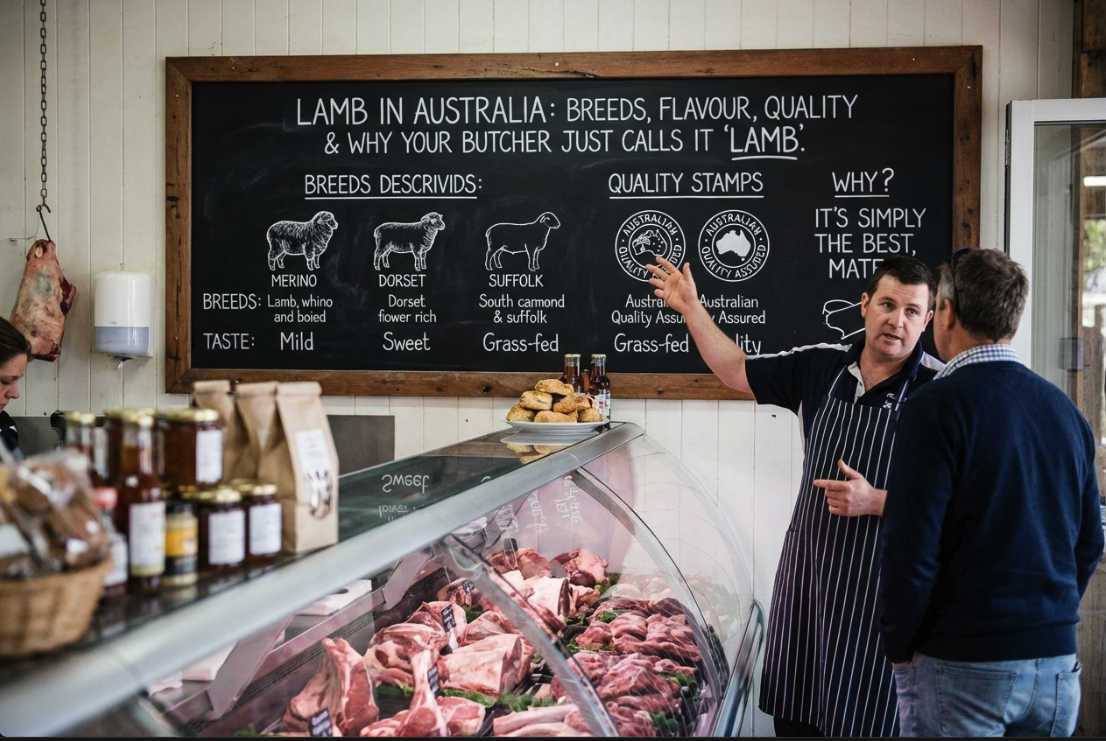
Breed: the part nobody labels (but it still matters)
Australia produces a lot of lamb from meat-focused breeds — often crossbred for consistency.
Common lines you’ll see in the supply chain (even if they aren’t labelled):
- Suffolk / White Suffolk — mild, tender, reliable (great cutlets, racks)
- Dorset / Poll Dorset — brilliant legs and shoulders, strong roasting performance
- Texel — meaty loins/cutlets, often a touch leaner
- Dorper — rich, juicy, full-flavoured (great slow cook)
- Merino (older animals) — deeper flavour (often hogget/mutton territory)
Why breed usually isn’t listed
Because most lamb is crossbred — and that’s not a bad thing. It creates strong carcasses and consistent eating quality. It just means the “breed label” often isn’t clear at retail level.
So chefs look to the next two things first…
Region: where lamb really gets its flavour
Lamb is sensitive to what it eats. The land speaks — and lamb reflects it.
Some classic Aussie patterns:
- Cool-climate, lush pasture → cleaner, milder, more “buttery”
- Hardier grazing / saltbush / coastal influence → richer, savoury, sometimes slightly more intense
- Dry seasons / sparse feed → flavour can deepen, fat can tighten up
Chef’s take: if you want lamb to be a “hero”, provenance matters as much as cut.
Age: the biggest difference most home cooks never hear about
This is where lamb changes character completely.
- Spring lamb (young): mild, delicate, very tender
- Lamb (up to ~12 months): still tender, slightly deeper flavour
- Hogget (older): richer, fuller flavour — chef favourite
- Mutton (2+ years): robust, deeply flavoured — unbeatable for slow cooking
If you remember old-school lamb stews that filled the whole house with aroma… there’s a good chance you were eating hogget or mutton, not the modern mild lamb many of us cook today.
Why lamb doesn’t get asked about like beef
A few reasons:
- Lamb is usually grass-fed, so the feed conversation is less obvious
- Breed differences are often subtler than beef marbling
- Lamb has been marketed as a staple, not a “premium education piece”
- Most people were never taught what to ask — so the industry never had to answer it
Until now.
What to ask your butcher (simple, not awkward)
You don’t need a 10-minute interrogation — just better questions:
- Where is this lamb from?
- Is it young lamb or older (hogget/mutton)?
- Is it pasture-raised only, or grain-assisted to finish?
- Which cuts are best from this animal right now?
That one conversation can improve your results instantly.
Quick cheat sheet: choose with purpose
If you want mild, tender, foolproof
- Younger lamb
- Well-finished, good fat cover
- Best cooking: quick grill, cutlets, rack, leg roasted medium
If you want rich, savoury, “chef-style” lamb flavour
- Older lamb / hogget
- Best cooking: shoulder, shanks, slow braises, long roasts
If you want slow-cook magic
- Hogget or mutton
- Cook low, give it time, let the fat and collagen do their job
Final thought from Chef Ian
Lamb isn’t “just lamb.” It never was.
Once you start buying lamb with age + origin in mind (not just the cut), you’ll cook with more confidence, waste less money on “average” results, and get that bloody good lamb flavour more often.
Chef Ian