
Stories | Chef’s Table Kitchen Intelligence
Acid is the quiet hero in good cooking. It cuts richness, balances sweetness, and makes flavours taste alive. Most home cooks under-use it — then wonder why a dish tastes “fine”… but flat.
Vinegar isn’t just for salad dressing. Used properly, it’s a seasoning tool — the same way salt is.
Before you splash vinegar in, ask: What job am I hiring this acid to do?
A dish can be perfectly cooked… and still taste dull if it’s missing acid.
If dinner tastes rich, heavy, or one-note:
That’s structure. Not “sour”.
Best for: pickling, cleaning, egg poaching, sharp sauce corrections
Chef’s take: strong and blunt — brilliant for pickles, too harsh for most vinaigrettes unless diluted.
Best for: dressings, slaws, pork, chutneys, “country” cooking
Chef’s take: friendly and fruity — one of the most versatile everyday vinegars.
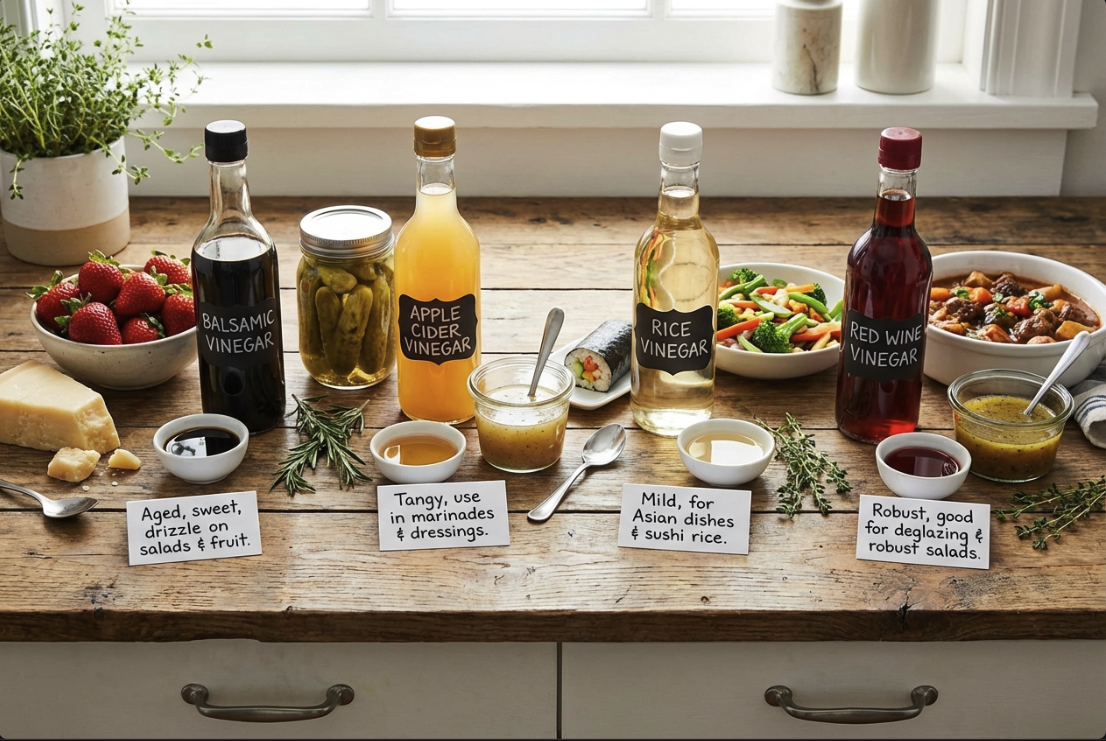
Best for: Mediterranean salads, braises, lamb, beef, earthy veg
Chef’s take: bold and savoury — adds depth, not just bite.
Best for: seafood, chicken, beurre blanc style sauces, lighter dressings
Chef’s take: clean and gentle — when you want lift without aggression.
Best for: finishing (not boiling), salads, strawberries, grilled veg, glazes
Chef’s take: drizzle it like seasoning. If you cook it hard, you mute the complexity.
Best for: roast vegetables, soups, pan sauces, Spanish flavours
Chef’s take: nutty and warm — a secret weapon for making “simple” taste expensive.
Best for: sushi rice, Asian dressings, quick pickles, finishing stir-fries
Chef’s take: softer acidity — adds brightness without dominating.
Best for: fish & chips, hearty British-style braises
Chef’s take: nostalgic and punchy — not subtle, but perfect in its lane.
Best for: delicate vinaigrettes, seafood, fruit salads
Chef’s take: light and elegant — when you want a whisper, not a shout.
Best for: Southeast Asian and Filipino cooking, dipping sauces, marinades
Chef’s take: generally rounder, gentler acids with more “body” — fantastic with chilli and sugar balance.
Best for: quick dressings, finishing sauces, salads, glazes
Chef’s take: treat them like aromatics — use to finish, not to cook for an hour.
This week: pick one vinegar and use it three ways
That’s how vinegar becomes a tool — not a forgotten bottle.
Acidity is your secret seasoning.
"A dish without acid is like a song without rhythm — it might be technically correct, but it won’t sing."
Chef Ian