
Stories | Chef’s Table Kitchen Intelligence
Flour is the quiet achiever of the kitchen. It builds breads, binds batters, thickens sauces, and gives you that golden crunch on a schnitty.
But not all flours behave the same.
Some make cakes light. Some make bread chewy. Some thicken like a dream. Some absorb liquid like a sponge. And once you understand why, you stop guessing — and start getting consistent results.
Here’s the chef’s guide to choosing the right flour (including gluten-free options), plus how to store it properly so it doesn’t taste stale or “musty.”
Your everyday workhorse.
Best for: cakes, muffins, pancakes, sauces, roux, coating for frying.
Plain flour with raising agents already added.
Best for: scones, quick muffins, easy cakes.
Chef’s shortcut (make your own):
1 cup plain flour + 2 tsp baking powder + pinch of salt
Higher protein = more gluten structure = better rise and chew.
Best for: pizza dough, sourdough, sandwich loaves.
More fibre, more flavour, slightly heavier texture.
Best for: loaves, muffins, pancakes.
Chef tip: Use 50/50 wholemeal + plain for lighter results.
Lower protein for tender crumb.
Best for: soft cakes, biscuits, pastries.
Finely milled and silky.
Best for: pasta, pizza, focaccia.
Chef tip: Great stretch and texture — especially in doughs.
Coarse, golden, slightly nutty.
Best for: pasta, gnocchi, dusting pizza bases, semolina cakes.
Earthy, dense, aromatic.
Best for: hearty breads, crackers.
Chef tip: Blend with bread flour unless you love a dense loaf.
Slightly sweet, softer texture than wholemeal.
Best for: muffins, pancakes, rustic baking.
Gluten-free isn’t “worse” — it’s just different. The trick is choosing the right one for the job.
This one deserves its own lane: Lupins for Life Lupin Flour (available in the Underground Chef Pantry).
Made from Australian-grown sweet lupins, it’s:
I reformatted my Sticky Date Pudding to use 100% lupin flour — works beautifully.
If you’re converting a standard recipe, you’ll often need:
Important note: Lupin is a legume. If anyone has a peanut/legume allergy, treat lupin with caution and check suitability first.
Curious to try Lupins for Life Lupin Flour for yourself?
👉 Find it now in the Underground Chef Pantry — alongside other chef-tested staples, curated to help you cook smarter and eat better.
Flour might look tough, but it’s sensitive to air, heat, and light.
🧑🍳 Chef’s Tip:
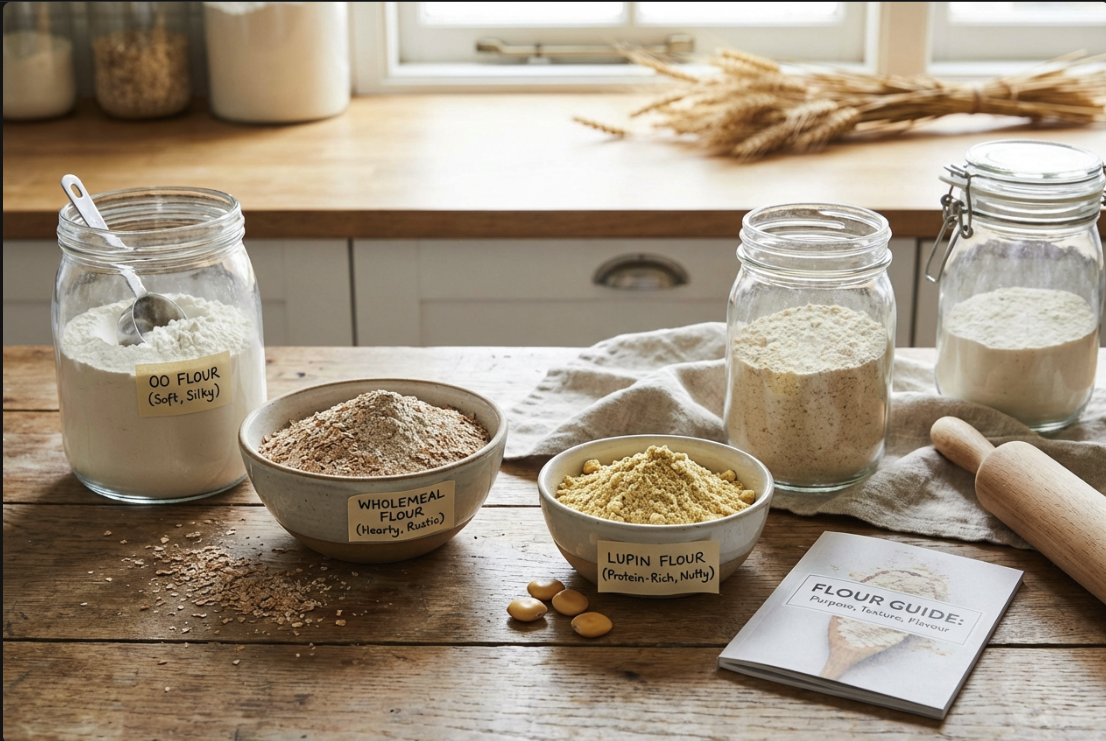
Store flour in glass jars with tight seals — not only does it keep things fresh, but it makes your pantry look smart too.
Flour isn’t just a white powder in a bag — it’s the backbone of your kitchen.
Each type behaves differently, influencing flavour, structure, and feel.
The more you understand it, the smarter (and tastier) your cooking becomes.
So next time you reach for flour, think beyond “plain” — experiment with something new. Try lupin for added nutrition, spelt for sweetness, or 00 for that Italian touch.
Chef Ian