
Stories | Chef’s Table Kitchen Intelligence
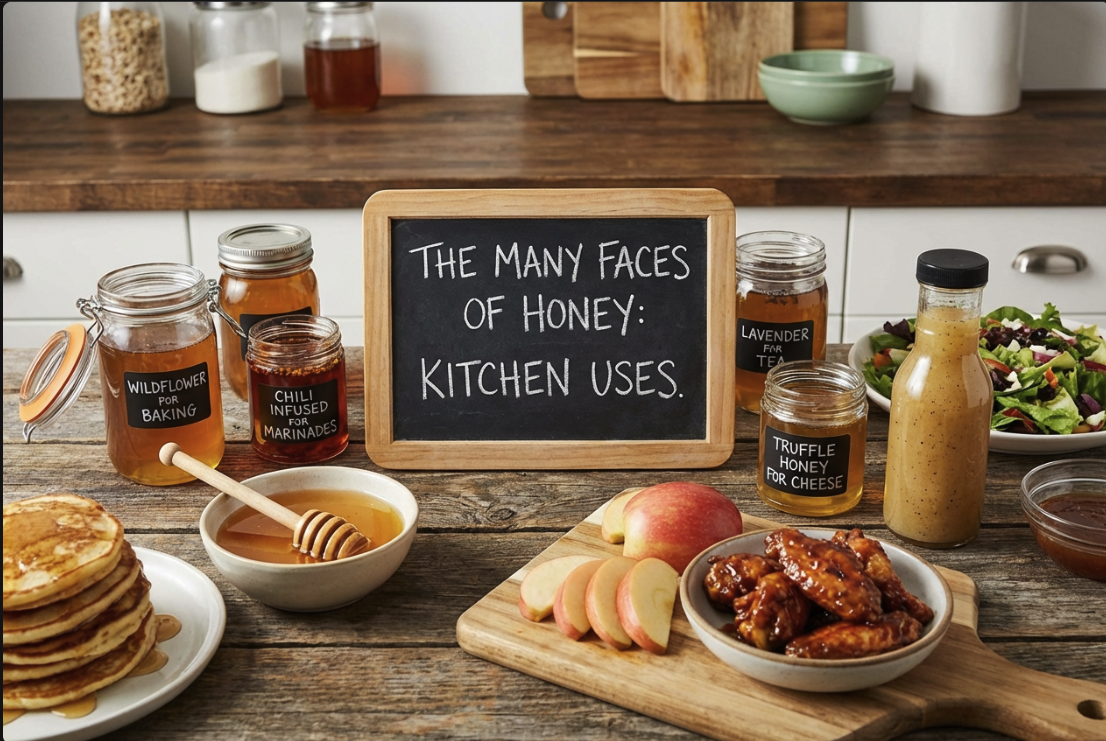
Honey gets called “liquid gold” for a reason — not just because it’s sweet, but because it carries place, season, and character in a way sugar never will.
And here’s the little moment that kicked this blog off for me:
I stumbled across a proper Tea Tree honey at a market recently, brought it home, sliced up a few fresh figs… and finished them with a drizzle of that honey and a crack of black pepper.
Sounds too simple to be special.
It was unreal. Sweet, floral, slightly medicinal in the best way — and the pepper made it sing.
That’s honey at its best: simple, but with a story.
Think of honey like olive oil or vinegar: different types behave differently.
Honey can:
Honey flavour is shaped by what’s in bloom — the bees collect nectar from blossoms, so the landscape does the flavouring.
You’ll notice patterns like:
Chef’s note: Don’t expect “macadamia honey” to taste like nuts — it comes from the blossom, not the nut.
Real honey isn’t manufactured to taste identical forever.
That variation is a good sign. It means you’re eating something real.
If your honey turns grainy or sets firm, don’t panic — that’s natural crystallisation.
To bring it back:
Creamed honey isn’t dairy - it’s honey that’s been guided into fine, even crystals, so it spreads like velvet.
Perfect for:
A simple rule that works:
Best for: yoghurt, fruit, teas, light dressings, breakfast drizzles
Best for: baking, cheese boards, roasted carrots/pumpkin, everyday cooking
Best for: BBQ glazes, marinades, slow-cooked meats, roasted veg, sticky sauces
Fresh figs → Tea Tree honey → cracked pepper → done.
If you want honey with traceable origin and proper flavour:
(You’re not just paying for sweetness — you’re paying for flavour and craft.)
Infused honey is brilliant because it gives you “instant chef flavour” with no fuss.
Two easy (safe) favourites:
Tip: Keep infusions dry (zest, dried chilli, dried herbs). If you add fresh wet ingredients, store it in the fridge and use quickly.
And yes — if you’ve got something like a chipotle honey, that’s a weapon for wings, prawns, and dressings.
Honey isn’t “just honey.” It’s flavour, place, and finish — and once you start treating it like a real ingredient, you’ll find a dozen ways to use it every week.
Chef Ian