
Stories | Chef’s Table Kitchen Intelligence
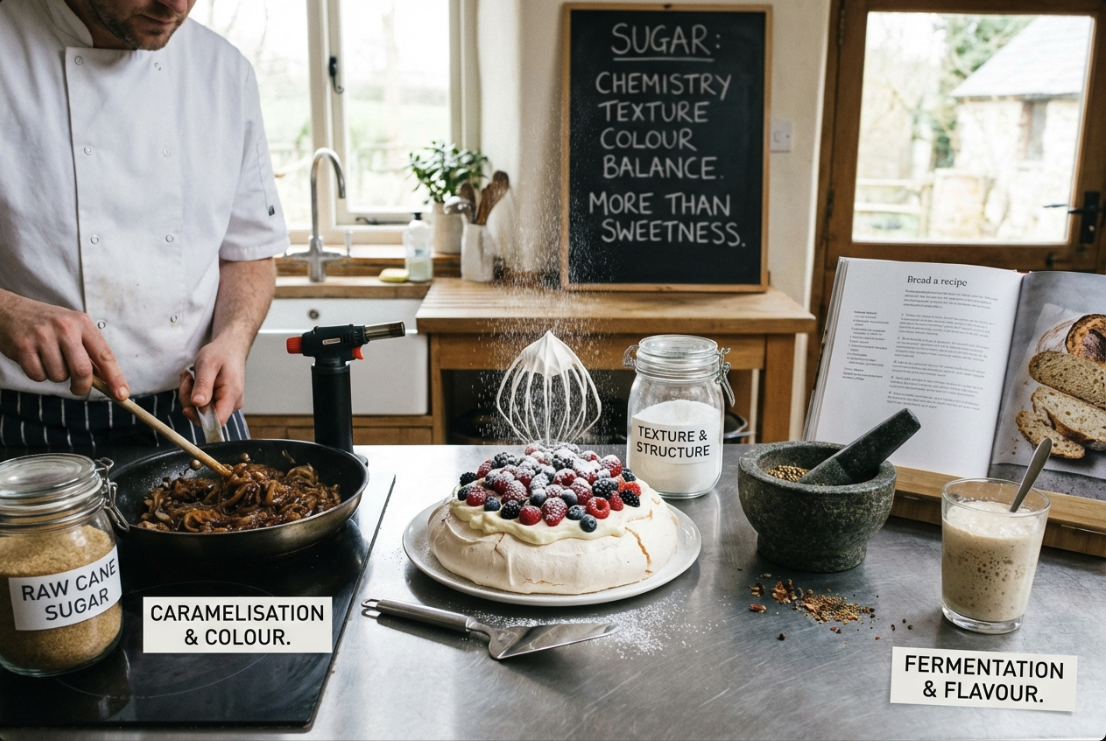
Sugar isn’t just “sweetness.” In a chef’s kitchen it’s colour, texture, structure, balance and preservation — the quiet force behind everything from caramelised onions to crisp crackling and perfect pavlova.
If you’ve ever reduced sugar in a recipe and thought, “Why did this go weird?” — that’s because sugar isn’t only flavour. It’s chemistry.
Think of sugar like salt:
Sometimes it’s the star. Most of the time it’s doing support work — rounding out acid, taming bitterness, or creating the texture you actually want.
Sugar can:
Best for: baking, syrups, jams, drinks
Chef’s take: clean sweetness without adding flavour — your everyday workhorse.
Best for: meringues, pavlova, sponge, whipped mixes
Chef’s take: dissolves fast = smoother texture and better structure.
Best for: buttercream, frosting, dusting, stabilising whipped cream
Chef’s take: great for smooth finishes. Watch the anti-caking in some brands.
Best for: crunchy toppings, fruit roasting, coffee
Chef’s take: rustic crunch and golden colour — not for silky bakes.
Best for: cookies, sticky puddings, marinades, BBQ sauces
Chef’s take: moisture + toffee depth.
Best for: crumble tops, brûlée-style crunch, grilled fruit
Chef’s take: finishing sugar. Big crystals, big impact.
Best for: sticky date, gingerbread, fruitcake, BBQ marinades
Chef’s take: “soul sugar” — deep, dark, rich. Use when you want warmth and drama.
Best for: Thai/Indonesian cooking, curries, dipping sauces
Chef’s take: this is sugar as seasoning — balances chilli, salt and sour like a pro.
Best for: baking, sauces, marinades
Chef’s take: caramel tone, handy substitute, but it will darken the final colour.
Best for: caramel, confectionery, ice cream
Chef’s take: stops crystallisation — keeps things silky.
Best for: ANZACs, tarts, puddings
Chef’s take: chew, shine and that nostalgic buttery sweetness.
Best for: gingerbread, BBQ, dark sauces
Chef’s take: intense and earthy — a little goes a long way.
Best for: glazes, marinades, baking, dressings
Chef’s take: flavour depends on origin. It browns fast — watch your heat.
Best for: breakfast, glazes, dressings, sauces
Chef’s take: brilliant with pork, pumpkin, bacon, nuts — sweet with savoury backbone.
Best for: cold drinks, raw desserts, vegan baking
Chef’s take: dissolves instantly and is sweeter than you think — use less.
Crunch? Demerara/raw.
Structure? Caster.
Moisture + depth? Brown/muscovado.
Asian balance? Palm/coconut.
Honey, maple, brown sugars and syrups can burn quickly — especially in hot ovens or air fryers.
In savoury cooking, a touch of sugar can:
This week, use sugar in a non-dessert way:
It’ll change how you think about “sweet.”
Sugar is more than sweet — it’s balance, body, and browning.
The trick is knowing when to let it shine… and when to let it quietly do the heavy lifting in the background.
Chef Ian