
Recipes | Chef’s Table Exclusive
This week I’m cooking Prawn & Pea Risotto — and the hero of this dish isn’t just the prawns… it’s the stock.
Risotto is one of those recipes where shortcuts show up immediately. If the stock is average, the whole bowl is average. But if the stock is beautiful? Suddenly you’ve got depth, sweetness, and that proper seafood finish that tastes like it came from a restaurant pass.
If you don’t have time to make prawn stock from scratch (and let’s be honest, most weeks you won’t), the next best thing is a stock you can trust. I’m using Silver Seas Seafood Prawn Stock, made from Mooloolaba prawn trawlers — and it does the heavy lifting beautifully.
Chef’s Table rule: stock matters.
This is not the moment for powdered stock. Risotto needs real flavour in the liquid, because the rice absorbs it all.
And because this is Chef’s Table, we plate it like we mean it — I’ll show you a simple mould trick so it looks restaurant-ready, not like it’s been ladled in with a soup spoon.
Watch the tutorial here: YouTube link
Watch the pairing video here: YouTube link
Serves: 2
Time: 25–30 minutes
Difficulty: Easy–Intermediate
Best pan: Wide, flat-based pan (not a saucepan)
Skill focus: Risotto rhythm + timing prawns properly
The secret is dedication to the task: prep everything first, then once you start adding stock, stay with it. Don’t get distracted — and if you’re called away, turn the heat off and come back when you’re ready.
Warm the prawn stock + water so it’s hot and ready to go.
Cold stock drops the pan temperature and slows everything down (and that’s how risotto turns into a gluey slog).
In a hot, wide pan, add olive oil, then sauté the garlic and Spanish onion until the onion starts to go opaque and soften.
Add the sea spice mix, then the prawns — just until they change colour.
Remove prawns from the pan and set aside. (They’ll finish later.)
Chef’s tip: This “part-cook” method is far more foolproof than trying to time raw prawns at the end.
With those garlic/onion flavours still in the pan, add the risotto rice and stir for 1–2 minutes.
You’re not trying to brown it — you just want the grains lightly toasted so they absorb flavour evenly.
Add a ladle of hot stock mix — just enough to cover the rice — and keep the heat at a gentle simmer.
From here, stay with it: keep stirring and moving the rice around the pan.
When the pan starts to look dry, add another ladle of warm stock and keep stirring.
Repeat this cycle 4–5 times over 15–18 minutes.
How I know it’s ready: I taste.
Soft, creamy, no hard core — but I stop just shy of perfect because residual heat finishes it.
Chef’s tip: If you run low on stock near the end and just need a little more moisture, add a splash of water. The flavour is already in there — the extra liquid is simply to nail texture.
When the rice is nearly there, stir through the peas.
Then add parmesan and squeeze in ½ a lemon, stirring well so the cheese melts evenly.
Pan note: Cheese can grab the base — keep it moving.
Add the part-cooked prawns back in and stir until they’re just cooked through and warmed.
Keep two whole prawns aside for plating.
Taste before seasoning — the stock and parmesan usually bring enough salt.
If it needs anything, it’s often just pepper.
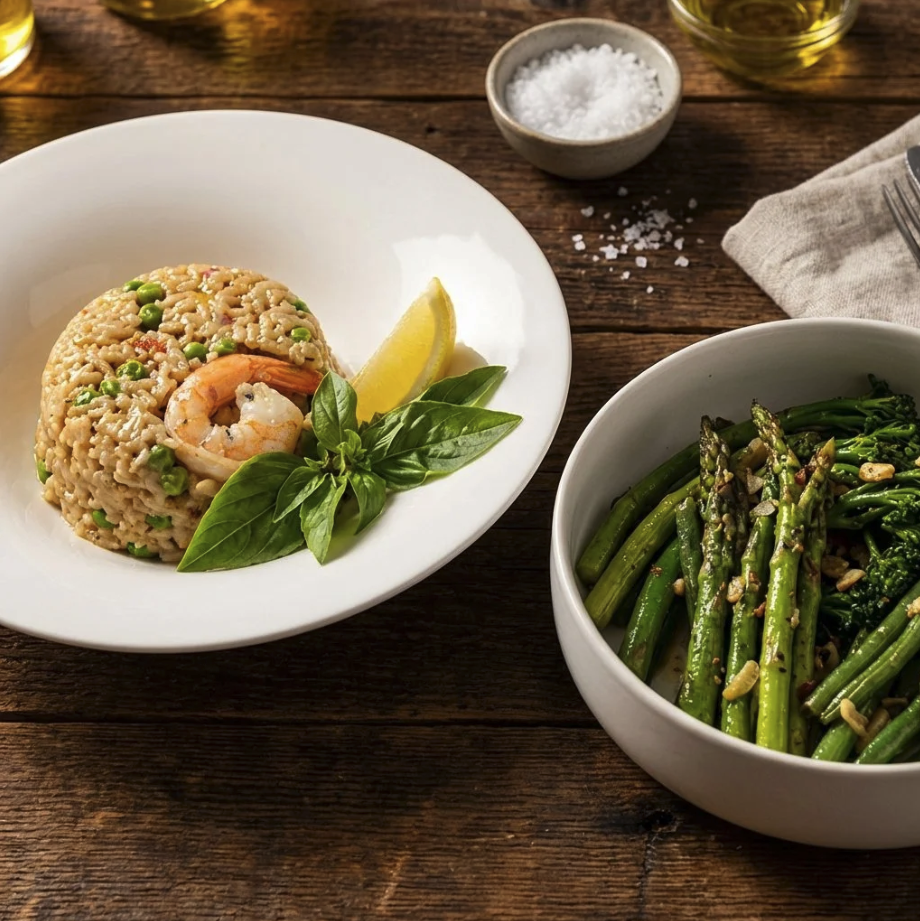
Pack the risotto into a lightly oiled mould, upturn onto the plate, then finish with whole prawns on top and garlicky greens on the side.
Serve with a lemon wedge — it brightens the whole dish right at the table.
Risotto is simple, but it demands presence: ladle, stir, absorb, repeat.
That steady rhythm is what creates creaminess without cream.
This is a high protein meal which will be satisfying. The carbohydrate content is 40 % due to the arborio rice, but this is mainly starch. This dish is low in salt and moderately high in dietary fibre.
Prawn & Pea Risotto Servings – 2 serves Serving size: 692g

Gralicky Greens Servings – 2 serves Serving size: 184g

Serve this with a glass of Ballandean Estate's finest.
If you get one thing right in this dish, make it the stock.
Prawns and peas are the supporting cast — the stock is the story.
Cook with a good foundation, stay with the pan, and you’ll end up with a risotto that tastes like it belongs on a restaurant menu… without turning dinner into an all-day project.
Chef Ian