As adults age, it is harder to gain muscle mass.
The muscle loss due to ageing can impact quality of life by increasing the risk of frailty, loss of independence and age related disability. There are two proactive strategies that will help with maintaining muscle mass.
Firstly, by increasing dietary protein and secondly by strength training. Building muscle requires protein to keep functioning. Unfortunately, up to 46 % of over 55 year olds don’t eat enough protein each day.
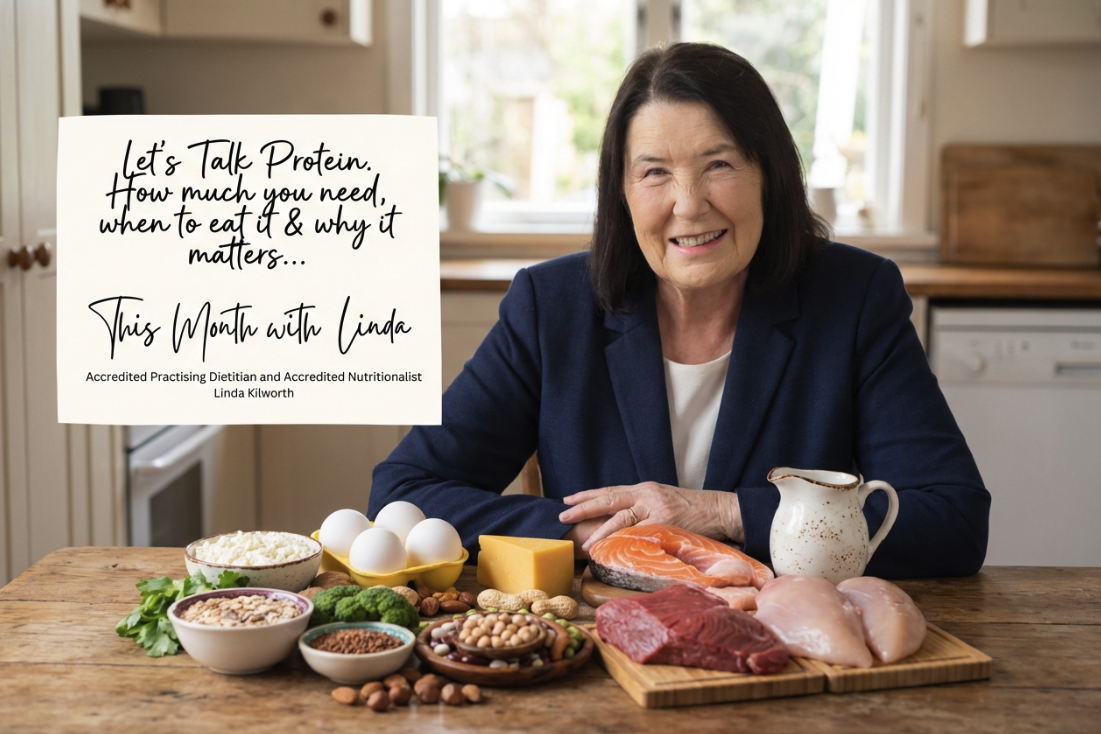
A wide variety of foods, both plant- and animal -based, are high in protein.
· Animal -based meat, poultry, seafood, eggs and dairy foods.
· Plant-based proteins include beans, peas, lentils, soy products, nuts and seeds. Whole grains have a small quantity of protein.
When it comes to quality, animal-based proteins are considered nutritionally superior since they contain more ample amounts of the nine essential amino acids that support health and metabolism. With the exception of soy, plant-based proteins usually lack meaningful amounts of at least one essential amino acid, if not more.
The research says that you need between 1- 1.2 g/kg body weight. So if you are 65 kg, the protein requirement is 65 – 78 g Protein per day. You may like to calculate your protein requirement using https://www.calculator.net
Research also suggests that when you consume protein is important. So, spreading the protein consumption throughout the day is recommended.
Think, whole grain cereal with milk and some yoghurt for breakfast or a piece of wholemeal toast with a poached egg or scrambled egg. Aim for some meat, fish, poultry, egg or dairy for lunch and similarly for dinner. As a guide approx. 100g of meat, fish, poultry offers 25 – 30 g protein, 2 eggs offers 20g protein and 30g Nuts offer 6 – 10 g protein.
Too much protein can also lead to health risks such as dehydration and lower kidney function. As they say, you can have too much of a good thing!
What about using protein powders? Many people find protein powders an easy solution to meeting their protein requirements, as well as being convenient. It is best to discuss these with your doctor or dietitian as brands differ in the protein content . Some are graded for medical use and others are food supplements. There are three main types of protein powders; Whey, casein and plant based. Whey and Casein are derived from dairy. Plant -based protein powders are a combination of wheat, pea, hemp or soy. Studies show that whey based powders are effective for muscle building. Dairy foods contain whey, so my preference is to digest dairy protein from milk, yoghurt and cheese!
Changes during the cooking process
Protein in cooking changes structure (denatures) with heat, acid, salt, alcohol and mechanical agitation, affecting texture, but largely preserving nutritional value (like meat or eggs). The denaturing of protein unfolds the protein’s molecular structure , so it becomes a long strand of amino acids ( the basic building blocks of protein), making it easier to digest. So cooking foods high in protein enhances the taste, texture and digestibility of the food. You won’t lose protein if you cook and reheat meals.
1. Include a high protein food at breakfast, lunch and dinner.
2. Look for high protein snacks that include dairy, such as cheese and biscuit, milk smoothie or Greek yoghurt.
3. Find high protein lunch and dinner recipes to expand the variety of protein you eat. Experiment with different seasonings.
4. If you prefer a plant- based diet, look for foods higher in protein such as tofu and soy products. Snack on nuts and seeds.
5. Opt for real foods first, but if that is unattainable, then look at protein powders to supplement the diet.
Linda