
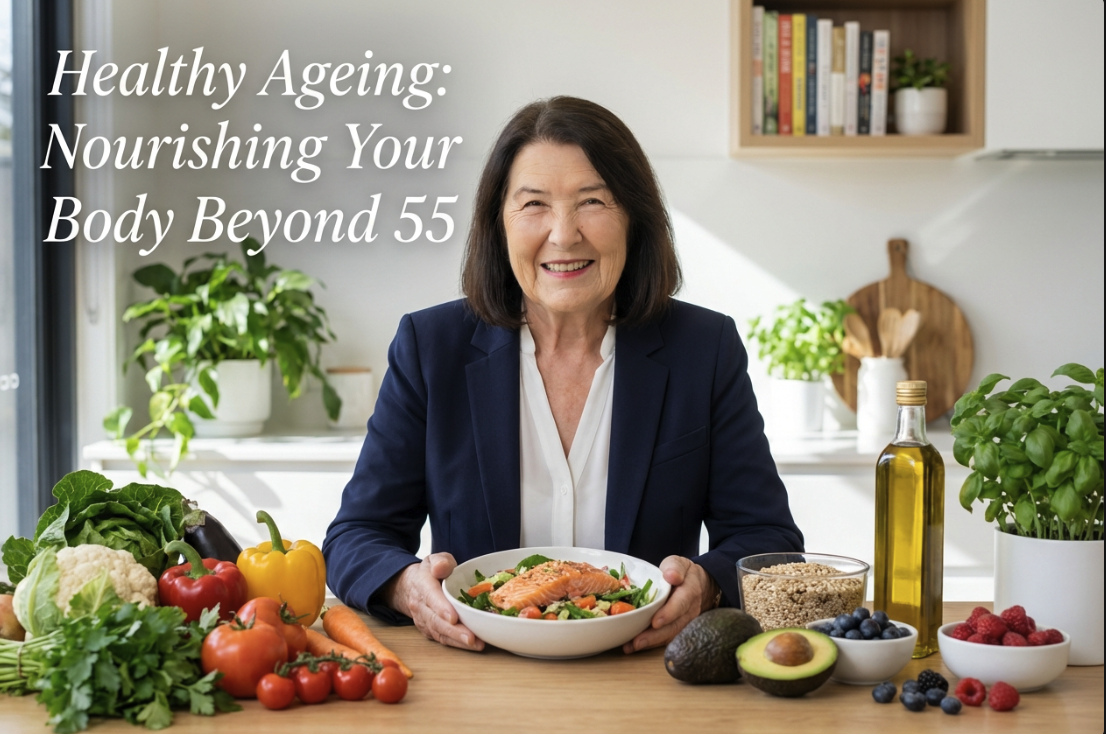
I first met Linda Kilworth back in the 1990s on the Gold Coast, when I was President of the Australian Culinary Federation (ACF).
Linda was invited to become a member and share her wisdom through a series of insightful nutrition articles in the ACF Chefs Gazette — and even then, her approach stood out. No fads. No fear. Just sound advice and a genuine passion for helping people eat well and age well.
All these years later, I’m thrilled to reconnect and welcome Linda to the Underground Chef family. Her deep understanding of nutrition, paired with her grounded, practical style, makes her the perfect fit for our Over-55s audience.
There’s also a personal connection that feels especially meaningful.
Linda’s late mum was Japanese — a lovely coincidence, as my own journey through Japan has deeply shaped how I cook, teach, and view food. In both cultures, food is about more than nourishment; it’s about respect, balance, and living well for as long as we can.
In this guest article, Linda explores how our nutritional needs change as we age — and what we can do to stay stronger, sharper, and more energised. From maintaining muscle and metabolism to choosing foods that fuel an active lifestyle, this is one you’ll want to bookmark and share.
Ageing is inevitable, but staying healthier and fitter is the best strategy. Ignore the headlines that shout about anti-ageing foods and supplements. If you talk to centenarians, they often say they have never been on a diet. They mostly eat a little bit of everything, keep active and opt for a positive outlook.
The overwhelming philosophy is to “look out more than you look in.”
However, certain diseases can impact on diet and exercise, genetics and poor sleeping patterns. Each of us treads a different life path, however, we all grow old.
As we age we lose muscle and fat from places where we would like to have it and gain fat in areas we don’t want it. Muscle loss is related to the type of foods eaten and the amount of activity that you do regularly.
Lack of physical activity impacts on mobility and promotes bone loss. It also results in a sedentary lifestyle and lower total food intake. It also lowers metabolic rate.
Metabolic rate is the rate at which your body uses energy — the number of kilojoules you burn in a given amount of time at rest or while active.
Muscle is metabolically active, so the more muscle you have, the higher the metabolic rate. That means you can eat a lot more and not gain weight.
However, if you lose muscle, then the metabolic rate is lower and weight gain may occur.
You can stoke the furnace by doing 30 minutes of strength training three days a week and aerobic exercise (such as walking) daily.
👉 See: Australian Physical Activity Guidelines for Older Australians
Protein foods help to maintain muscle structure. Studies show that protein intake often decreases as we age, particularly with women. The reasons vary, but include loneliness, lack of desire to cook, inability to purchase foods as not close to shops, financial struggles and problems with chewing or swallowing.
Sometimes it is too hard to cook some meat and vegetables for dinner. It is easier to make a slice of toast and a cup of tea. If this becomes a habit, then the overall nutritional needs will not be met.
Poor nutrition is akin to driving a car on minimal fuel. Eventually it will stop.
There are nutritional guidelines that will help. Look at Eat for Health – Australian Dietary Guidelines.
This site gives you portions and number of serves required for males and females from the five food groups, daily.
About one third of older people will have ‘stomach problems’, due to a reduction of hydrochloric acid, pepsin (digestive enzyme) and intrinsic factor. This reduces the absorption of Vitamin B12, folate, iron and calcium.
Vitamin B12 is found in animal foods and a diet lacking this will lead to problems with the nervous system.
Folate is the naturally occurring form of vitamin B9, essential for creating DNA, cell growth, and producing red blood cells. It is found in foods like leafy greens, legumes, and citrus fruits. Bread and some cereals are fortified with folic acid, which converts into folate in the body.
A diet low in iron can cause fatigue and lead to anaemia.
Iron-rich foods include lean red meat, poultry, and seafood, as well as plant-based options like beans, lentils, dark leafy greens (such as spinach), and nuts.
Other good sources are fortified cereals, breads, and pastas, along with dried fruits like raisins and apricots.
To enhance absorption, pair non-heme iron sources with vitamin C-rich foods like citrus fruits, strawberries, or tomatoes.
💡 Cooking with a cast-iron skillet can increase the iron content of your food.
Calcium intake is often neglected as we age. Calcium is an essential mineral vital for building and maintaining strong bones and teeth, with about 99% of the body's calcium stored in these structures.
It also supports muscle and nerve function, blood clotting, and heart health.
Calcium-rich foods include dairy products like milk, yoghurt, and cheese, as well as canned fish with bones such as sardines and salmon.
Other good sources are leafy green vegetables, tofu, fortified cereals and juices, and almonds.
Overall, we need to prioritise foods that maximise our nutritional needs, so that the ageing body can maintain overall health.
Given that there are so many nutrients required to fuel an ageing body, it is best to follow some simple rules:
Thanks, Linda — and welcome aboard.
It’s great to be sharing a platform again after all these years, this time with a shared mission to help people cook smarter, eat better, and feel stronger at every age. Your practical advice and honest approach fit perfectly with what we’re building here at Underground Chef — a community that values good food, good health, and good company.
Here’s to eating well, ageing well, and learning a few new tricks along the way.
Like to know more about your health - book a telehealth appointment with Linda here.
— Chef Ian