
A note from Chef Ian
Bone broth has certainly had its moment in the wellness world, but from a chef’s point of view, broth and stock have always had an important place in the kitchen.
For me, a good broth is not about chasing miracle claims. It is about building flavour, adding comfort, creating depth, and making beautiful soups, sauces, braises, risottos and everyday meals taste better from the very beginning.
At Underground Chef, we often talk about starting with good foundations. A well-made stock or broth is one of those foundations. It can turn simple ingredients into something generous, nourishing and satisfying — not because it is a cure-all, but because it is good cooking.
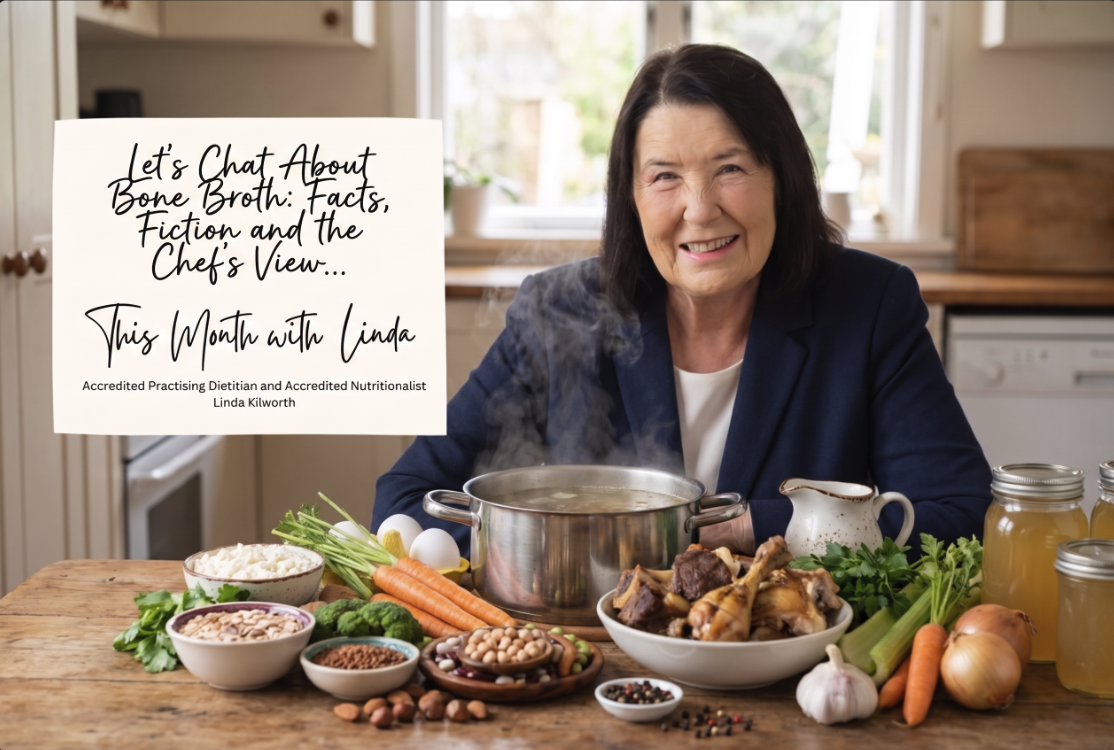
This month, dietitian Linda Kilworth takes a practical look at bone broth and separates the facts from the fiction. It is a helpful reminder that food can be comforting, useful and delicious without needing to be marketed as magic.
Bone broth has become a wellness trend, but the evidence for its specific health claims is much thinner than the marketing suggests. A lot of what’s published on line is derived from the bone broth brands themselves. Here are the facts versus fiction and you can make up your own mind.
Nutritional content: Bone broth does contain protein, some minerals (calcium, magnesium, phosphorus), and collagen/gelatin from simmered bones and connective tissue. Collagen is a protein, but it is not a complete protein as it is missing one essential amino acid (the building block molecule that the body needs)
Bone broth is also relatively low in kilojoules and can be a decent source of hydration and electrolytes.
Amino acids: Think of amino acids as Lego bricks and the protein is where you build the structure together. There are 20 different amino acids that the body strings together in specific sequences to build muscle tissue, skin, hair, collagen, hormones and antibodies to help the immune system.
Bone broth contains amino acids, glutamine, histidine, arginine, glycine and proline, which are involved in collagen production, gut lining maintenance, and other bodily processes.
Comfort and satiety: Like other broths and soups, it can be soothing when you're sick, and the protein content may help with fullness. Bone broth forms the basis of many comforting recipes and adds flavour. It is a culinary staple.
"Gut healing" claims: The idea that bone broth repairs a "leaky gut" is popular in wellness circles but isn't well supported by clinical research in humans. There's some theoretical basis (glycine and glutamine are involved in gut lining maintenance), but no strong trials showing bone broth itself fixes gut issues.
Some people with Irritable Bowel Syndrome often report benefits, but this is due to a reduction in dietary fibre, which allows the stomach to rest. Restricting fibre, long-term will change the gut bacteria and can impact on gut health.
Joint health/collagen for skin: Some studies on hydrolysed collagen supplements show modest benefits for skin elasticity or joint pain, but bone broth's collagen content is variable and much lower than concentrated supplements used in those studies. It's a stretch to extrapolate those results to a cup of broth.
Mineral content is often overstated: Bone broth contains calcium, phosphorus, potassium, magnesium and zinc. Commercial products have added salt. Studies have found the actual mineral content of homemade bone broth is inconsistent and often lower than assumed — it varies a lot based on cooking time, bones used, and acid added.
Anti-inflammatory or immune-boosting claims: Largely unsubstantiated and most studies are based on animal models. Any benefit you feel from broth when sick is more likely from hydration, warmth, and kilojoules than any special compound. However, incorporating bone broth as part of a healthy diet could harness some of the nutritional elements.
Bone broth isn't harmful and can be a nutritious, comforting part of a diet - but it's not a superfood or medical treatment. Most of the specific claims (gut healing, joint repair, detox) outpace what's actually been demonstrated in rigorous human studies.
If you enjoy it, there's no reason to stop, but remember that no one food is a cure-all. Bone broth is important for overall culinary experience and should be incorporated as part of a healthy balanced diet.
Linda
This is where good nutrition advice and good cooking can work beautifully together.
Bone broth and stock do not need to be treated as a miracle food to be valuable. They are valuable because they help us cook better.
Use them as the base for soups, stews, sauces, risottos, braises, noodle bowls, gravies and pressure-cooked meals. Choose a good quality broth or stock, use it with real ingredients, and enjoy it as part of a balanced way of eating.
That is the Underground Chef approach: practical, flavour-first cooking with honest ingredients and sensible advice.