Stories | Chef’s Table Kitchen Intelligence
Cheese isn’t just “cheese.” It’s milk + time + technique — and that’s why two wedges can look similar but taste completely different.
If you’ve ever bought something new and thought, “Why does this smell funky… and why do people love it?” — welcome. That’s not you. That’s cheese being cheese.
Think of cheese like wine:
Sometimes it’s the hero.
Most of the time it’s doing a job — melting, sharpening, smoothing, finishing, balancing.
Cheese can:
Examples: Bocconcini, ricotta, cottage cheese
Best for: salads, pasta, light lunches
Chef’s take: clean, milky, low drama — perfect confidence builders.
Examples: Brie, camembert, triple cream
Best for: boards, toasties, baked cheese moments
Chef’s take: bring it to room temp and it becomes restaurant-level with zero effort.
Examples: Havarti, Jarlsberg, young gouda, edam
Best for: sandwiches, kid-friendly boards, easy melts
Chef’s take: these are your crowd-pleasers — smooth, friendly, reliable.
Examples: Manchego, comté, gruyère, aged gouda
Best for: boards, snacking, pairing with fruit/nuts
Chef’s take: nutty + savoury = instant “fancy” without scary flavours.
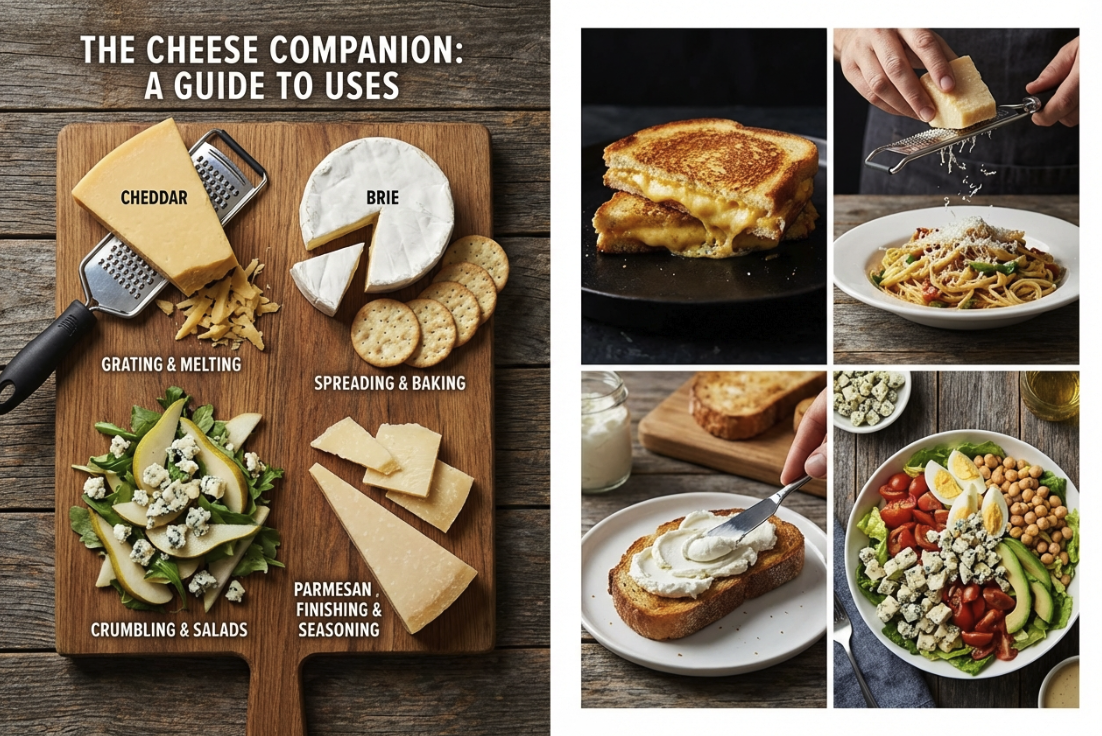
Examples: Parmigiano Reggiano, pecorino, aged cheddar
Best for: grating, shaving, soups, pasta, salads
Chef’s take: a little goes a long way — think of these as seasoning.
Examples: Blue Castello (mild), gorgonzola (creamy), stilton/roquefort (bold)
Best for: boards, sauces, pears/figs/honey pairings
Chef’s take: blue + sweet = magic. Start mild and work up.
Examples: Port Salut / similar washed rinds
Best for: boards when you want a talking point
Chef’s take: can smell intense, taste surprisingly gentle — ask for the mildest one first.
Examples: Halloumi, kasseri
Best for: BBQ, salads, quick protein add-on
Chef’s take: golden crust + lemon = ridiculously good.
Take it out of the fridge 30 minutes before serving (less if it’s stinking hot in QLD).
This week: buy your usual cheese… and add one wildcard.
Small wedge only. Low risk. Big discovery.
Bonus points if your wildcard is:
Cheese confidence isn’t about memorising names — it’s about learning what each cheese does.
Start simple. Taste often. Buy small.
And keep one rule: one new cheese per shop.
That’s how you level up — deliciously.
Chef Ian