Turning Seasonal Abundance into Year-Round Flavour
This is what Chef’s Table is all about…
Seeing an ingredient at its peak—cheap, plentiful, full of flavour—and asking:
👉 How do we make the most of this?
👉 How do we extend it?
👉 How do we elevate it?
This time… Muscat grapes.
Sweet, juicy, and in season—perfect candidates for dehydration.
Why Muscat Grapes?
Muscat grapes bring something special:
- Naturally high sugar content
- Floral, almost honey-like aroma
- Intense flavour when reduced
Once dehydrated, that flavour doesn’t just stay…
👉 It concentrates.
The Chef Thinking Behind It
This isn’t just about making “dried fruit.”
This is about:
- Buying when produce is at its best price and quality
- Reducing waste
- Creating premium ingredients from everyday produce
- Having flavour tools ready when you need them
👉 This is pantry building at a Chef’s Table level.
Equipment Upgrade (Lessons Learned)
Last time… not ideal.
- Standard racks = grapes falling through
- Skins tightening and wrapping awkwardly
- Uneven drying
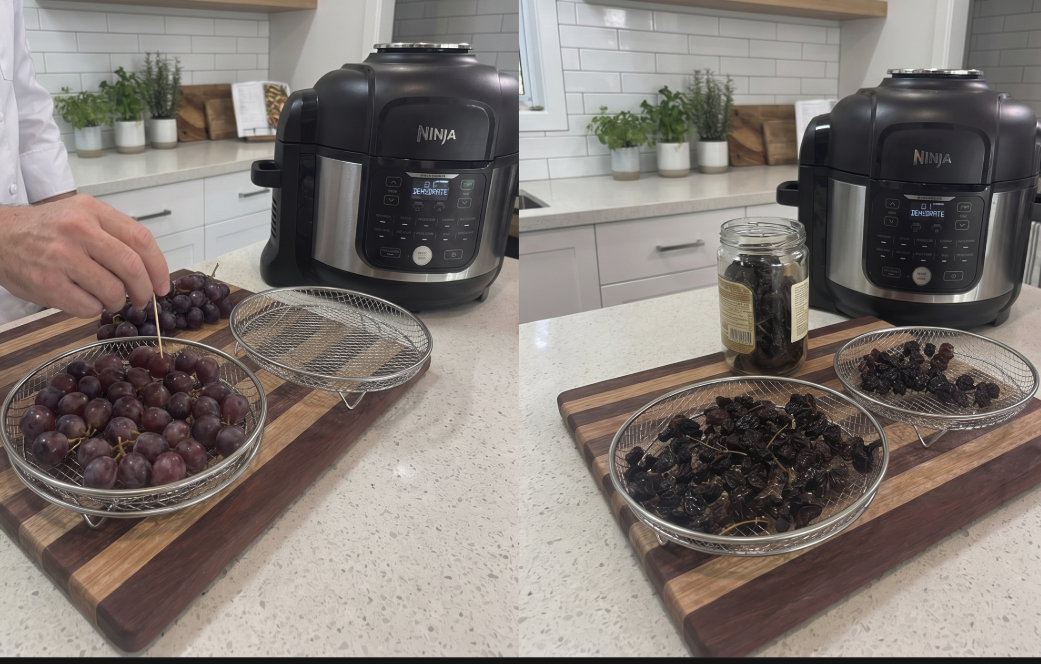
Solution? Wire baskets.
✔ Hold shape
✔ Allow airflow
✔ Contain the fruit properly
✔ Consistent drying
👉 Same dehydrator… completely different result.
Method Overview
- Wash and dry grapes thoroughly
- Lay in a single layer in wire baskets
- Set dehydrator to ~60°C
- Dehydrate for ~24 hours
👉 This batch was 3x larger than previous runs—still consistent results.
Chef’s Tip (Don’t Skip This One)
👉 Lightly prick each grape before dehydrating
This simple step makes a big difference:
- Allows moisture to escape more easily
- Promotes more even dehydration
- Helps prevent tough skins and uneven shrivelling
- Reduces overall drying time slightly
You can use:
- A small knife tip
- A skewer
- Or even a fork
👉 Just a small puncture—don’t mash or split them.
What You’re Looking For
- Shrivelled but not rock hard
- Still slightly pliable
- Deepened colour
- Intensely sweet aroma
Not brittle. Not sticky.
👉 Think premium raisin—not supermarket dried fruit.
Storage
- Cool completely
- Store in a clean, sterile jar
- Keep in a cool, dark place
Shelf life: Several months
Where This Gets Interesting (Uses)
Cheese Boards (Obvious—but worth doing properly)
- Pairs beautifully with:
- Blue cheese
- Aged cheddar
- Soft brie
Adds:
✔ Sweetness
✔ Texture
✔ Visual contrast
Veal Jus / Sauce Work (This is the Chef’s Table move)
Add chopped dehydrated muscat grapes into:
- Veal jus
- Red wine reductions
👉 They rehydrate slightly and release:
- Sweetness
- Depth
- A subtle fruit complexity
Perfect with:
Other Uses
- Toss through grain salads
- Add to couscous or pilaf
- Chop into dressings
- Finish roasted vegetables
Chef’s Insight
What we’re doing here is capturing flavour at its peak… and saving it for later.
This is the difference between:
- Cooking with ingredients
vs - Cooking with intent
What This Reinforces
- Buy when it’s in season and affordable
- Think beyond immediate use
- Build a pantry that works for you
- Use technique to elevate simple ingredients
What’s Next…
🍅 Tomatoes
And this one…
is going to be something special.
Final Thought from Chef Ian
Anyone can buy ingredients.
But knowing when to buy, how to transform, and how to use them later…
👉 That’s where real cooking starts.
Enjoy the You Tube link here: